

The Derrick Rose legacy deserves more respect than an injury footnote. At his peak, Derrick Rose was not merely an exciting young guard with extraordinary athleticism. Rose became the NBA’s youngest MVP and led the Chicago Bulls to the league’s best regular-season record. Before injuries changed the course of his career, Rose had established himself as one of the most dangerous offensive players of his generation.
The numbers tell only part of the story, but the numbers are difficult to dismiss. Rose averaged 25.0 points, 7.7 assists and 4.1 rebounds in 2010-11 while playing all 81 regular-season games, leading Chicago to a 62-20 record and the Eastern Conference’s top seed. The MVP season also made Rose the youngest MVP in NBA history, an accomplishment that remains unmatched. Rose’s legacy should not be reduced to what might have happened after his ACL tear. The better question is how great Rose had already become before the injury interrupted a career that was moving toward its prime.
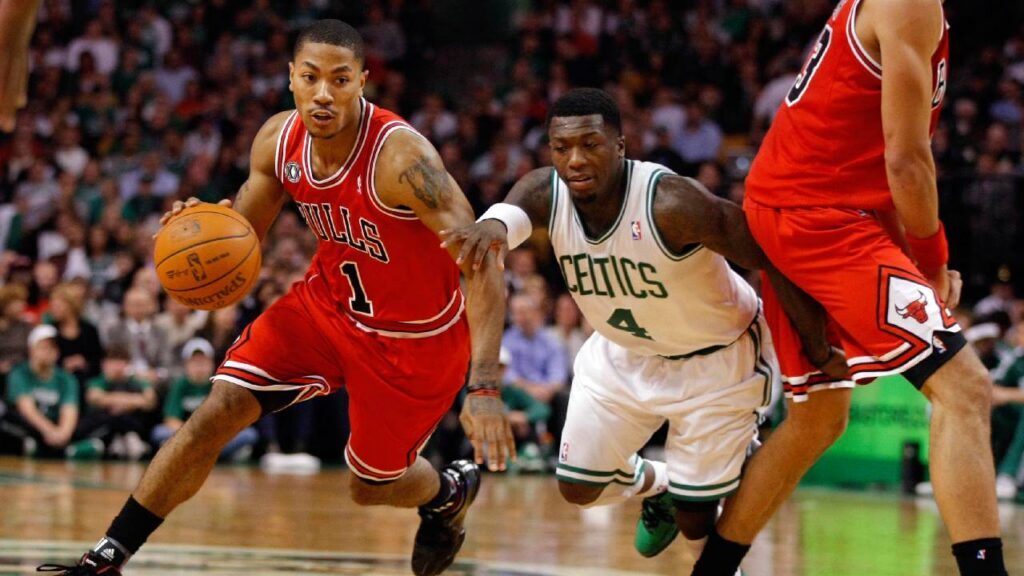
Rose arrived in the NBA as the No. 1 overall pick in the 2008 NBA Draft and joined his hometown Bulls at 19 years old. Speed defined Rose’s game, but raw speed alone did not make him special. Rose could change direction without losing momentum, explode through narrow driving lanes, absorb contact around the rim and finish with either hand.
Defenders could not simply retreat because Rose could turn a small opening into a layup, dunk or foul. Rose’s first postseason provided an immediate example of that ability. The rookie scored 36 points against the defending champion Boston Celtics in his playoff debut, matching Kareem Abdul-Jabbar’s record for the most points by a rookie in a playoff debut.
The playoff debut established Rose as a player capable of handling postseason pressure before his second NBA season even began. The NBA named Rose Rookie of the Year after that season, with 111 of 120 first-place votes. The Rookie award became the first major individual honor in a career that would reach its highest point only two years later.

The 2010-11 season remains the central piece of the Derrick Rose legacy because the MVP was supported by far more than highlights or hype. Rose averaged 25.0 points and 7.7 assists while leading Chicago to 62 wins, the NBA’s best record, and a conference finals appearance. Advanced numbers reinforce the argument. Rose posted a 23.5 PER, a .550 true shooting percentage, 13.1 win shares and a 6.8 BPM while carrying a 32.2% usage rate. Basketball-Reference also credits Rose with 6.7 VORP and a 38.7% assist percentage, illustrating how much offensive responsibility rested on the Bull’s young point guard.
The MVP voting reflected that impact. Rose received 113 of 120 first-place votes and 1,182 total points, while Dwight Howard finished second with 643 points. LeBron James received 522 points, Kobe Bryant had 428 and Kevin Durant finished fifth with 190, making the MVP voting another measure of how convincingly Rose won the award.
Chicago’s 62-win season also matters when evaluating Rose’s MVP. The Bulls finished with the league’s best record and advanced to the Eastern Conference finals. Miami’s James, Dwyane Wade, and Chris Bosh ended the Bull’s championship pursuit in five games. The conference finals did not erase the regular-season achievement.
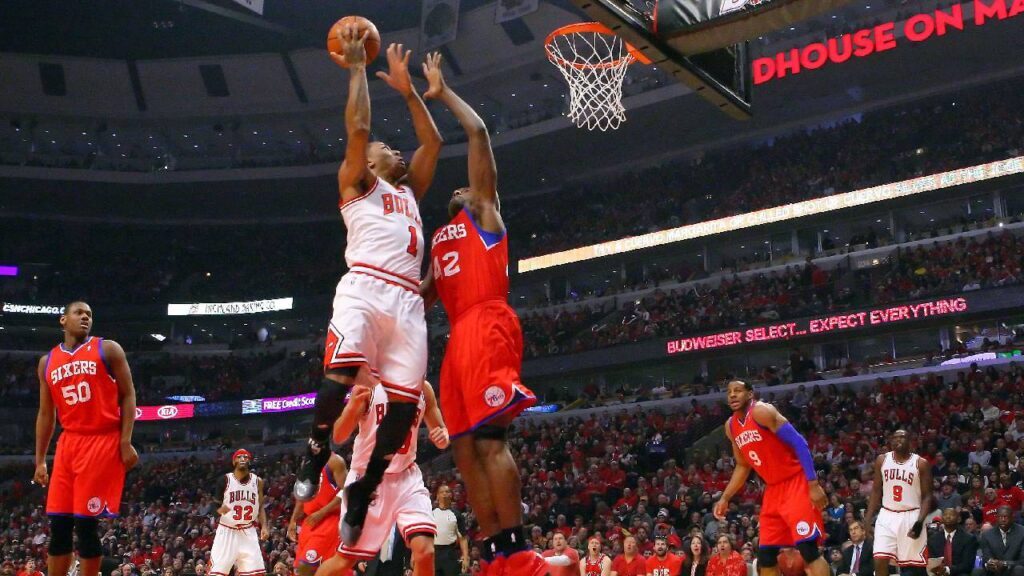
The most painful chapter of the Derrick Rose legacy began on April 28, 2012. Rose tore the ACL in his left knee during Game 1 of Chicago’s first-round playoff series against the Philadelphia 76ers after posting 23 points, nine rebounds and nine assists. The Bulls led by 12 points with 1:22 remaining when the non-contact injury occurred. The ACL injury immediately transformed Rose from one of the league’s rising superstars into one of basketball’s biggest what-if stories.
No responsible evaluation caan claim a healthy Rose would have won multiple championships. Miami remained a formidable opponent, Chicago still had roster questions, and postseason outcomes cannot be predicted with certainty. The evidence supports a simpler conclusion: the injury interrupted a player who had already reached an extraordinary level.

Rose’s time with the New York Knicks from 2016 to 2017 showed that he could still contribute after the injuries had changed his career. New York acquired Rose from the Bulls in the 2016 offseason, giving him an opportunity to play alongside Carmelo Anthony and Kristaps Porzingis. Rose averaged 18.0 points, 4.4 assists and 3.8 rebounds in 64 games, remaining an important offensive piece for a Knicks team that finished 31-51.
Rose’s post-injury career deserves more attention than a simple comeback narrative. Multiple knee problems prevented a return to the exact player who had terrorized defenses in 2010-11, forcing Rose to become more comfortable with a different offensive toolbox. Rose added more midrange shooting and floaters as he adjusted to the physical demands of his new reality.
In 2014, Rose discussed adding his midrange game and a floater while acknowledging that game experience would be necessary to rebuild his rhythm. That evolution helped extend his career. Rose eventually became a more complementary scorer and veteran playmaker instead of relying almost entirely on the devastating first step that had defined his MVP season.
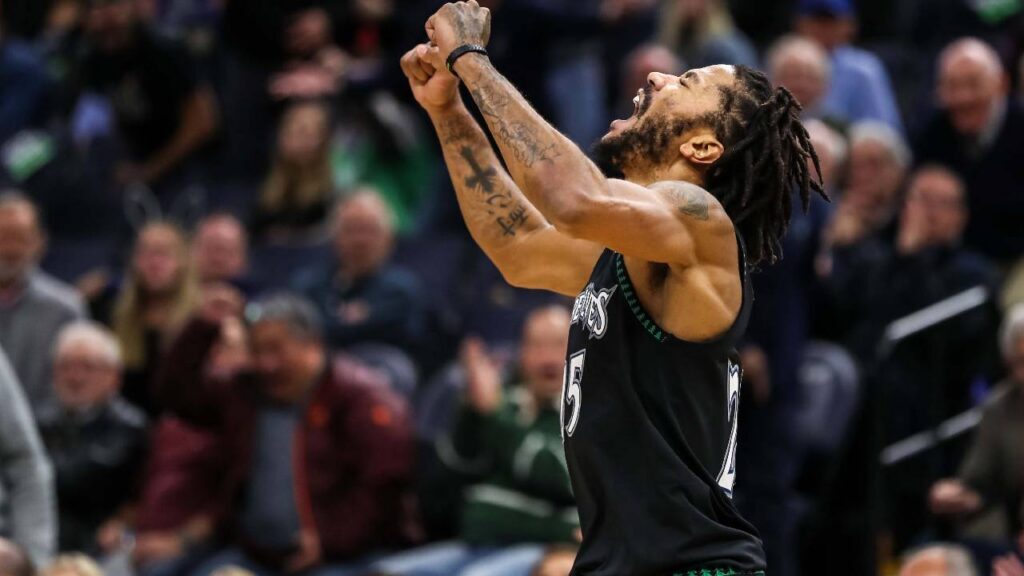
Rose scored a career-high 50 points for the Minnesota Timberwolves against the Utah Jazz, shooting 19-for-31 and adding six assists in a 128-125 victory. The 50-point performance remains one of the defining moments of his post-ACL career. The emotional significance of that night came from more than nostalgia. Rose had endured multiple setbacks and changing roles, yet the performance showed that his scoring instincts and competitive edge could still produce a spectacular NBA performance.
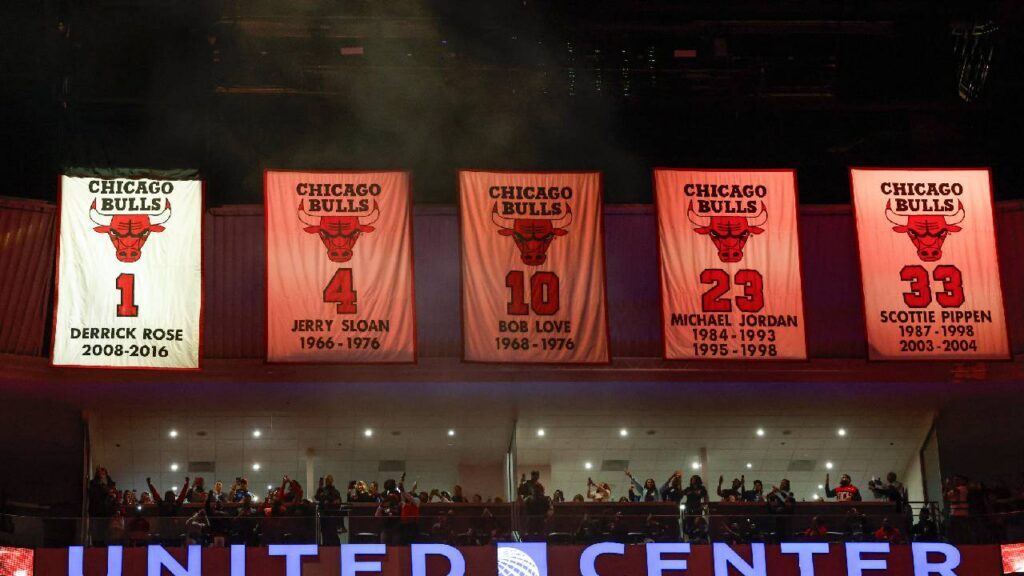
Rose retired in September 2024 after 16 NBA seasons, finishing with career averages of 17.4 points, 3.2 rebounds and 5.2 assists across 723 regular-season games. Those career totals do not resemble the résumé of a typical all-time great, which makes the context surrounding Rose especially important. Chicago’s decision to retire Rose’s No. 1 jersey provides the strongest modern confirmation of his franchise impact. The Bulls raised Rose’s No. 1 jersey to the United Center rafters on Jan. 24, 2026. The ceremony made Rose the fifth player in franchise history to receive the honor, joining Michael Jordan, Scottie Pippen, Bob Love, and Jerry Sloan.
Chicago recognized the importance of a hometown superstar who became the franchise’s face in the years following Michael Jordan’s departure. Rose’s eight-season Bulls tenure ended without a championship. Rose did not duplicate Jordan’s championships, but his impact on Chicago was different from a conventional statistical résumé.
The hometown No. 1 pick became Rookie of the Year, an All-Star and the youngest MVP in NBA history while leading the Bulls to their best regular-season record since Jordan’s final championship era. The Hall of Fame debate remains more complicated because Rose’s extraordinary peak was not sustained for a traditional superstar career.
Rose’s peak also deserves to be viewed alongside the elite guards of his era. Rose’s 2010-11 season was not as statistically complete as the later campaigns of Chris Paul or Russell Westbrook. Even so, Rose was already an All-NBA First Team player and the offensive engine of a 62-win Bulls team before turning 23. Unlike Paul’s more complete playmaking profile or Westbrook’s later triple-double production, Rose’s value came from combining high-volume scoring with elite downhill creation.
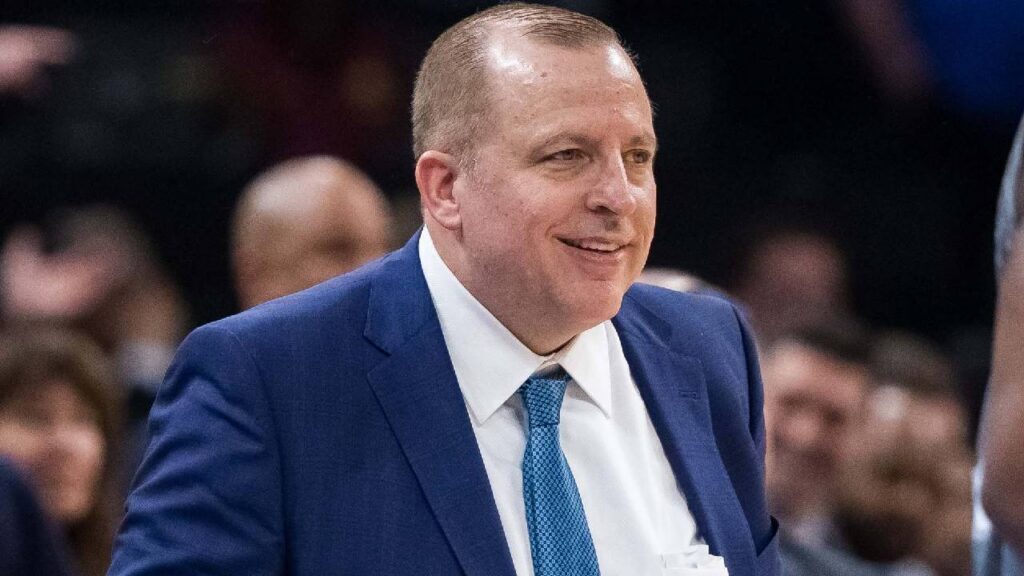
Tom Thibodeau, who coached Rose in Chicago and later Minnesota, offered a useful perspective during Rose’s 2018 comeback. Thibodeau acknowledged that Rose’s MVP season represented the peak of his career, but also pointed to the productive seasons Rose had after returning from injury. That distinction matters because Rose’s career did not simply end with the ACL tear. The injury cost Rose the version of himself built around overwhelming athleticism, but he found other ways to remain an effective NBA player.
Derrick Rose did not have the career his MVP season seemed to promise. That is the tragedy of his story, but it should not become the entire story. Rose did not need an alternate timeline to prove he was great. The 2010-11 season already provides the evidence of Rose’s greatness. At 22, Rose reached the sport’s highest individual level, and injuries that prevented him from sustaining that standard do not make the peak any less real.
Rose’s later career added another layer to that legacy. The former MVP adapted, remained in the NBA, and produced a 50-point game years after the ACL injury. Chicago’s decision to retire Rose’s No. 1 jersey in 2026 gave that legacy an official endpoint. .
