
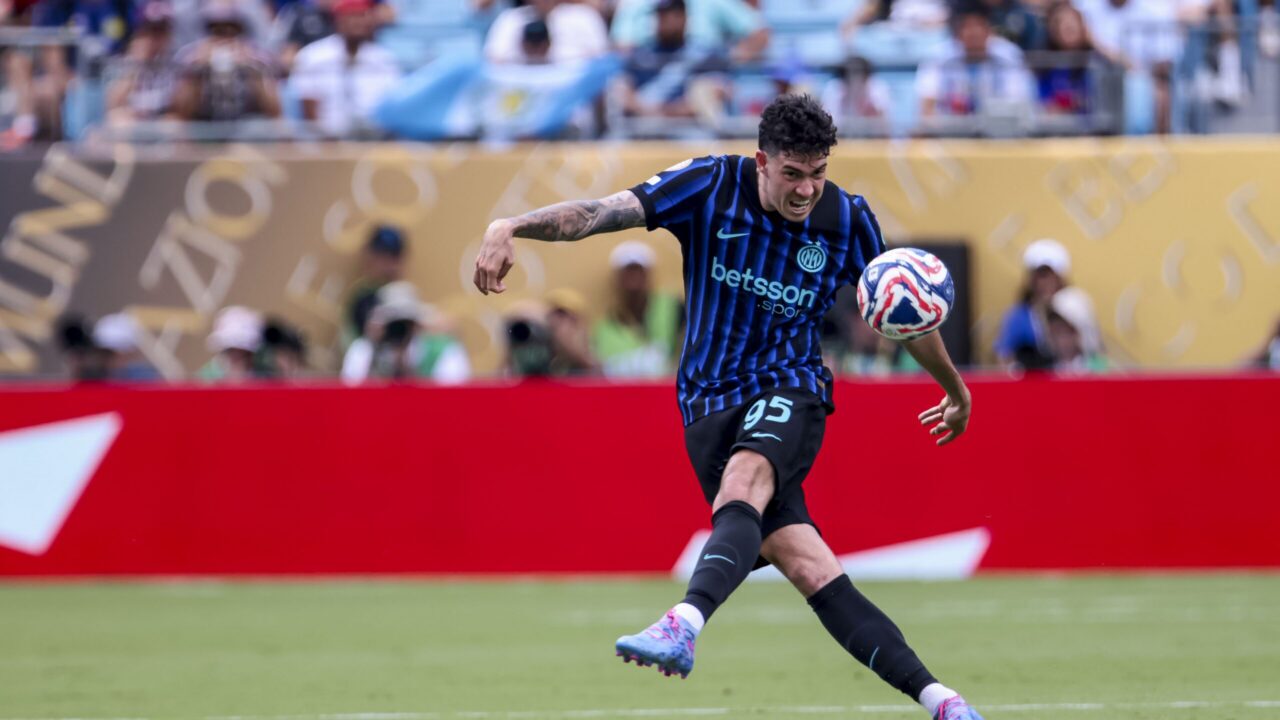
Cristian Chivu has admitted Inter Milan lost their tactical balance and composure after missing key chances in their 4-3 Champions League defeat to Club Brugge at San Siro on Tuesday.
The result leaves Inter with two defeats from their opening two league-phase matches, following their 2-1 loss to Real Madrid. More concerning for Chivu is how his side’s defensive problems resurfaced against a Club Brugge team that punished their mistakes.
Speaking after the game, the Inter manager accepted responsibility for his team’s performance and acknowledged that frustration contributed to their collapse.
According to Football Italia’s report on Chivu’s reaction, the coach identified poor positioning, mistimed pressing and a failure to recover defensively as key reasons for the defeat.
Chivu believed Inter started the match well but struggled to maintain their structure when the game turned against them.
“It was a good first half from both teams, with intensity, but we conceded a goal on a counter-attack from our own corner where we could’ve been more organised,” he told Sky Sport Italia.
Inter responded before the break and started the second half positively. However, their inability to convert two important chances changed the team’s approach.
“We had two big chances to score that we didn’t take, so a little frustration set in, we got frenetic, lost our balance and then from the 2-1 it all went wrong,” Chivu explained.
His assessment points to a problem that extended beyond missed opportunities. Rather than remaining patient and trusting their game plan, Inter became increasingly rushed and exposed themselves to Club Brugge’s attacks.
Chivu also praised the Belgian side’s technical quality, intensity and determination, acknowledging that their opponents took advantage of the situation.
Club Brugge’s victory highlighted Inter’s difficulties in protecting their defence when their attacking approach became more aggressive.
Chivu was particularly critical of his team’s pressing and positioning. When Inter pushed forward in search of goals, they struggled to recover quickly enough when possession changed hands.
“We made the wrong pressures, with long distances. We were always a bit late,” was the substance of Chivu’s post-match tactical assessment.
The manager explained that frustration encouraged his players to advance too far without tracking back effectively. That left spaces for Club Brugge to exploit through quick transitions.
This is where Inter’s performance became particularly concerning. The problem was not simply that the home side conceded four goals; it was that their defensive organisation deteriorated when they needed to remain disciplined.
Inter’s attacking players still produced enough to score three times, but their defensive structure could not withstand Club Brugge’s pressure.
The visitors also deserve credit for exploiting those weaknesses. Their intensity and ability to attack open spaces made it difficult for Inter to regain control once the match became stretched.
Nicolò Tresoldi’s hat-trick proved decisive as Club Brugge secured an extraordinary 4-3 victory at San Siro.
Inter fought back through Lautaro Martínez, who scored twice, while Ange-Yoan Bonny added a late goal. However, the Nerazzurri could not prevent the visitors from leaving Milan with all three points.
The result underlined the difference between Inter’s attacking output and their defensive reliability. Scoring three goals at home would ordinarily give a team a strong chance of winning, but Inter’s inability to manage the game without possession proved costly.
For Chivu, the challenge is to ensure that his team’s attacking ambition does not leave its defence exposed. His comments suggest he recognises the need to improve the distances between players, the timing of pressing actions and the team’s response when possession is lost.
The post-match report from Football Italia also highlights the wider concern surrounding Inter’s recent Champions League results.
Chivu did not attempt to shift the blame entirely onto his players. Instead, he acknowledged that his preparation and management of the match also required scrutiny.
“I must be the first to take responsibility, because perhaps I cannot find the right balance going into certain types of games,” he said.
The admission is significant because Inter’s problems have extended beyond this defeat. According to Football Italia, the loss to Club Brugge was Inter’s seventh defeat in their previous eight Champions League matches.
That record raises questions about whether the team’s domestic strengths are translating effectively to European competition, where opponents can punish even brief lapses in concentration and positioning.
Chivu acknowledged that his side must reassess its approach, particularly its mental preparation and ability to remain organised under pressure.
He also suggested that he could have encouraged greater calm at half-time rather than allowing the team to become too emotionally charged.
The next step is turning that admission into measurable improvements. Inter need to defend transitions more effectively, compete for second balls and avoid abandoning their structure when scoring opportunities are missed.
Despite the damaging result, Chivu insisted that Inter must retain their confidence with six league-phase matches remaining.
“We must also keep the faith, because there are another six to go,” he said.
However, Inter cannot afford to treat the defeat as an isolated setback without addressing the issues that contributed to it. Their loss to Real Madrid had already left them under pressure, and the defeat to Club Brugge has made their European position more difficult.
Chivu’s immediate task is to restore defensive discipline without sacrificing the attacking qualities that allowed Inter to score three goals.
The evidence from this match suggests that Inter’s problem is not a complete inability to create chances. It is their failure to maintain control when those chances do not produce the expected result.
If Inter continue to push forward without protecting the spaces behind their midfield, opponents will have opportunities to exploit the same weaknesses.
Chivu has accepted responsibility for the tactical and mental shortcomings. His next challenge is to show that Inter can respond with greater composure, better positioning and more consistent game management.
The defeat to Club Brugge has exposed serious concerns, but the response in Inter’s remaining Champions League fixtures will determine whether Chivu can correct them quickly enough.
