
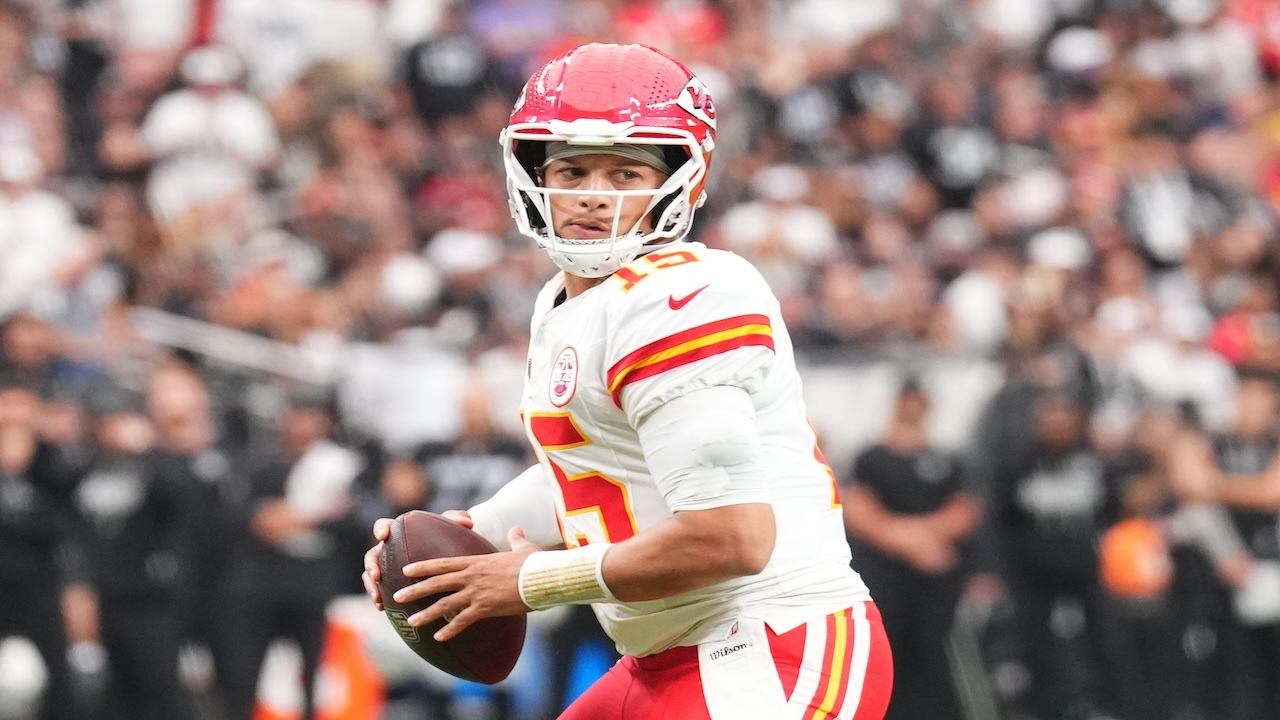
On Sunday, Oct. 25, the Chiefs pass protection problem against Seattle was more complicated than leaving Patrick Mahomes behind an overwhelmed offensive line. On one documented pressure, Kansas City had a running back involved in protection and still allowed an interior path to the quarterback. On another, a tackle faced an edge rusher without assistance. When both tackles received help on the opening drive, the protection held. The pass still missed.
Those differences matter. “Keep somebody in to block” sounds reasonable until somebody stays in, and the quarterback gets hit anyway.
Two Blockers Turned Outside While Lawrence Came Through Inside
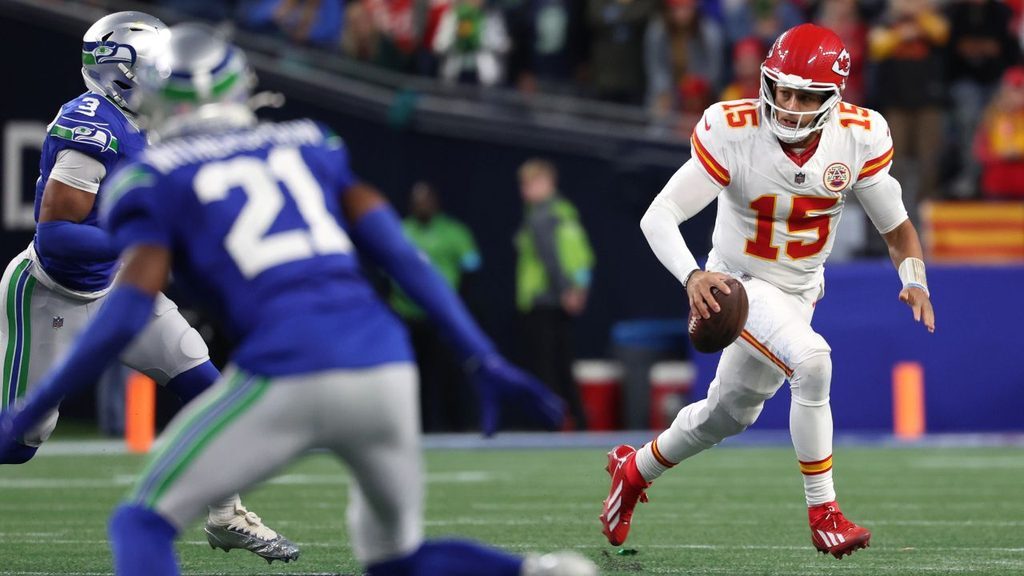
With 1:38 remaining in the second quarter, Kansas City faced third-and-10 at its own 35. Mahomes eventually completed a five-yard pass to Emmett Johnson, leaving the Chiefs short of the first down. The protection explains why that completion required an escape first.
The end-zone footage shows Ernest Jones threatening an interior gap before dropping into coverage. Seattle sends five rushers, including Devon Witherspoon from outside Kansas City’s right tackle. Byron Murphy moves inside toward Creed Humphrey and Trey Smith while DeMarcus Lawrence attacks beside him.
Johnson begins on Mahomes’ right. His first movement after the snap takes him toward the right edge, where Witherspoon is approaching. The angle shows Johnson’s movement clearly, though not where his eyes are focused.
Joshua Ezeudu initially makes contact with Lawrence, then turns outward toward Witherspoon as Johnson approaches the same threat. Lawrence continues inside Ezeudu. At that moment, Humphrey and Smith are occupied with Murphy. Neither is waiting freely in Lawrence’s path. An interior blocker would’ve needed to break away from Murphy and turn back toward Lawrence to pick him up.
Kansas City’s tackle and running back both turn toward the outside threat, leaving Lawrence free to rush through the opening inside. The footage doesn’t establish which player violated the protection call.
Mahomes retreats and escapes right. Johnson subsequently releases, catches the pass, and gains five yards. The completion salvages yardage, but it doesn’t rescue the possession. I appreciate Mahomes escaping the pressure. I’d appreciate it more if escaping weren’t the admission price for a five-yard completion.
The fix starts when Ezeudu turns away from Lawrence. Kansas City needs someone to stay with the inside rusher as the tackle responds to pressure outside.
An Isolated Tackle Presents A Different Decision
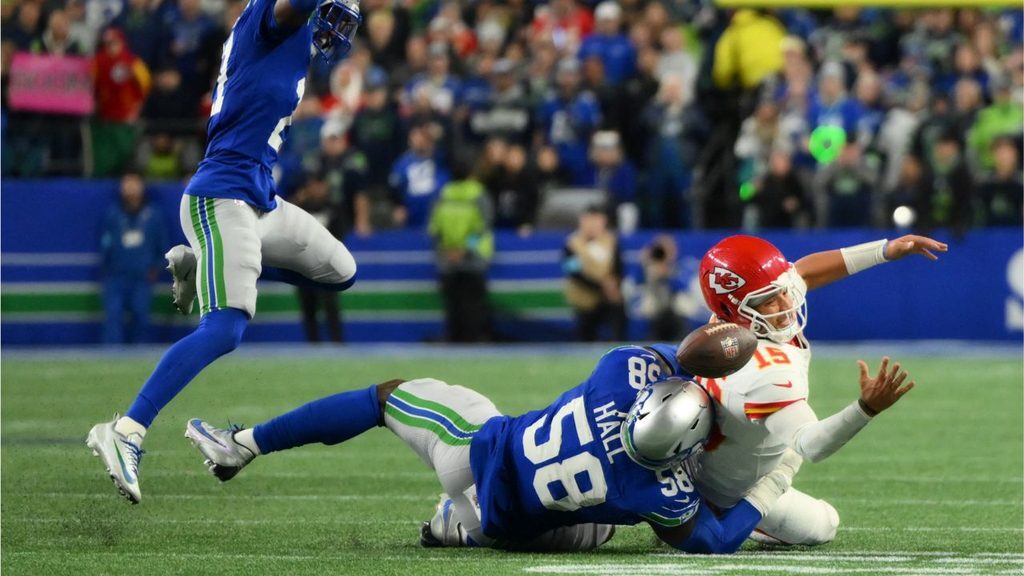
Caleb James’ third-down breakdown describes another pressure with a different result. Seattle crowded the line before the snap. Creed Humphrey engaged the nose tackle, Trey Smith handled an interior defender, and Ezeudu faced Derick Hall alone from a wide alignment. Hall beat him and hit Mahomes on an incompletion.
Here, the Chiefs pass protection problem was an isolated tackle losing his matchup. The interior blockers were occupied, and the tackle lacked the initial assistance that might’ve disrupted Hall’s approach.
Those plays call for different fixes. Someone needed to stay with Lawrence when Ezeudu turned outside. Against Hall, Kansas City needed to consider whether leaving its tackle alone was asking too much. “Good luck out there” has its limits as a protection plan.
If the routes need time to develop, the tackle should have help slowing the edge rusher before the extra blocker releases into a route, when the call allows. That help cannot leave another rusher untouched or take away the quick outlet Mahomes may need.
A chip should slow the rusher or force him off his path. Otherwise, it’s just a courtesy handshake while another defender heads straight for Mahomes.
Successful Protection Still Requires A Completed Pass
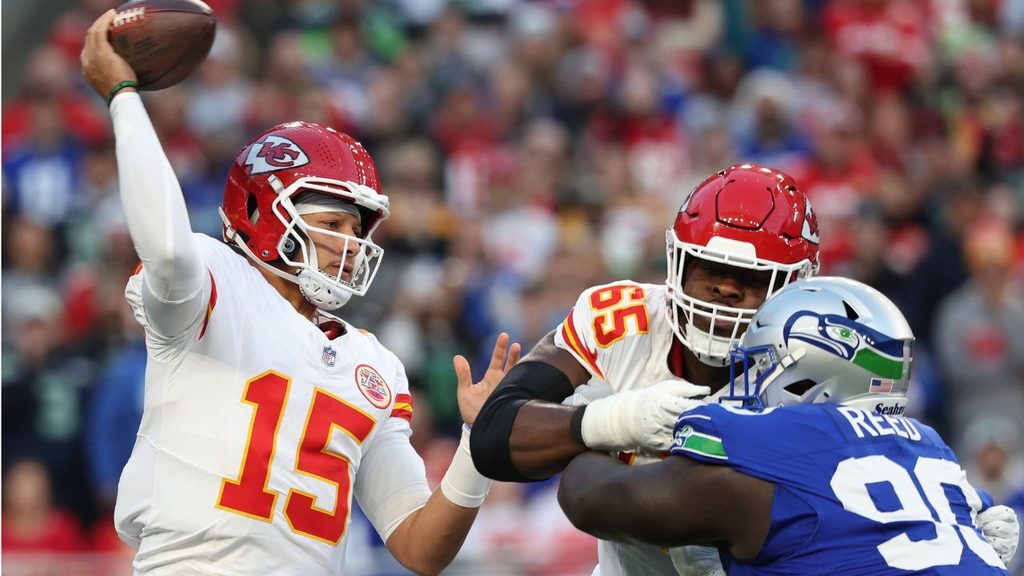
The same Arrowhead Pride breakdown shows what happened when the Chiefs pass protection held up. On the opening third-and-12, Seattle showed multiple potential rushers but sent four. Both Chiefs tackles received chip assistance, the protection held, and Mahomes missed Kelce.
Kansas City supplied time and a throwing opportunity. The pass still needed to be completed. Of course, the day the blockers earn a break from criticism, the throw gives us somewhere else to direct it.
Kansas City handled the crowded line by giving its tackles help. Seattle’s pre-snap threats did not turn into pressure on that play.
James also identifies a later play on which Johnson and Kelce chipped before releasing into their routes. That assistance delayed their availability as receivers, but the delay alone does not explain the failed pass. Establishing that connection would require showing which targets Mahomes could access while they were blocking. This example establishes the tradeoff, not that Kansas City chose incorrectly.
Fixing Chiefs pass protection starts with distinguishing a rusher left unblocked from a tackle beaten one-on-one. The former requires resolving who takes the threat. The latter raises the question of whether that matchup needs assistance. Those protection problems were part of a larger story: why Kansas City managed just three points against Seattle.
End Of My Chiefs Pass Protection Rant
Seattle produced an unblocked interior path on one play and exploited an isolated tackle on another. Kansas City also protected successfully and failed to complete the pass. Each deserves its own correction.
The Chiefs need to know who is blocking the dangerous defender and who is available to catch the ball. Preferably during the same play.
