
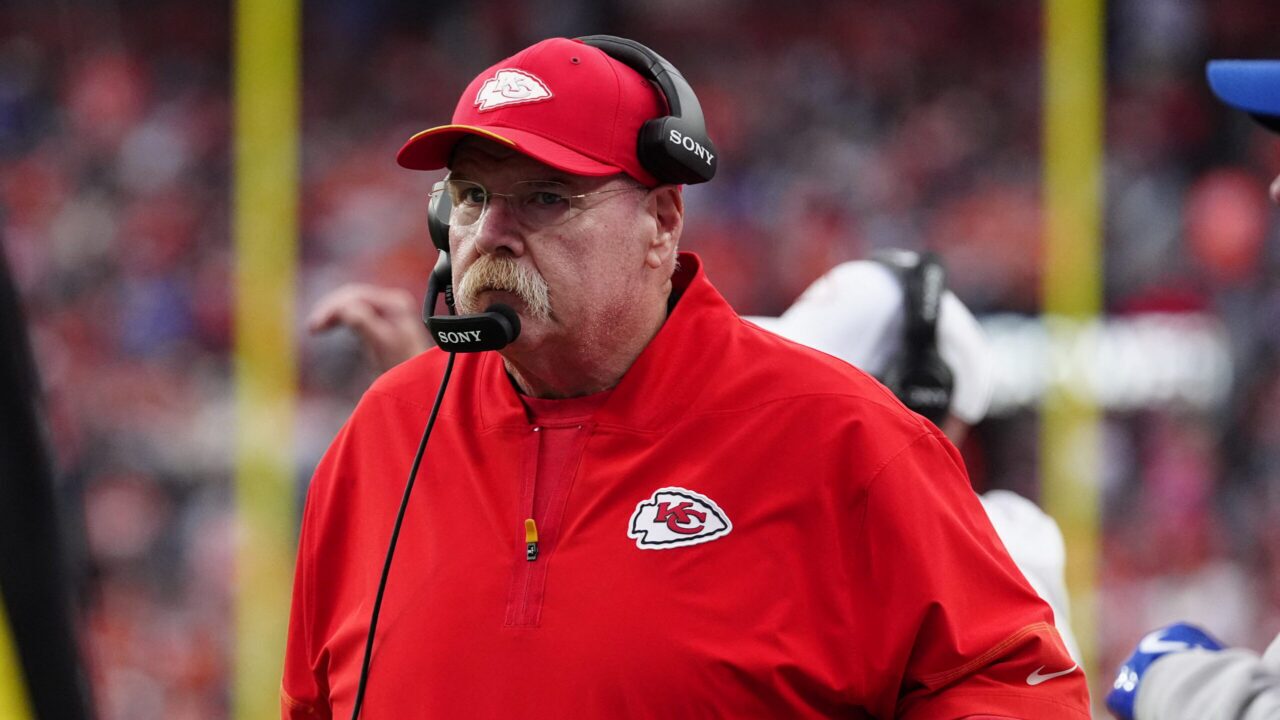
Of the 13 Chiefs explosive pass plays that started with a short throw, 10 went to running backs or tight ends. Rice was the only wide receiver to produce one, and he did it three times. Travis Kelce led Kansas City with four catches of at least 20 yards on short throws. Emmett Johnson and Rashee Rice had three apiece, Kenneth Walker III had two, and Noah Gray had one.
Xavier Worthy came up one first down richer against the Jets without making that list. He needed one yard and gained 11 on a short throw. On the next snap, Patrick Mahomes threw short again and Rice gained 21. Both catches moved the chains. Rice’s cleared the 20-yard cutoff.
Across Kansas City’s first eight games, through Nov. 8, 2026, Mahomes completed 22 passes that gained at least 20 yards. The play-by-play labeled 13 throws short and nine deep. Those labels describe pass depth without giving exact air yards or yards after the catch. “Short” and “deep” tell us roughly how far Mahomes threw the ball. Neither label tells us exactly where the receiver caught it or how far he ran afterward. Only official receiving yards count toward the 20-yard cutoff. Penalty yards, plays erased by flags, and runs are excluded. In the last two games of that stretch, Mahomes had three completions of 20-plus yards against Denver and three against the Jets. All six started with short throws.
Travis Kelce Is Still The Most Reliable Answer
Johnson owns the longest catch of the bunch. Kelce has the stronger case for doing it again. He took a short pass 59 yards against Denver in the opener, gained 24 against the Chargers, then added catches of 32 in the Denver rematch and 38 against the Jets. Those four Chiefs explosive pass plays added up to 153 yards, and each came in a different game. His longest and shortest qualifying gains came six weeks apart. By now, every defense facing the Chiefs should have a plan for Kelce after the catch.
The Jets game puts an actual number on Kelce’s contribution after the ball arrived. Kansas City reported that 56 of his 72 receiving yards came after the catch. It was his fourth game this season above 75 percent. That figure covers all four of his catches against New York. It also helps explain why his 38-yarder matters. Kelce can give Mahomes a target close to the line and still make the defense pay as though somebody got behind it.
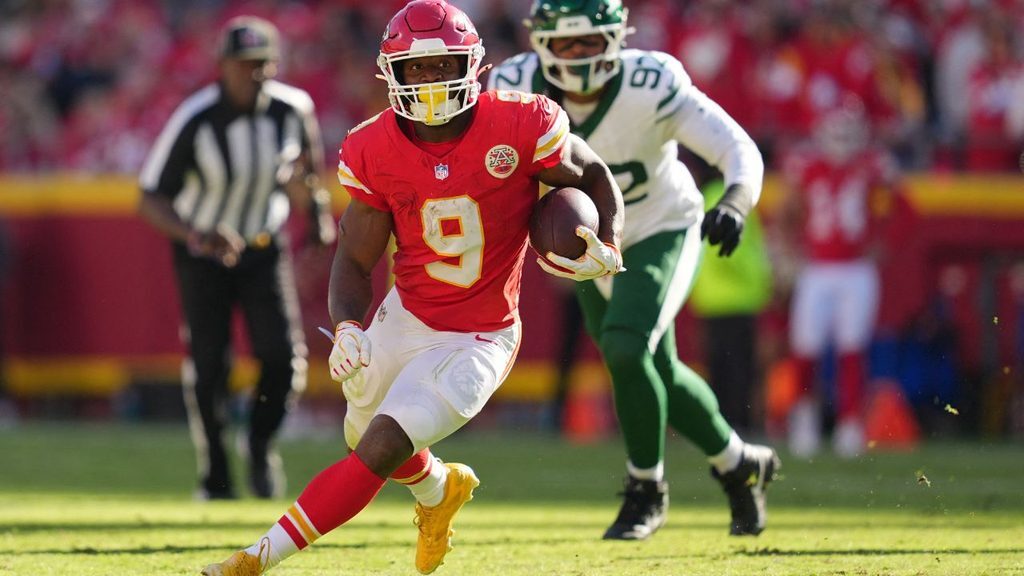
Johnson’s production has been more concentrated. He turned three short throws into Chiefs explosive pass plays, all against Denver. He gained 25 yards in the opener, then 73 and 38 in the rematch. On the 73-yard touchdown, Mahomes’ pass traveled seven yards downfield, and Johnson ran the other 66 after the catch.
The Chiefs faced third-and-10. Mahomes delivered the ball three yards short of the marker. Johnson had work to do just to keep the offense on the field. He handled it, and then some, with roughly 63 yards to spare. That’s a reason to keep Johnson involved as a receiver.
That’s a reason to keep Johnson involved as a receiver. It’s also a reason to resist penciling in a 40-yard gain every time he checks into the huddle. Kelce has done this against three opponents. So far, Denver is the one defense that has had to learn the Emmett Johnson lesson twice.
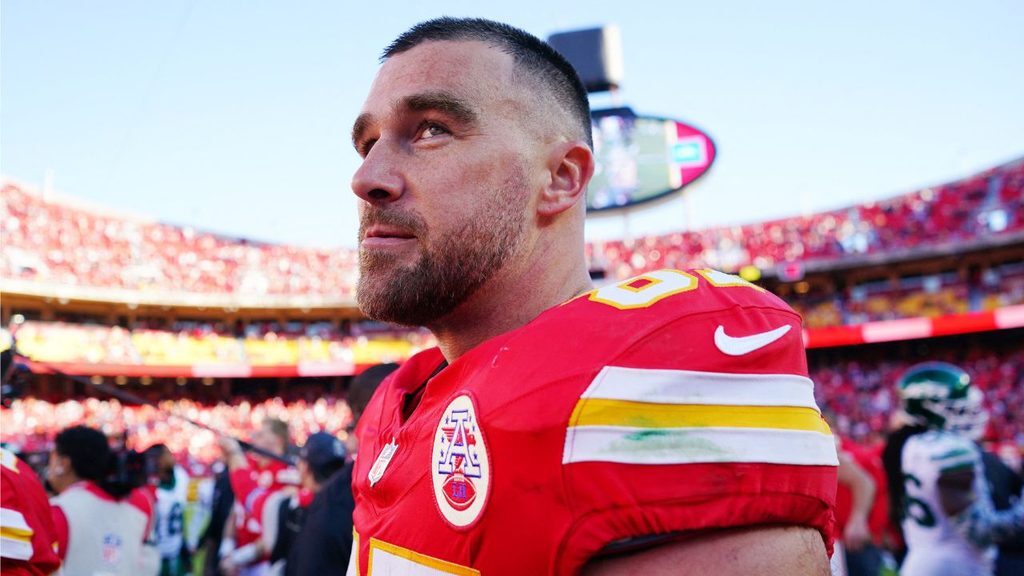
How Kelce, Walker, And Rice Produced 3 Chiefs Explosive Pass Plays Against The Jets
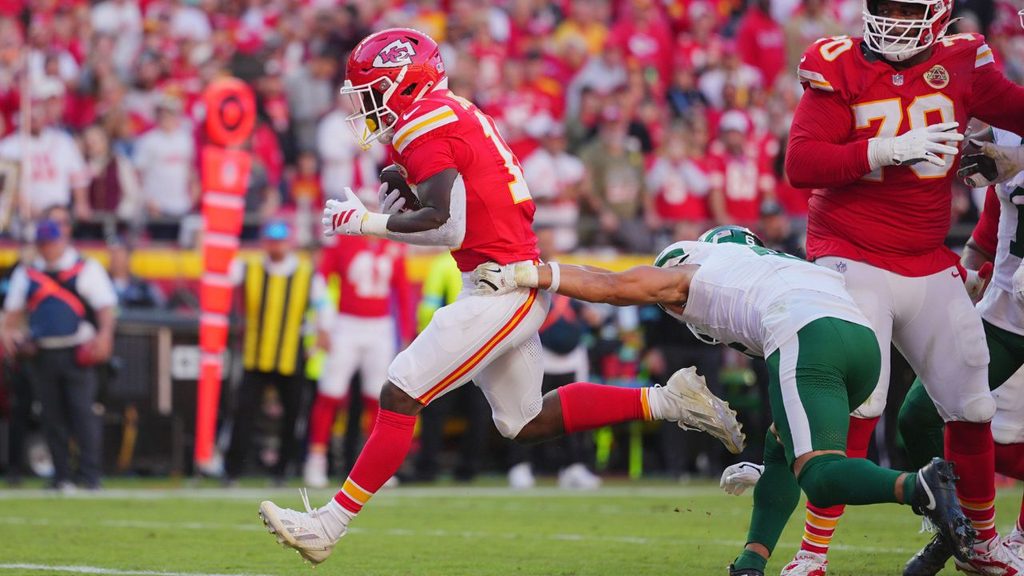
Kansas City’s three explosive completions against New York went to Kelce for 38, Walker for 25 and Rice for 21. Each started short. What makes that game encouraging is that the Chiefs had an answer even though Johnson, fresh off his 128-yard receiving day in Denver, supplied none of the three.
Some of the credit belongs to players who finished the afternoon with no receiving yards whatsoever. On Walker’s second-and-11 touchdown, guards Trey Smith and Kingsley Suamataia got out in front of the screen. Kansas City’s own highlight identifies blockers leading Rice on his 21-yard screen. Those details matter if the coaching takeaway is “get the ball to the playmakers.” Walker and Rice got the ball. They also got teammates downfield in time to do something about the first tackler. The guards might reasonably request a footnote on the fantasy points.
Rice gives that design some history beyond one Sunday. He had already turned short throws into gains of 30 and 31 yards against Indianapolis. When defenders widen to follow the backs into the flat, Reid can still get Rice the ball on a screen with blockers out front.
What The Short Game Still Has To Replace
The three Chiefs explosive pass plays against Las Vegas matched Kansas City’s total against the Jets. The difference was how far Mahomes threw the ball. In Las Vegas, all three passes were recorded as deep. Worthy gained 41 yards, and Tyquan Thornton gained 42 and 55. Two of those completions came on third down. Kansas City could attack well beyond the sticks before the catch.
That’s the piece Reid should preserve. When Johnson caught the ball on third-and-10 in Denver, a defender still had a chance to end the drive after Mahomes completed the pass. A deep completion beyond the marker takes that opportunity away. Seattle supplied a less entertaining version of the Johnson play. On third-and-10 before halftime, he caught a five-yard pass that brought out the punt team. Same back. Same distance needed. This time the catch was all Kansas City got.
End Of My Chiefs Explosive Pass Plays Rant
Kelce has supplied the repeat performances. Johnson delivered the biggest gain. Against the Jets, Rice and Walker showed how much a receiver can do when his blockers arrive on schedule. Those results earn the short game a place in Reid’s plan, including on downs when the crowd would happily launch the ball into the next county.
The down I’d watch is third-and-long. Keep the screen when Kansas City can get blockers in front of the receiver. Give Mahomes a credible target beyond the sticks when the first tackler has a clean path to the catch. Johnson turning seven air yards into a 73-yard touchdown is a fine use of a rookie running back. “Catch the ball, dodge a defender, save the drive.” Apparently, the rookie orientation packet was missing a few pages.
