
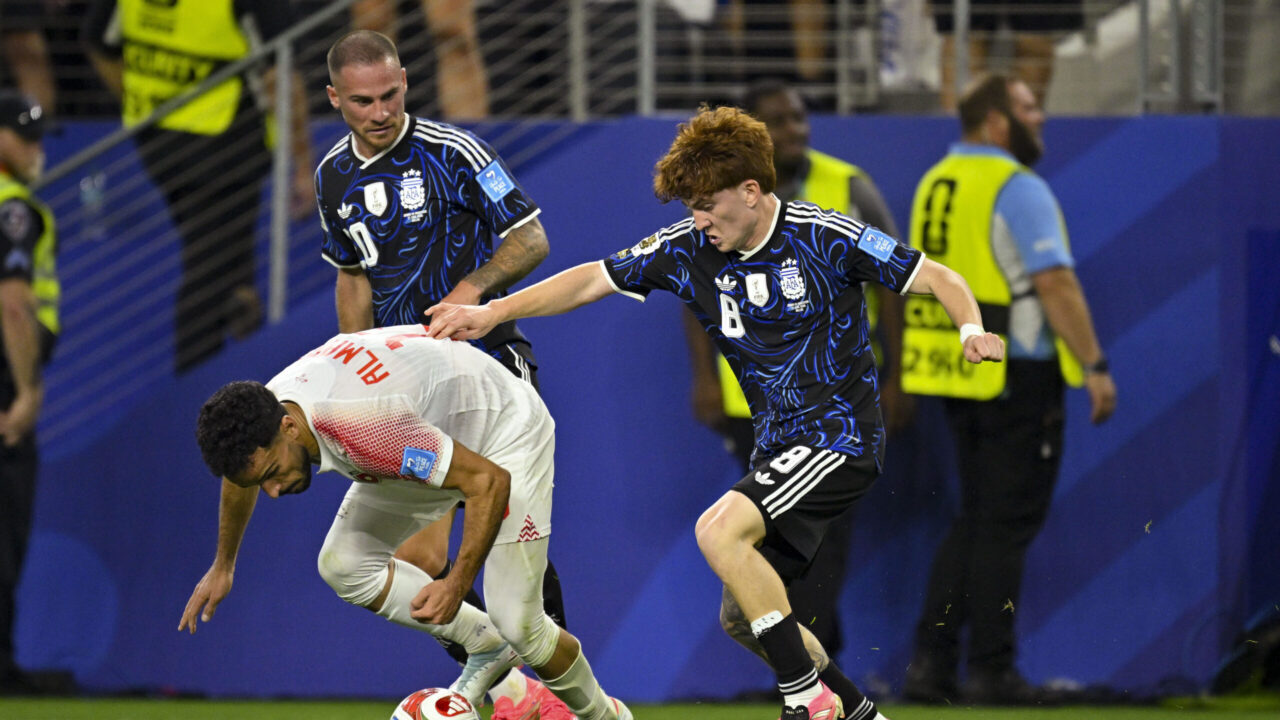
Chelsea have completed the signing of Valentín Barco from RC Strasbourg on a long-term contract running until 2033, in a deal reported to be worth around €40 million.
At 22, the Argentine arrives after a breakout season in Ligue 1 and a place in Argentina’s 2026 World Cup squad.
The biggest question isn’t whether Barco’s talented — it’s where Xabi Alonso will actually use him.
Barco began his career at Boca Juniors, making his professional debut at just 16.
The 22-year-old moved to Brighton & Hove Albion in January 2024, but rather than break into the first team in England, he was sent out on loan
The Argentinian was frst loaned to Sevilla, then to Strasbourg, where manager Liam Rosenior converted him from a natural left-back into a central midfielder.
Strasbourg made the move permanent in 2025, and Barco spent this past season as a near-constant presence for the club, comfortable at left-back, left wing-back, or in central midfield.
Barco now a full Argentina international and was part of the squad that reached the 2026 World Cup final before losing to Spain, though he made only one appearance at the tournament.
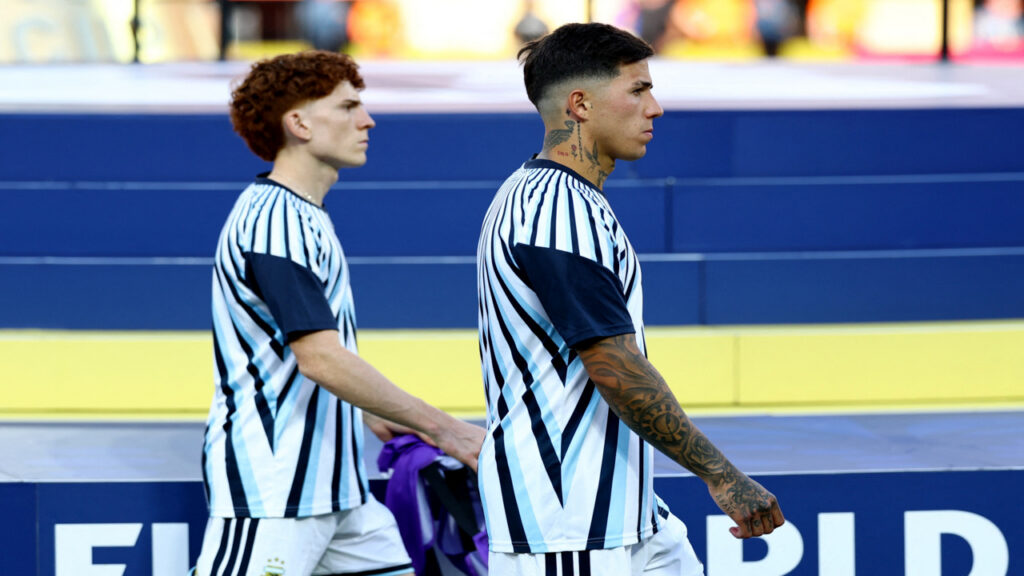
This isn’t really a left-back signing, even though Barco can play there.
Chelsea have already addressed that specific position twice over: Jorrel Hato, signed from Ajax in 2025, provides left-back and centre-back cover.
The club have also reportedly agreed a separate deal worth around €25 million for Rayo Vallecano’s Pep Chavarría as the direct replacement for the departed Marc Cucurella.
Barco’s real value lies in central midfield and left wing-back depth — positions Chelsea also needed to reinforce.
Signing a player capable of covering all of those roles in one, rather than needing separate midfield and left-back reinforcements, fits the recruitment model BlueCo has favored since taking over the club.
The club prioritizes young, multi-positional players on long contracts that spread transfer fees over time.
It’s also not Chelsea’s first dealing with Strasbourg this year: the two clubs, both owned by BlueCo, have already done business once this year on defender Mamadou Sarr.
Barco arrives with the added benefit of familiarity with a sister club’s football department and scouting profile.
This might be his single biggest selling point.
Over the last two seasons he’s featured as a left-back, a left wing-back, a central midfielder, and occasionally further forward on the left flank.
That flexibility opens up several tactical possibilities under Alonso, giving him multiple ways to use the same player depending on the opponent and the system, rather than needing to build a specific role around him.
Valentin Barco isn’t simply a defender who happens to pass well — he’s often the player who starts Strasbourg’s attacks.
Barco is comfortable carrying the ball through midfield lines rather than just recycling possession sideways, and that carrying ability creates overloads that a more conservative deep-lying midfielder wouldn’t generate.
Barco contributed 12 goal involvements in 43 appearances across all competitions for Strasbourg last season — reported as 3 goals and 9 assists.
It is a solid output for a player operating from deep or wide positions rather than as an out-and-out attacker.
That’s a meaningful creative return for a 22-year-old still adapting to a new role in central midfield.

This is the biggest concern heading into the Premier League.
Ligue 1 attackers generally don’t match the physical profile of Premier League forward.
The analysis of his game has flagged a tendency to go to ground to compensate for a relative lack of physicality.
An effective habit at times, but one that raises real questions about how he holds up in aerial duels and defending crosses at the back post against bigger players
When isolated in wide areas, quicker wingers can expose him — independent scouting analysis has been blunt about his 1v1 defending, pointing to a tendency to overcommit or dive into tackles.
That’s part of why he may need protection within Chelsea’s broader defensive structure rather than being left to defend one-on-one in space regularly.
Because he’s a naturally adventurous ball-carrier, Barco can occasionally leave space behind him when he pushes forward.
That isn’t necessarily a flaw on its own — plenty of elite attacking full-backs and midfielders carry the same tendency — but it requires disciplined teammates around him to cover the space he vacates.
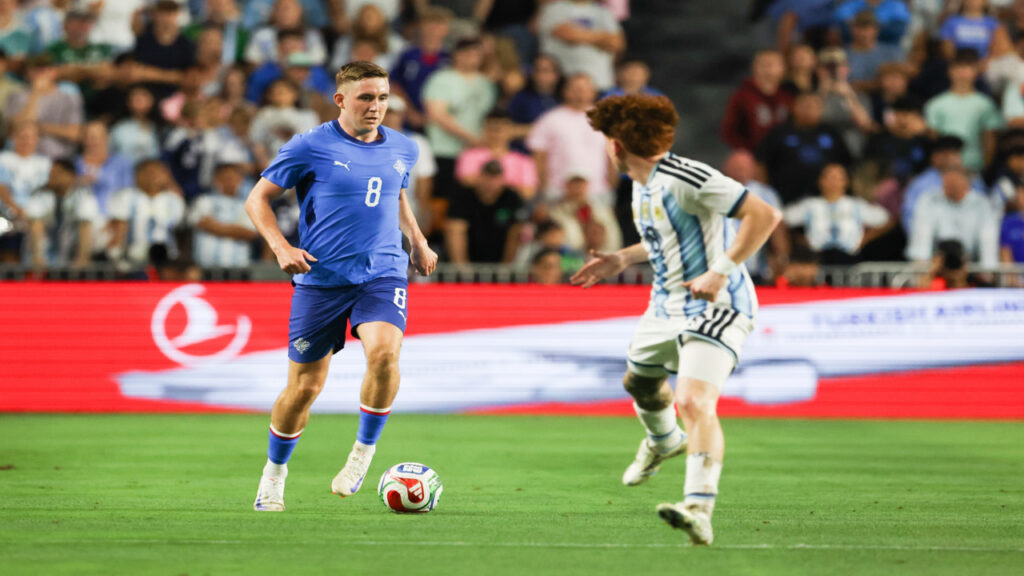
This is probably his long-term home.
It lets him dictate tempo, progress possession from deeper areas, and create chances centrally, while avoiding the repeated defensive isolation that comes with playing as an out-and-out wing-back against Premier League wingers.
A very Alonso-coded role — starting wide, then moving inside during possession to help build central overloads.
It’s similar to how Alonso has previously deployed technically gifted wide players rather than relying on traditional overlapping full-backs.
He can play there, and it’s the position he came through as a teenager, but it’s probably not where his passing range and progressive carrying are maximized.
Alonso’s teams are built around positional rotations, midfield triangles, and building attacks patiently from the back rather than relying on direct, transition-heavy football.
Barco’s game — comfortable receiving under pressure and capable of playing multiple positions across the same defensive line — maps onto that identity well.
Barco’s football IQ and adaptability may end up mattering more to Alonso than his raw pace, which isn’t his standout attribute.
That’s less certain. Chelsea’s midfield and left-sided options are already crowded after a busy summer of incoming and outgoing transfers.
A player converted to central midfield only within the last year or so will likely need time to fully adapt to Alonso’s exact demands, on top of adjusting physically to the Premier League.
He has the profile to earn minutes quickly, but easing him in gradually would be the more conservative — and more likely — approach.
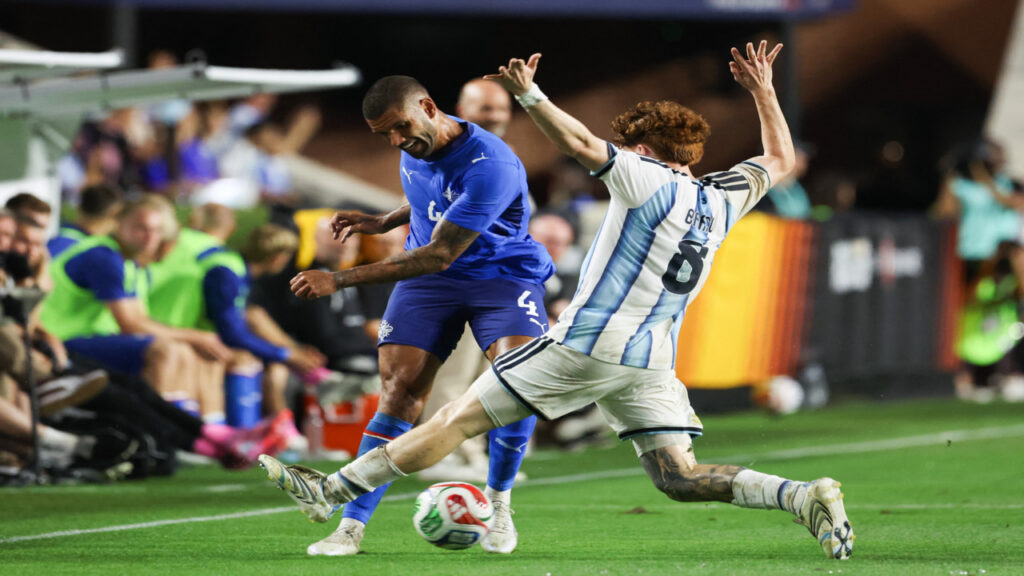
| Attribute | Rating |
|---|---|
| Passing | 9/10 |
| Vision | 8.5/10 |
| Ball Carrying | 9/10 |
| Creativity | 8.5/10 |
| Tactical Intelligence | 8.5/10 |
| Versatility | 9.5/10 |
| Pace | 7/10 |
| Physicality | 6/10 |
| Defensive Positioning | 6.5/10 |
| One-v-One Defending | 6/10 |
Overall Rating: 8.3/10
Best Position: Left-sided central midfielder, with inverted left wing-back as the strongest secondary option.
