
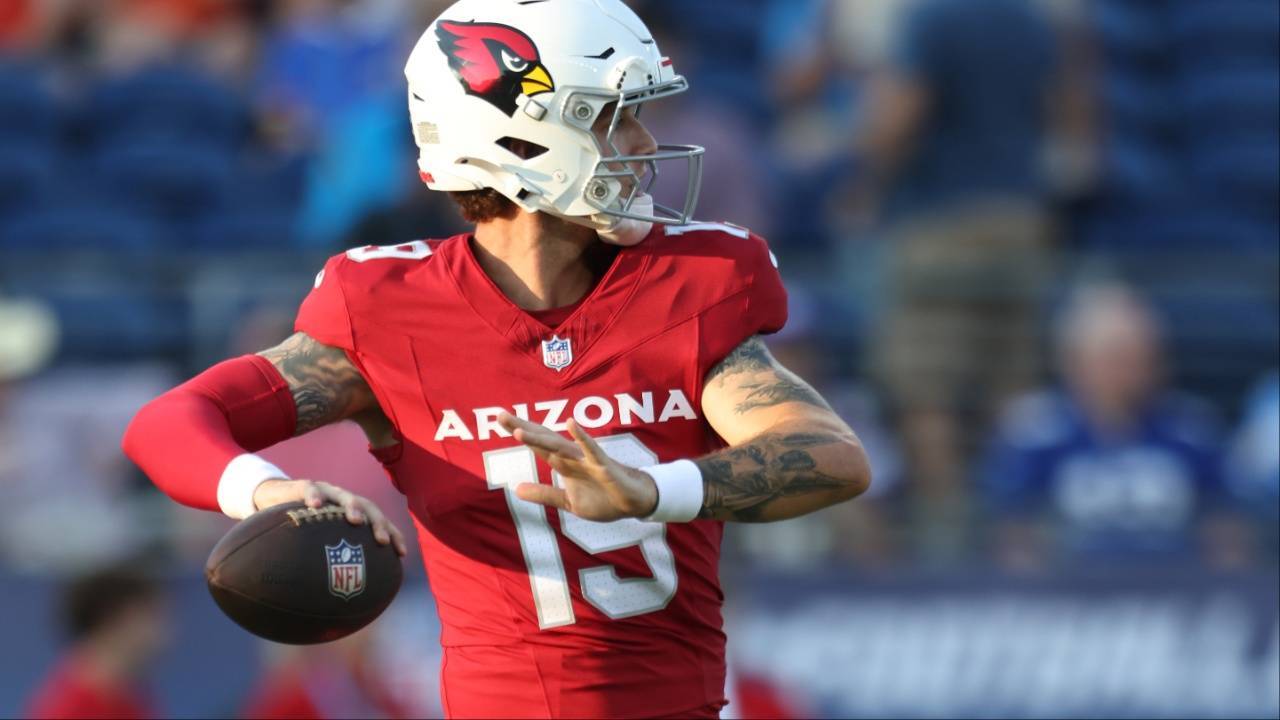
Carson Beck’s first start gives the Arizona Cardinals an opportunity to evaluate their rookie quarterback against the NFL’s fourth-ranked defense by EPA per play. The Los Angeles Rams visit State Farm Stadium on Sunday, November 15, 2026, with Aaron Donald and Myles Garrett threatening Arizona’s injury-depleted offensive line. Beck’s preseason accuracy offered encouragement, but protection recognition, early-down execution, and receiver distribution will provide stronger evidence of his readiness.
The Cardinals enter at 3-6 after Gardner Minshew II suffered a season-ending elbow injury against the Seattle Seahawks. Arizona’s quarterback change followed Jacoby Brissett’s trade to Baltimore, leaving Beck as the team’s third starter in three games. Sunday’s matchup begins an eight-game evaluation that could influence the franchise’s quarterback plans for 2027.
Carson Beck’s First Start Tests His Preseason Promise
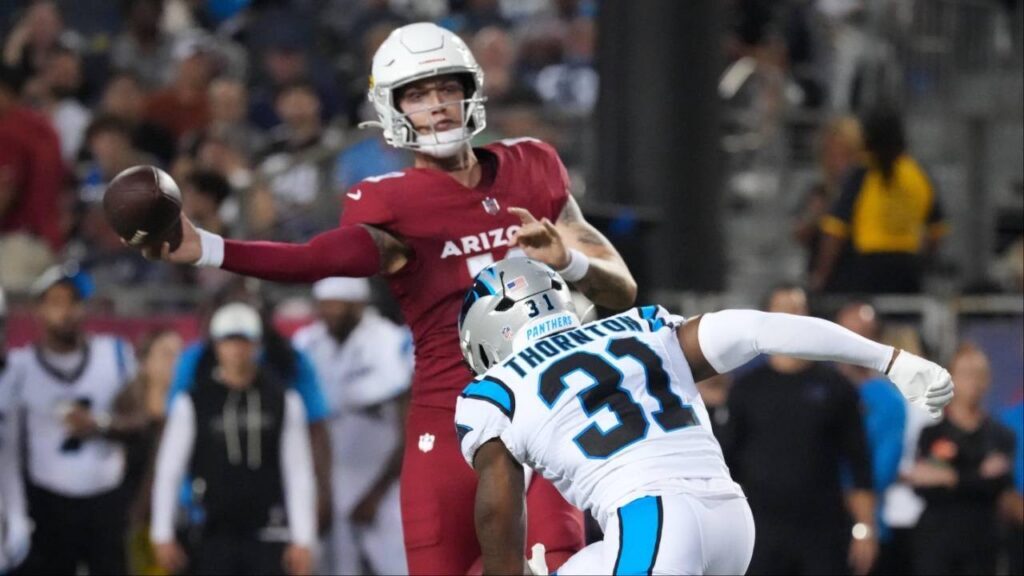
Beck completed 15 of 19 passes for 188 yards and one touchdown against the Carolina Panthers in August. The preseason performance included a 35-yard completion to Jalen Brooks and a touchdown pass to Simi Fehoko. A rib injury subsequently ended his preseason, leaving that exhibition as his only professional game experience.
The 78.9% completion rate and 9.9 yards per attempt demonstrated encouraging accuracy and downfield production. Preseason defenses, however, cannot replicate the complexity or personnel Beck will encounter against Los Angeles. Sunday’s challenge involves maintaining his timing when coverage changes after the snap and defenders collapse the pocket.
Beck completed 72.4% of his passes during his final college season, throwing 30 touchdowns against 12 interceptions. The former Georgia and Miami quarterback brings extensive experience against high-level college competition. NFL defenders will challenge whether his anticipation and decision-making can survive tighter throwing windows.
Coach Mike LaFleur expressed confidence in Beck’s preparation despite his limited practice opportunities with the starting offense. The Cardinals preview included LaFleur’s assessment: “I have all the confidence that he’s ready to roll.” Beck must now convert months of preparation into productive decisions against regular-season competition.
Test 1: Recognizing Pressure Before The Rams Reach Him
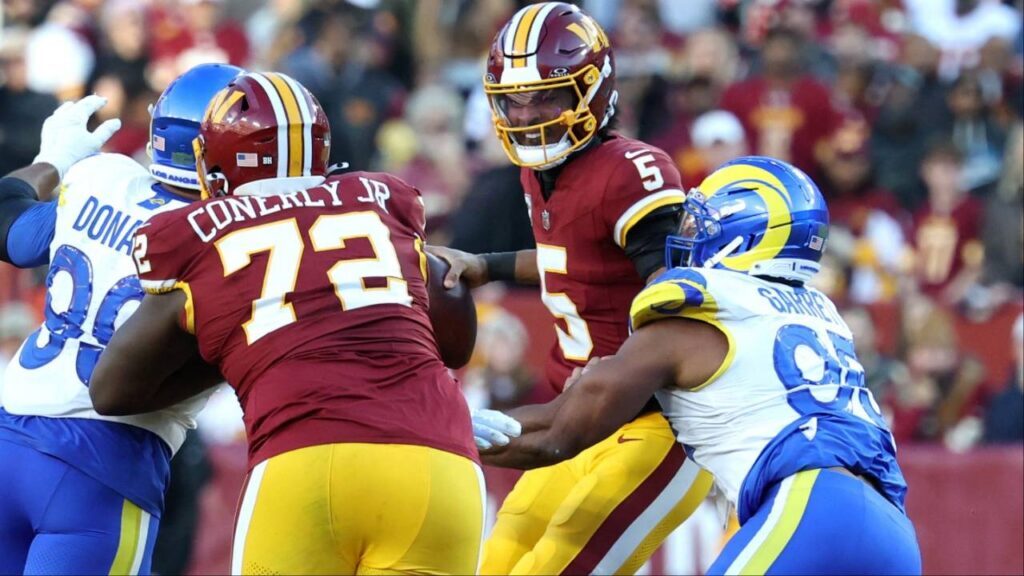
Arizona has allowed 23 sacks through nine games, exposing protection concerns before Beck’s promotion. The Rams feature Donald and Garrett, two accomplished pass rushers capable of attacking different protection assignments. Los Angeles recorded three Garrett sacks against Washington last Sunday, demonstrating the danger awaiting Arizona’s inexperienced starter.
The Rams’ analysis revealed a significant difference when both defenders shared the field against Washington. Los Angeles allowed 5.0 yards per play and recorded four sacks across 23 snaps with Donald and Garrett together. The defense surrendered 8.1 yards per play and recorded no sacks on the other 19 snaps.
Garrett is questionable with a knee injury, although coach Sean McVay expects him to play Sunday. Donald carries no game-status designation, while the Cardinals will be without center Hjalte Froholdt and guard Jon Gaines II. The final injury report also lists Arizona tackle Jayden Williams as questionable with a knee injury.
The Cardinals already lost Paris Johnson Jr. to a season-ending biceps injury, further complicating protection against Los Angeles. A possible protection slide toward Garrett could leave Donald attacking an interior blocker without assistance. Beck must recognize that potential mismatch and identify a quick passing option before pressure reaches him.
Arizona should track Beck’s response to pressure alongside his sack and turnover totals. Throwing the ball away when necessary can preserve field position and prevent manageable situations from becoming costly mistakes. Repeated hesitation against recognizable pressure would raise more serious concerns about his readiness.
Test 2: Keeping Arizona Ahead Of The Chains
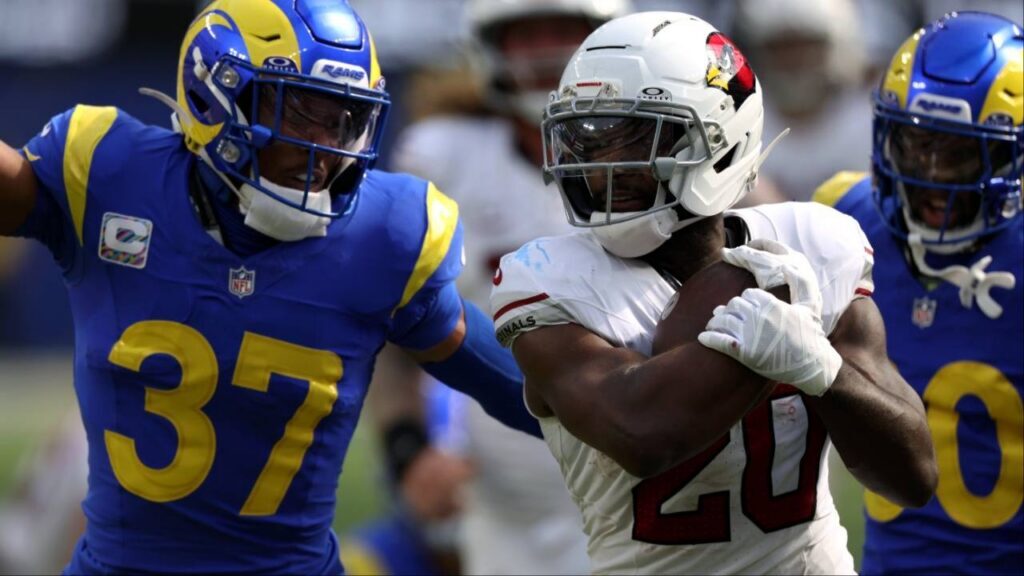
Los Angeles enters Sunday allowing 198.7 net passing yards per game and a 61.1% opposing completion rate. The Rams have surrendered 11 passing touchdowns while recording seven interceptions through nine contests. Their defense has also permitted 36 conversions on 114 third-down attempts, limiting opponents to a 31.6% success rate.
The Cardinals’ offense has produced a 43.2% early-down success rate in a matchup analysis using season-to-date play data. Los Angeles has allowed opponents a 41.8% success rate on those downs, creating a useful benchmark for Sunday’s matchup. The comparison covers rushing and passing plays, rather than isolating Beck’s expected passing performance.
Quick completions, play-action concepts, and productive rushing attempts could create manageable third downs for Beck. Arizona should also give its rookie opportunities to throw on first down before the defense anticipates an obvious passing situation. Consistent gains would limit Garrett and Donald’s opportunities to attack predictable passing plays.
Early-down success provides a useful benchmark because completion percentage alone can conceal ineffective possessions. A short completion on third-and-long might improve Beck’s statistics without extending the drive. Successful first-down throws and manageable second downs would demonstrate greater command of LaFleur’s offense.
The Cardinals defeated the Rams 18-16 on October 18, with Brissett operating the offense. Arizona produced 218 passing yards without a passing touchdown during that victory. Sunday’s rematch offers an opportunity to compare offensive execution while accounting for changes in personnel.
Test 3: Finding Trey McBride Without Forcing Every Throw
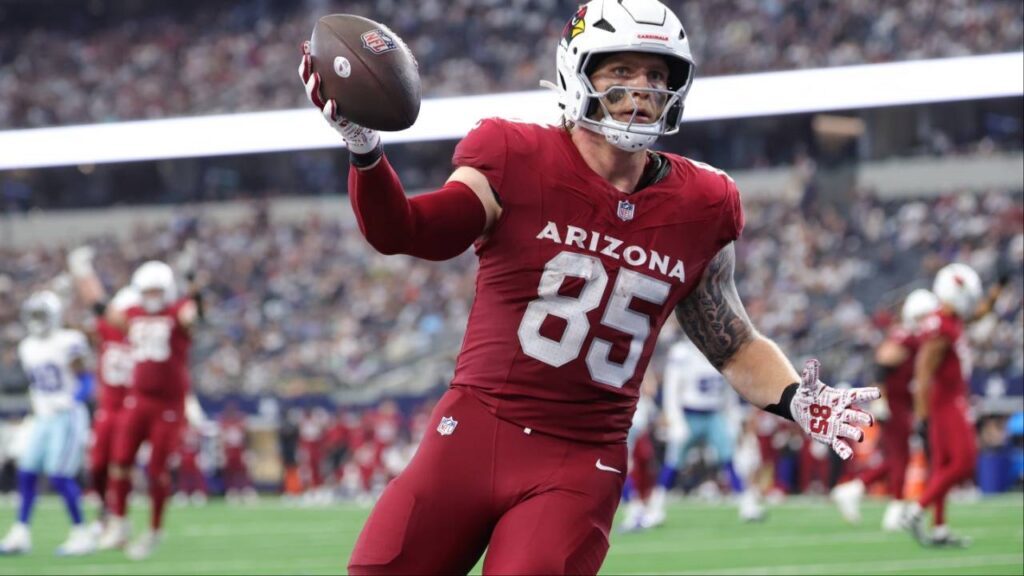
Trey McBride enters Sunday’s matchup with 73 receptions for 598 yards and five touchdowns. The tight end remains the Cardinals’ most productive receiving option, particularly with Michael Wilson sidelined by a season-ending neck injury. McBride’s reliability provides Beck with an established target when defensive pressure disrupts longer passing concepts.
Arizona also lost Kendrick Bourne and Jalen Brooks to injuries, while Marvin Harrison Jr. was traded to Houston. The Cardinals’ receiving group includes Reggie Virgil, Simi Fehoko, Harrison Wallace III, and Devin Duvernay. Limited regular-season production among those options increases the pressure on McBride to sustain the passing attack.
Arizona’s receiver report identifies Fehoko, Virgil, and Duvernay as familiar targets from Beck’s scout-team work. The trio has combined for eight receptions and 93 yards, while Wallace has yet to record a catch. That existing chemistry could help the rookie maintain timing despite the offense’s significant personnel changes.
Beck previously played alongside Brock Bowers at Georgia, providing experience working with an accomplished receiving tight end. McBride presents similar opportunities through intermediate routes and favorable matchups against linebackers or defensive backs. That familiarity could help Beck identify passing windows without waiting for deeper routes to develop.
Los Angeles could devote additional coverage toward McBride, forcing Beck to identify opportunities elsewhere. The evaluation should include McBride’s first-down receptions, Beck’s target distribution, and successful throws to secondary receivers. The Cardinals need evidence that their rookie can operate the entire passing attack rather than depend on one reliable matchup.
Carson Beck’s First Start Begins An Eight-Game Evaluation
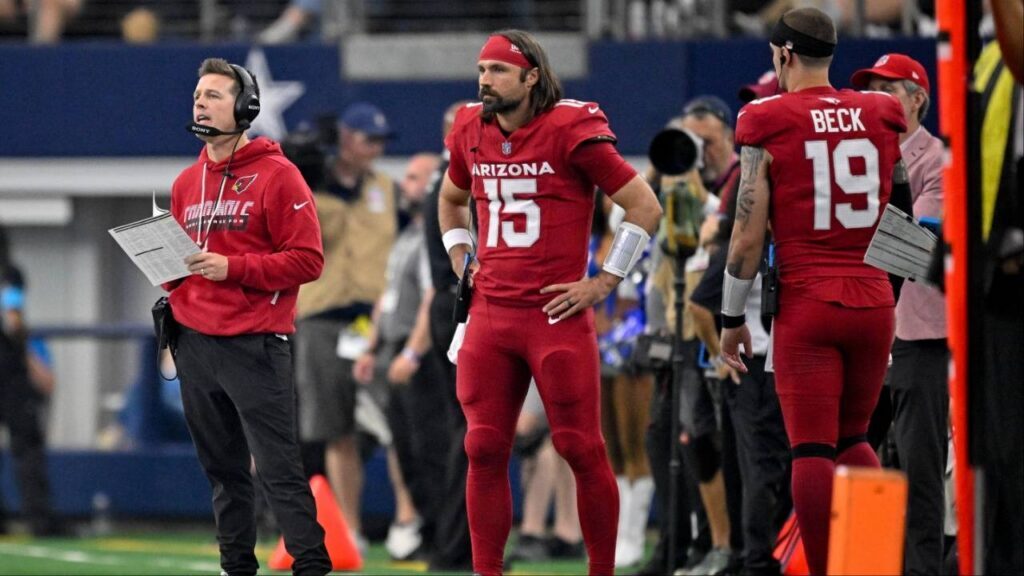
Beck was selected 65th overall in the 2026 NFL Draft, making his development an important part of Arizona’s rebuilding process. The Cardinals have eight remaining games to determine whether their investment could influence the quarterback position next season. Sunday’s performance should establish an initial evaluation rather than settle the organization’s long-term decision.
Arizona also faces broader roster questions after trading Brissett and Harrison while losing several offensive contributors to injuries. The Harrison trade brought 2027 second- and seventh-round selections, with the Cardinals sending Houston a sixth-rounder alongside the receiver. That additional second-round selection could help address offensive weaknesses or provide flexibility in another quarterback search.
Beck’s development may determine whether those resources support an existing quarterback or another potential starter. Improved protection recognition, early-down efficiency, and decision-making could justify further investment in his supporting cast. Repeated mistakes across multiple starts would strengthen the argument for exploring alternatives.
End Of My Carson Beck’s First Start Rant
Arizona has spent much of 2026 reacting to quarterback changes rather than building continuity around one starter. Beck now inherits an offense missing several important contributors while facing an opponent equipped to exploit protection mistakes. The Cardinals must recognize those limitations without lowering expectations for the decisions its rookie controls.
LaFleur cannot protect Beck through an entirely conservative approach and still expect to learn whether he can lead the offense. The rookie needs opportunities to anticipate throws, challenge coverage, and respond when defensive adjustments disrupt the original plan. Avoiding mistakes matters, but excessive caution could conceal the qualities Arizona needs to evaluate.
The Cardinals’ front office must also accept responsibility for the circumstances surrounding Beck’s promotion. The Brissett trade improved future draft flexibility, but subsequent injuries exposed the team’s limited quarterback depth. Beck deserves a meaningful evaluation, while management must answer whether the supporting roster gives him a reasonable opportunity to succeed.
