
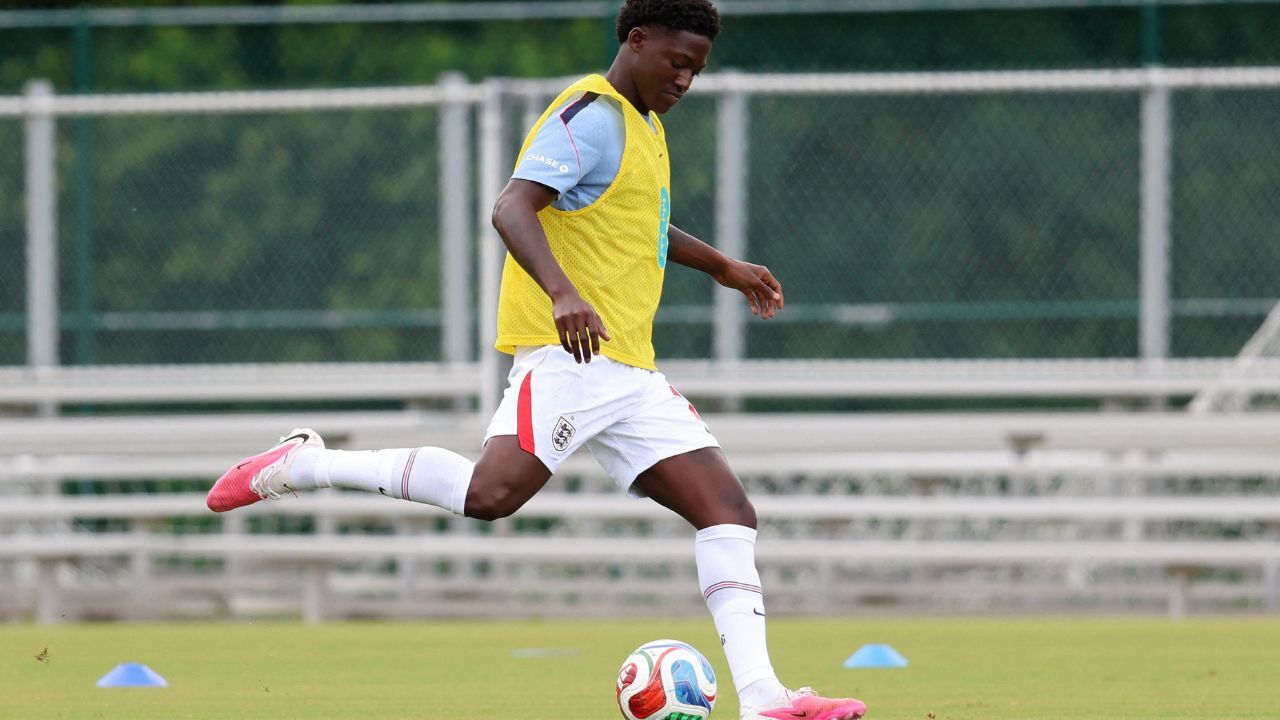
Manchester United has completed the transfer of Carlos Baleba from Brighton, confirming a deal worth a reported £70m and signing the Cameroon international through June 2031. He is United’s third midfield addition of the summer, following Youri Tielemans and Andrey Santos.
For most fans, the immediate question is simple: does this end Kobbie Mainoo’s time as a regular starter? The more useful question is different. Baleba doesn’t necessarily replace Mainoo — he changes what role Mainoo is asked to play. That’s the argument this piece makes, and it’s worth unpacking properly rather than leaving it as a throwaway line.
United’s own announcement confirms the length of the deal and Baleba’s status as the club’s headline midfield arrival this summer. The move follows more than a year of on-off interest. United first explored a deal, and Brighton held out for a fee close to their valuation before the transfer was finally agreed this week.
Baleba arrives with a reputation built on ball-winning, physicality, and ground coverage — qualities United’s midfield has lacked in recent seasons.
At 22, he’s still developing, but he’s already regarded as one of the Premier League’s most promising defensive midfielders.
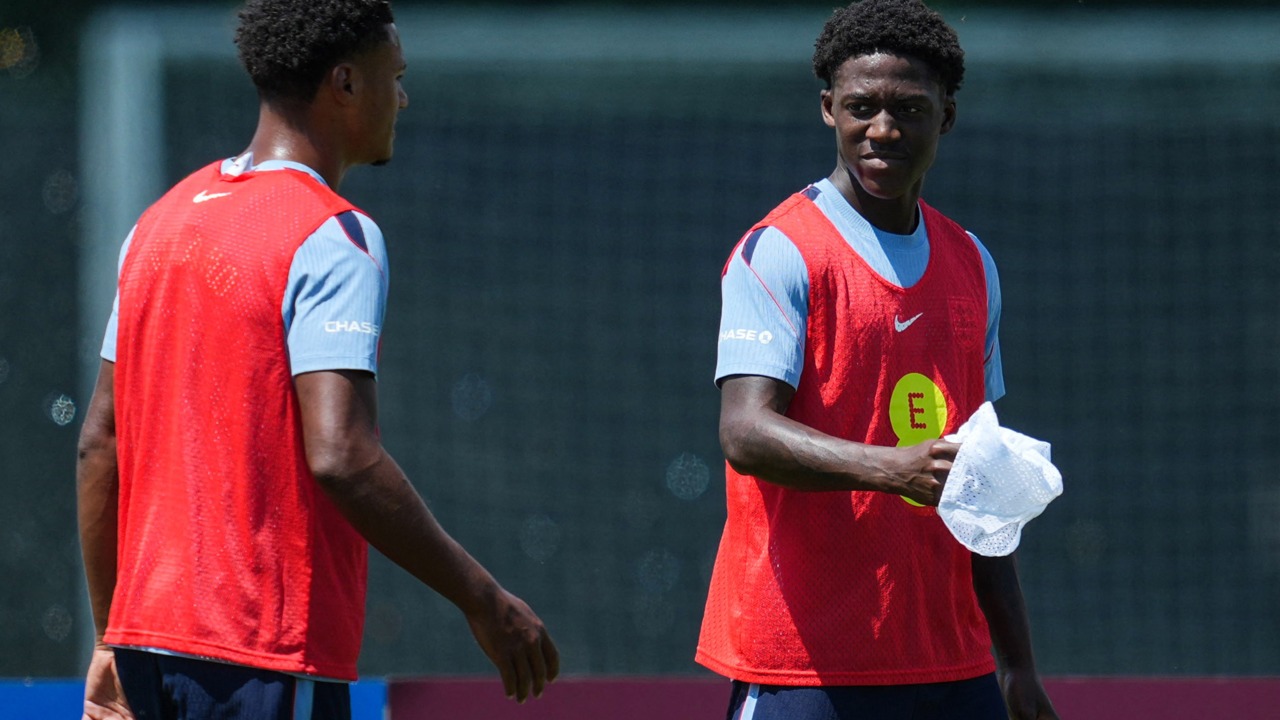
Before getting into tactics, it helps to see where the two players’ games actually differ. This isn’t a value judgement — it’s why they’re suited to different jobs on the pitch.
| Attribute | Carlos Baleba | Kobbie Mainoo |
|---|---|---|
| Ball-winning | Strong | Strong |
| Physicality | Excellent | Good |
| Ball carrying | Strong | Strong |
| Defensive coverage | Excellent | Moderate–Good |
| Progression (line-breaking passes/carries) | Good | Excellent |
| Creativity | Limited | Better |
| Final-third involvement | Moderate | Better |
The overlap matters as much as the contrast. Both Baleba and Mainoo can win the ball and carry it. This is why they can function as a pair rather than as direct rivals for one role. Where they genuinely diverge is at the defensive and creative ends of the pitch: Baleba is the stronger last line of midfield cover, while Mainoo is the more effective creator once United reaches the final third.
That split is the entire basis for the tactical argument below.
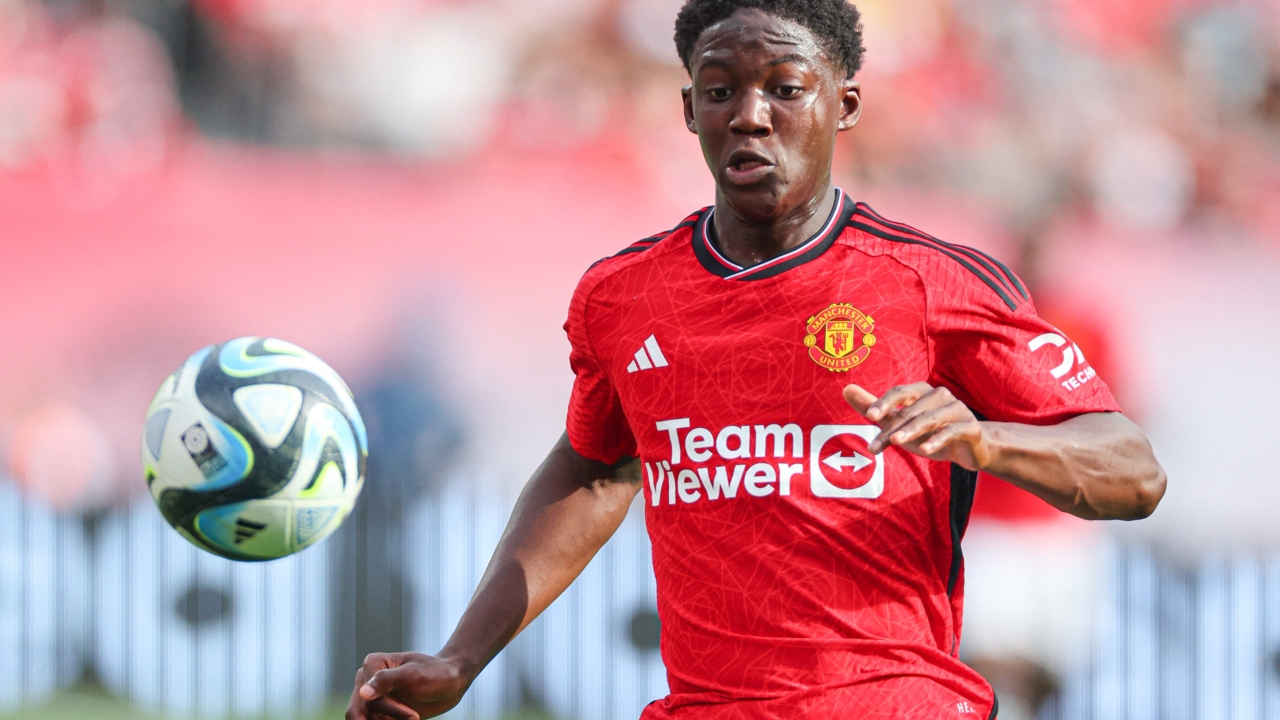
Mainoo remains an important player for manager Michael Carrick. According to Manchester United’s own player profile, he “has become one of the first names on the teamsheet under Carrick.” Mainoo scored the winner against Liverpool that secured Champions League qualification for 2026/27.
What changes with Baleba’s arrival is competition, not necessarily standing.
Carrick now has more central-midfield options than at any point in recent seasons. Baleba, Youri Tielemans, Andrey Santos, Mainoo, Bruno Fernandes, and Manuel Ugarte are all fighting for two or three pivot spots.
That depth means Mainoo may not start every match. It also means Carrick can tailor his midfield to the opponent — something United hasen’t been able to do reliably in recent years.
This is the part most coverage skips. It isn’t enough to say the two “complement” each other — the question is when and why that pairing works, and when it doesn’t.
Without Baleba on the pitch: Mainoo has often needed to cover more defensive ground himself, which limits how far forward he can push and how much risk he can take on the ball.
With Baleba behind him: Mainoo gets license to progress the ball into advanced areas, because Baleba’s defensive coverage (his strongest attribute, per the table above) covers the space Mainoo vacates.
With Bruno Fernandes ahead of both: Mainoo can sit as one of two deeper midfielders rather than the most advanced one. He will take on a progression role rather than a creative one. He will play to his strength as a carrier and line-breaker rather than his final-third instincts.
Against stronger opposition, or away from home: Baleba’s defensive solidity likely becomes the priority pairing, with Mainoo more likely to rotate in and out depending on the game state.
Against deep, low-block defences: Mainoo’s technical quality and final-third involvement become more valuable than Baleba’s ball-winning, since there’s less transitional play to defend against.
A few likely midfield combinations follow from this:
Recent coverage of United’s midfield rebuild has made a similar point. Baleba looks built to complement Mainoo rather than simply replace him, with the exact pairing shifting the team’s tactical balance from match to match.
None of this erases the real risk. Before Baleba’s arrival, United already had five senior midfield options competing for two or three starting spots. Adding a sixth, especially one signed for a club-record midfield fee, tells its own story about where Mainoo sits in the pecking order right now.
With Champions League football returning to Old Trafford, Carrick will need to rotate across multiple competitions — which cuts both ways. It reduces any single player’s guaranteed minutes, but it also means Mainoo is likely to feature regularly, just not automatically in every match.
What’s your take? Post it in our free sports community at stadiumrant.app, or download Stadium Rant on the App Store.
The more accurate framing isn’t “Baleba replaces Mainoo.” It’s “Baleba forces Carrick to decide what Mainoo’s best role actually is.” The statistical and tactical case above is why that role is likely to shift toward progression and final-third involvement, not away from the team entirely.
With Baleba anchoring the midfield, Mainoo could play with more freedom to carry the ball into advanced areas. With Tielemans alongside him, he might take on more responsibility for line-breaking passes. With Santos in the pivot, he could be pushed even higher up the pitch.
Baleba’s arrival makes Mainoo’s place less automatic — but it may ultimately give Carrick more ways to get the best out of him, rather than fewer.
