
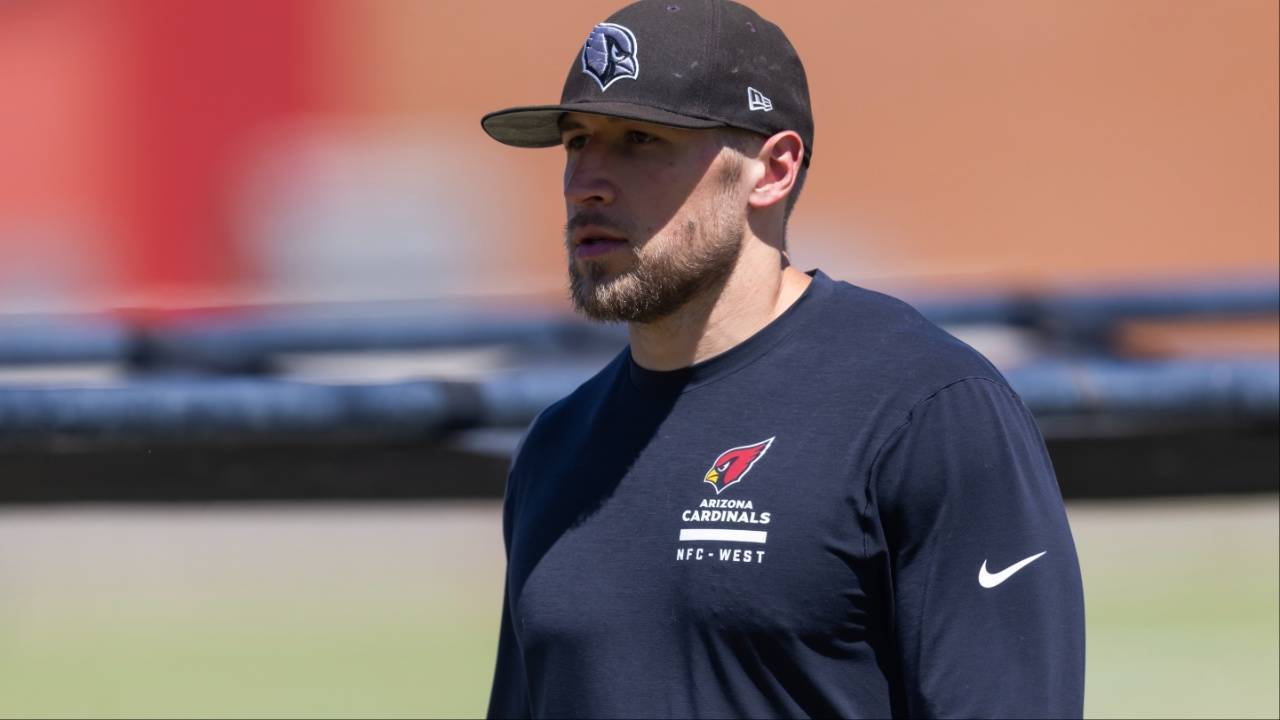
The Arizona Cardinals fired defensive coordinator Nick Rallis, with head coach Mike LaFleur announcing the move Monday, November 23, 2026. Interim coordinator Teryl Austin takes over for the final six games following Sunday’s 34–7 loss to the Kansas City Chiefs. Arizona fell to 3–8 with its third consecutive defeat, leaving LaFleur to evaluate how much a different defensive approach can accomplish.
LaFleur sought a “fresh perspective, a fresh voice” in Monday’s remarks after the Cardinals surrendered 435 yards and 27 first-half points. Austin inherits a defense that repeatedly struggled to end possessions, allowing opponents to turn manageable drives into scoring opportunities. Third-down stops give LaFleur a measurable way to judge whether the coordinator change improves execution with the same personnel.
Why The Nick Rallis Firing Came Now
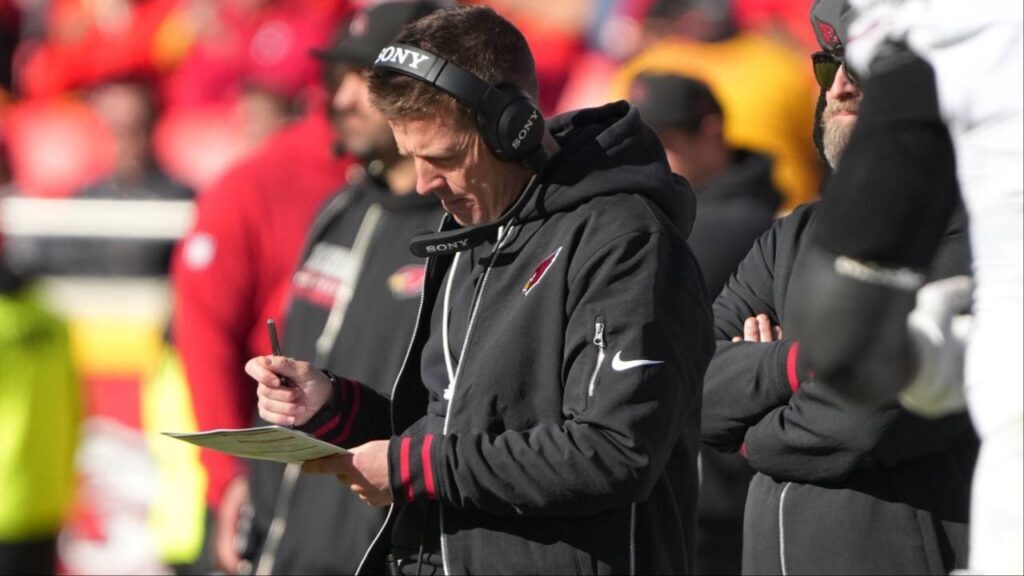
The Los Angeles Rams beat Arizona 34–6 in Week 10, preceding another game in which the defense allowed 34 points. Opponents reached 30 points in eight of 11 games, pushing the scoring defense to 31st at 29.4 points allowed per game. The Cardinals allowed 355.2 yards per game, with their yardage ranking at 26th and their defense last in opponent QBR through Week 11.
The PHNX tally put Arizona third from the bottom with 64 quarterback pressures, while nine takeaways ranked fifth-lowest. Rallis joined Jonathan Gannon’s staff in 2023 and remained through the offseason coaching change. LaFleur acknowledged that his late hire limited the pool of replacements, explaining how Rallis stayed in place despite the change at head coach.
The Cardinals’ defense had been healthier than the offense, although cornerback Will Johnson’s season-ending neck injury narrowed the available coverage options. LaFleur acknowledged offensive failures after the offense scored only 16 points across three games. The opening drives Sunday still showed how quickly the defense could widen a deficit before a struggling offense had established any rhythm.
The Defense Was In Trouble Before Fourth-And-1
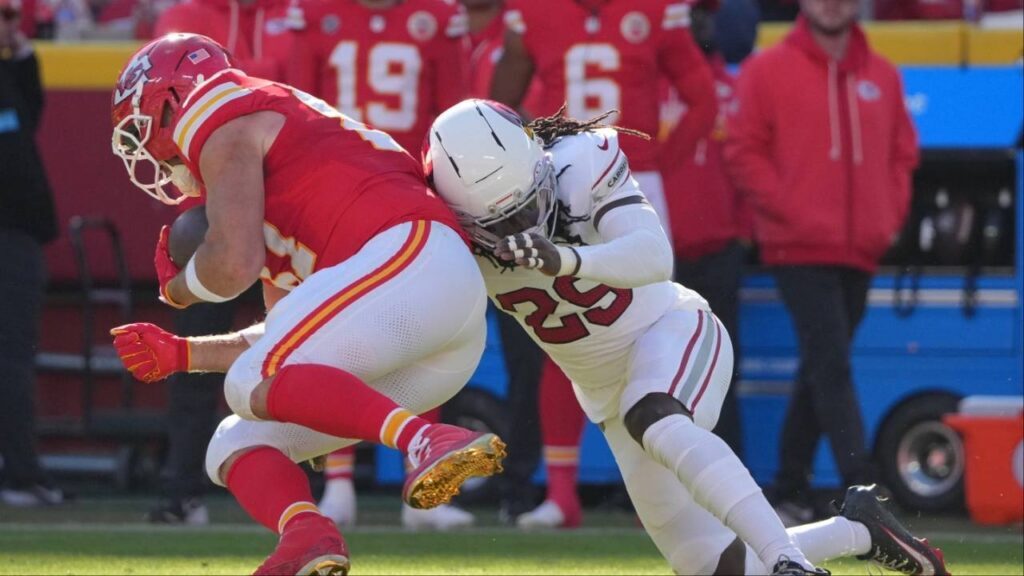
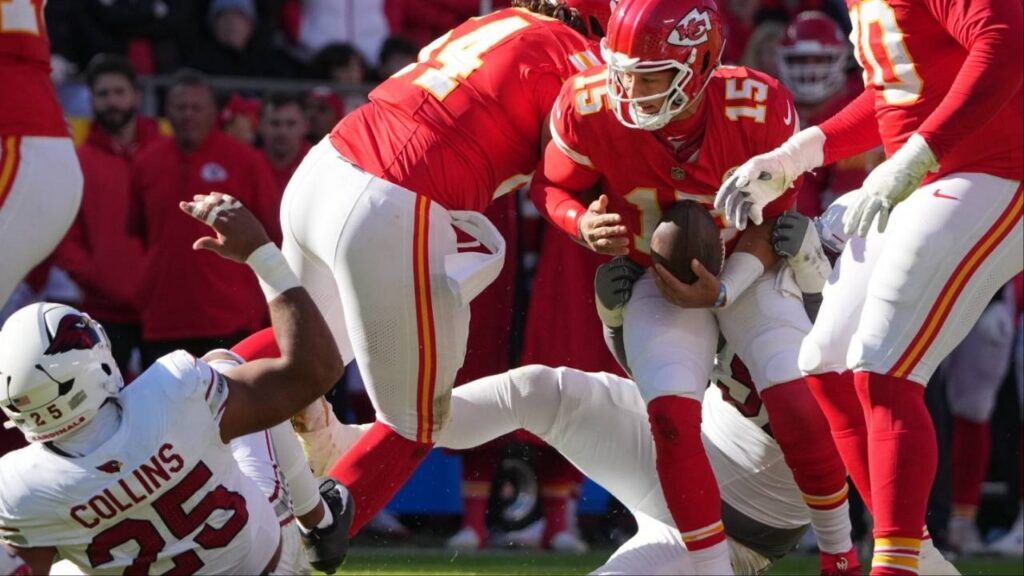
The Week 11 recap traced the failed fourth-and-1 before halftime, which gave Kansas City possession 37 yards from the end zone. Travis Kelce caught a 22-yard touchdown during that possession, turning the failed gamble into a more difficult deficit. The Chiefs had already opened with 72- and 80-yard touchdown drives, showing that favorable field position explained only part of the damage.
The NFL gamebook shows Rashee Rice converting third-and-5 on the opening drive, while Arizona yielded a fourth-down conversion on the second. Patrick Mahomes later found Rice for nine yards on third-and-8 from the 12, preserving another scoring opportunity. Emmett Johnson scored on the next snap to finish a 16-play possession that offered the defense repeated chances to escape.
The official box score credited Mahomes with 324 yards and three touchdowns as Kansas City converted seven of 13 third downs. Mahomes sat out the fourth quarter after the offense had already established control. The Week 10 recap documented five sacks of rookie Carson Beck as Los Angeles erased a 6–3 deficit and the Cardinals allowed 31 unanswered points. Beck’s offense went 0-for-6 on third down, while Sunday’s defense allowed five conversions on eight first-half attempts.
What Teryl Austin Can Change In Six Games
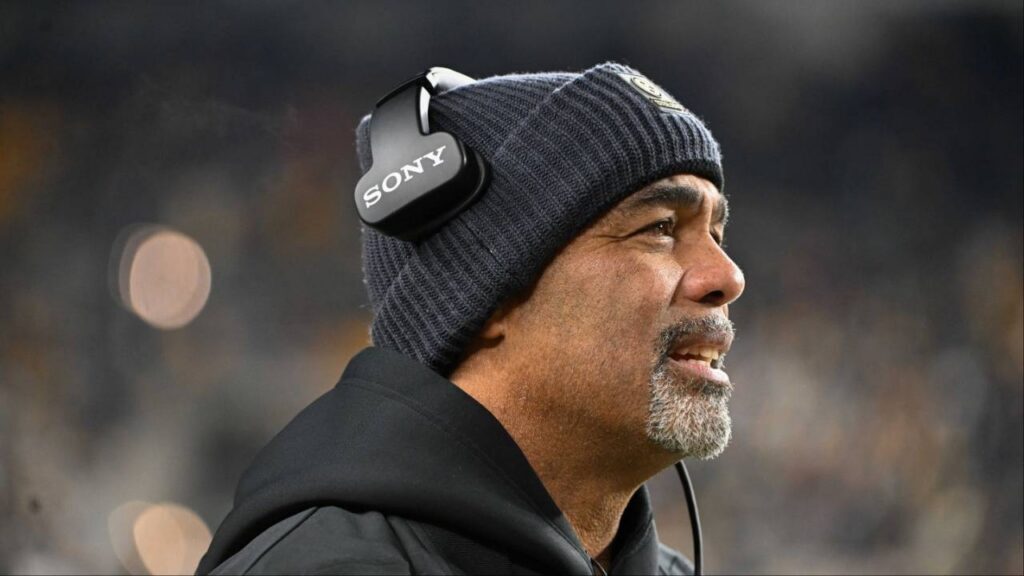
Austin, 61, previously coordinated the Detroit Lions, Cincinnati Bengals, and Pittsburgh Steelers before the March hire brought him back. Austin coached the secondary on the 2008 Super Bowl team, giving him experience with an earlier successful staff. Detroit led the league in run defense in 2014, and the coaching biography lists a third-place scoring finish. Pittsburgh employed Austin as coordinator from 2022 through 2025, providing a more recent basis for evaluating his approach.
Austin’s early defenses with the Steelers often paired four rushers with disguised coverage, an approach documented in the Post-Gazette’s film review. Austin added more blitzes in 2025, adjusting how the defense threatened protection. The Cleveland film study showed Patrick Queen and Cole Holcomb drawing protection inside, leaving Nick Herbig an isolated matchup for a sack of Dillon Gabriel.
Austin could send linebacker Mack Wilson Sr. through an inside gap, potentially drawing help away from Josh Sweat on the edge. Walter Nolen III recorded his second sack Sunday, with the team’s recap dating his first to Week 4. Nolen’s ability to win inside without an extra rusher would give Austin more freedom to protect the secondary.
Budda Baker can help disguise coverage before the snap, with coordinated safety rotations making an inexperienced corner’s assignment harder for quarterbacks to identify. Extra rushers leave fewer defenders available to help, making the timing of those calls especially important. Arizona should test whether four-man pressure can support tighter coverage before relying on additional rushers to manufacture disruption.
How LaFleur Should Judge The Interim Defense
The Washington Commanders visit Glendale on November 29, with the official schedule listing kickoff at 2:25 p.m. Arizona time. Austin gets one practice week before that first test and two games before the Week 14 bye. The break offers time to compare third-down calls, followed by four games to test adjustments against different opponents.
The Week 11 notes listed opponents at 51-for-120 on third down before kickoff, and Sunday added seven conversions on 13 attempts. The Cardinals enter Week 12 allowing a 43.6% third-down conversion rate, giving Austin an established baseline. Early-down stops would help Austin create longer third-down attempts and give his pass rush more time to work.
LaFleur should track how often Arizona forces third-and-7 or longer, then judge whether the defense finishes those possessions. Third-down conversion rate measures the result, while the distance split helps explain whether early-down defense created a favorable situation. A lower conversion rate carries more weight if the defense consistently forces longer attempts instead of depending on dropped passes.
Austin will be considered for the permanent job in 2027, although LaFleur plans a broader search and wants the defense functioning as “11 as 1.” LaFleur also called for coaching that develops younger players, making individual progress part of the evaluation. Clearer assignments should help defenders react sooner, giving Austin a chance to show whether hesitation has limited their production.
End Of My Nick Rallis Firing Rant
The Nick Rallis firing was warranted because the Cardinals surrendered sustained scoring drives even when opponents had to travel most of the field. Austin’s audition should begin with early-down execution and whether Nolen disrupts more plays inside. Sweat’s opportunities should improve if blockers need help there, while Baker’s secondary would have less time to cover.
Arizona should hold opponents below a 43.6% third-down conversion rate over Austin’s six games, with regular four-man pressure making that progress more convincing. LaFleur can evaluate pressure and conversion rates together while checking whether younger defenders handle their assignments more consistently. A coordinated defense would give the coaching change substance beyond the initial reaction to a dismissal.
