
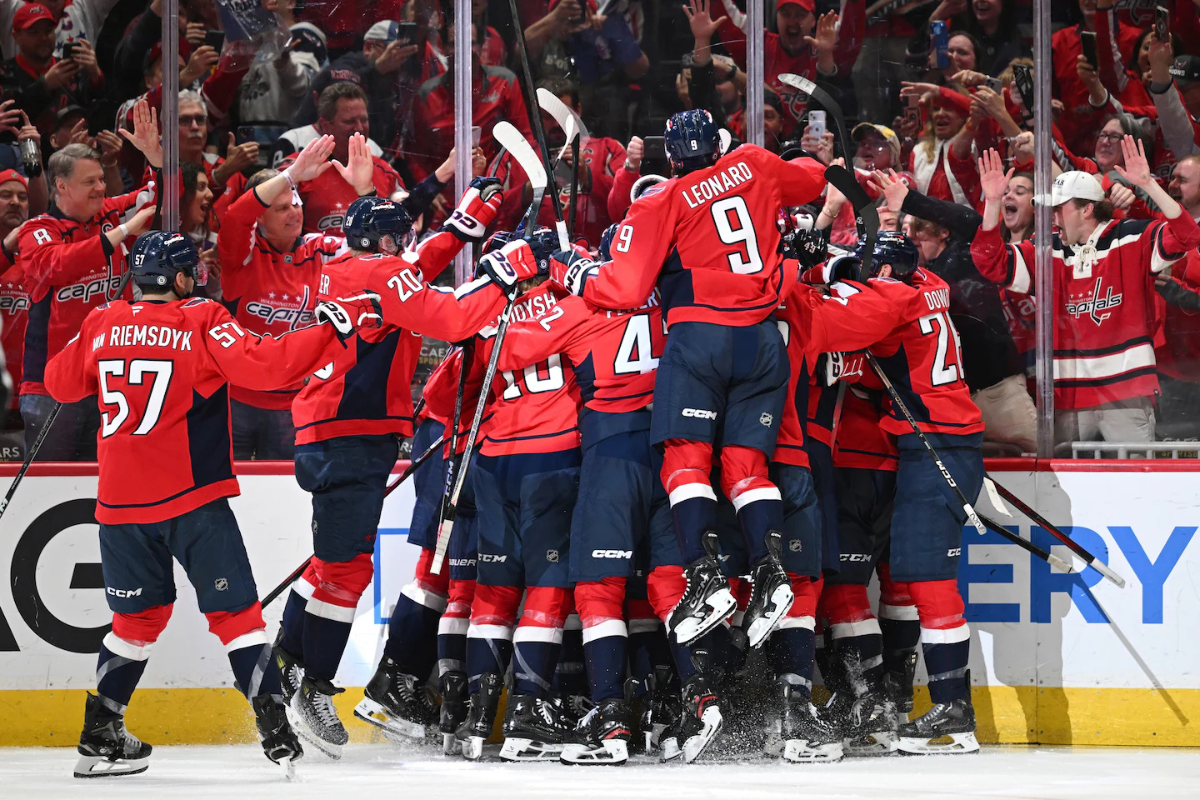
The history has been written. Now it’s time to build what’s next.
With the NHL Draft just days away and free agency approaching on July 1, the Washington Capitals enter a defining week in their retooling process. After an incredibly successful regular season, earning the Caps a return to the playoffs in 2025, the focus inside the front office isn’t on chasing headlines (or all-time goals), it’s on sustaining progress, shoring up weaknesses, and setting the course for a new era of consistent contention.
This is a team that achieved a lot in 2024–25. Now it needs to evolve, not just revert.
Washington holds the 27th overall pick in the first round, along with four additional selections later in the draft. The team’s prospect pipeline is in far better shape than it was just a few seasons ago, but there’s still a clear need to inject more speed, two-way skill, and size, particularly at forward and on the right side of the blue line.
Expect the Capitals to lean on a best-player-available approach in the first round, but with a quiet emphasis on adding sizable forwards and defensemen who can drive pace and transition effectively. While the organization is already deep in offensive skill, with forwards like Andrew Cristall, Patrick Thomas, and Terik Parascak in the system, there’s a noticeable lack of size among the group. Outside of Ilya Protas (the brother of current Cap Aliaksei Protas) and Eriks Mateiko, Washington has very few forward prospects above 6’4″ in the pipeline.
On defense, the need is even more specific. The Caps could use help on the right side of their prospect pool, where Vincent Iorio stands as the only right-shot defenseman over 6’3″. With a surplus of left-shot defenders already in the system and organization, targeting a tall, right-handed blueliner, especially in a draft deep with forwards, could be a savvy play in the opening round.
If Washington holds onto its first-round pick Friday night, several prospects could fit the mold of what the Capitals need.
Among right-shot defensemen, Henry Brzustewicz and Blake Fiddler stand out as strong two-way options with size (both over 6’2″) and poise under pressure. On the left side, Simon (Haoxi) Wang, Cameron Reid, and Sascha Boumedienne offer mobility and transitional upside, with Wang drawing attention for his 6’6″ frame and surprisingly fluid skating.
Up front, sizable forwards like Daniil Prokhorov and Milton Gästrin are names to monitor. Prokhorov (6’5″, 209 lbs) is widely considered the top Russian prospect in this class, boasting a mix of speed, skill, and secondary scoring potential, traits that would immediately balance Washington’s forward depth. Gästrin may only be 6’1″, but he plays with tempo and vision, emerging as a creative playmaker out of Sweden.
With limited cap space but a clear understanding of the roster’s needs, GM Chris Patrick and company will be selective.
The Caps could use:
Washington needs a goal scorer, but is going into Alex Ovechkin’s final season under his current contract. This is about precision, not noise.
The Capitals have been linked to young forward JJ Peterka of the Buffalo Sabres and veteran Brad Marchand in free agency. Peterka is an RFA, and Buffalo’s asking price is a right-handed defenseman, according to reports. While Marchand is coming off a cup with the Florida Panthers, for a team that wants to get younger, a 37-year-old Marchand may not be the best option. Peterka’s fit would allow McMichael to be that 3C, but the asking price might be a lot for a team short of right-handed blueliners.
Last season gave the coaching staff a better sense of who is ready and who might be expendable. McMichael and Protas took a leap. Ryan Leonard debuted late in the season after the conclusion of his college season. But others? Not as clear.
Decisions loom on aging veterans, underwhelming depth players, and whether to free up minutes for prospects.
Several players on the current roster are entering the offseason squarely on the bubble. Sonny Milano, despite showing flashes in past seasons, missed almost the entire year due to injury and carries a $1.9 million cap hit. With younger, cheaper forwards like Ethen Frank, Ivan Miroshnichenko, and Bogdan Trineyev vying for ice time, Milano could be a buyout candidate if there’s no trade market.
Trevor van Riemsdyk also faces an uncertain future. While he’s been a reliable presence on the blue line, his $3 million cap hit and limited upside make him a potential trade chip, especially if someone like Ryan Chesley makes a strong camp push.
Up front, the team will need to make decisions on veterans like Lars Eller and Anthony Beauvillier. Eller’s leadership is respected, but his age and declining production suggest that his roster spot could be reallocated to a younger center, such as McMichael. Beauvillier might return on a short-term deal, but only if there is sufficient cap space and a defined role for him.
If the front office is looking to shake things up, they might explore a trade for a young, underutilized winger like Jason Robertson out of Dallas. While he hasn’t been linked like Peterka, a trade like that could inject some scoring depth and help bridge the gap between the aging core and the next generation in DC.
All told, tough decisions are ahead, but they’re the kind that could define the next chapter for this franchise.
One key difference in this offseason: the Capitals aren’t planning around nostalgia anymore. With Ovechkin’s chase in the rearview and TJ Oshie and Nicklas Backstrom off the books, the front office can allocate money and minutes based on who helps win now and later.
That means smarter cap usage, fewer sentimental signings, and possibly one or two uncomfortable roster moves in the name of long-term structure.
Washington has approximately $9.375 million in cap space to utilize and help build a potential contender this season, as well as a competitive team for the future, even after Ovechkin retires.
The past is enshrined: Ovechkin’s records, the 2018 banner, that unforgettable fountain celebration in Georgetown. But the future? That’s still on the Hill, waiting for debate.
This week, Washington’s front office enters the chamber for a new session. No filibustering, no ceremonial bill signings, just decisions that could shape a recharged contender. With the draft and free agency on deck, they’re not looking to spin PR; they’re looking to draft policy.
Forget partisan gridlock: this is a roster that requires bipartisan effort, skill, and grit, as well as youth and experience, cap space, and common sense.
The Caps aren’t rebuilding the monuments; they’re constructing the next great arena campaign. (Hopefully without needing a Metro delay to get there.)
The city of power is watching, the fanbase is buzzing, and the clock on the offseason, like a Senate hearing, is officially in session.
If you love sports, download Stadium Rant from the Apple App Store and join one of the fastest-growing social sports communities. Be sure to follow us on socials too — you can find all our profiles on our Linktree.
