
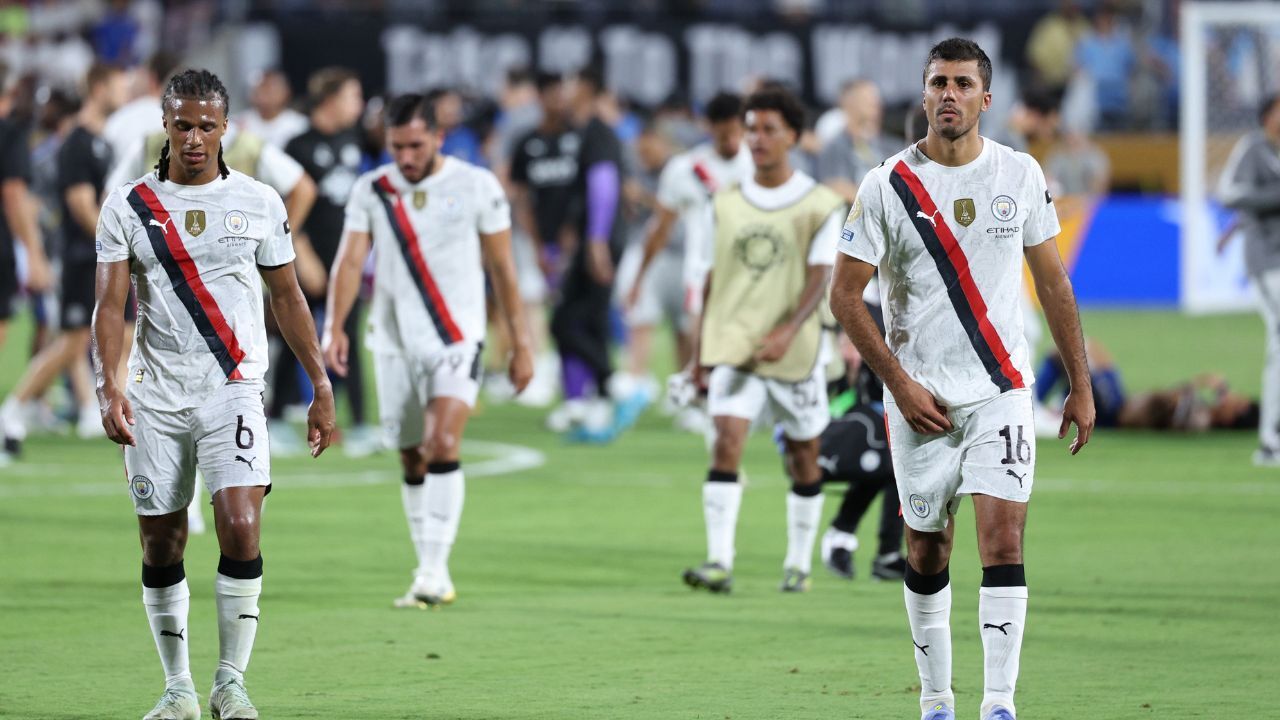
The Manchester City midfield problem was hard to miss on Sunday. Enzo Maresca’s side opened their Premier League campaign with a dramatic 2-1 win over Bournemouth. They scored twice in the final seven minutes to complete a comeback at the Etihad. It was the kind of result that will settle nerves after a chastening 3-0 defeat to Arsenal in the Community Shield. City’s comeback solved their immediate result problem. It did not solve their midfield problem.
Bournemouth took a deserved lead through Marcus Tavernier in the 26th minute. City spent long stretches of the game struggling to find a way past a well-organized visiting defense. Erling Haaland went close on several occasions without breaking through. The rescue act finally arrived late.
Marcus Guéhi headed home substitute Rayan Cherki’s corner in the 84th minute. Josko Gvardiol converted another Cherki assist in stoppage time to complete the turnaround. Gvardiol’s finish was initially ruled out for offside, before a VAR review confirmed the goal.
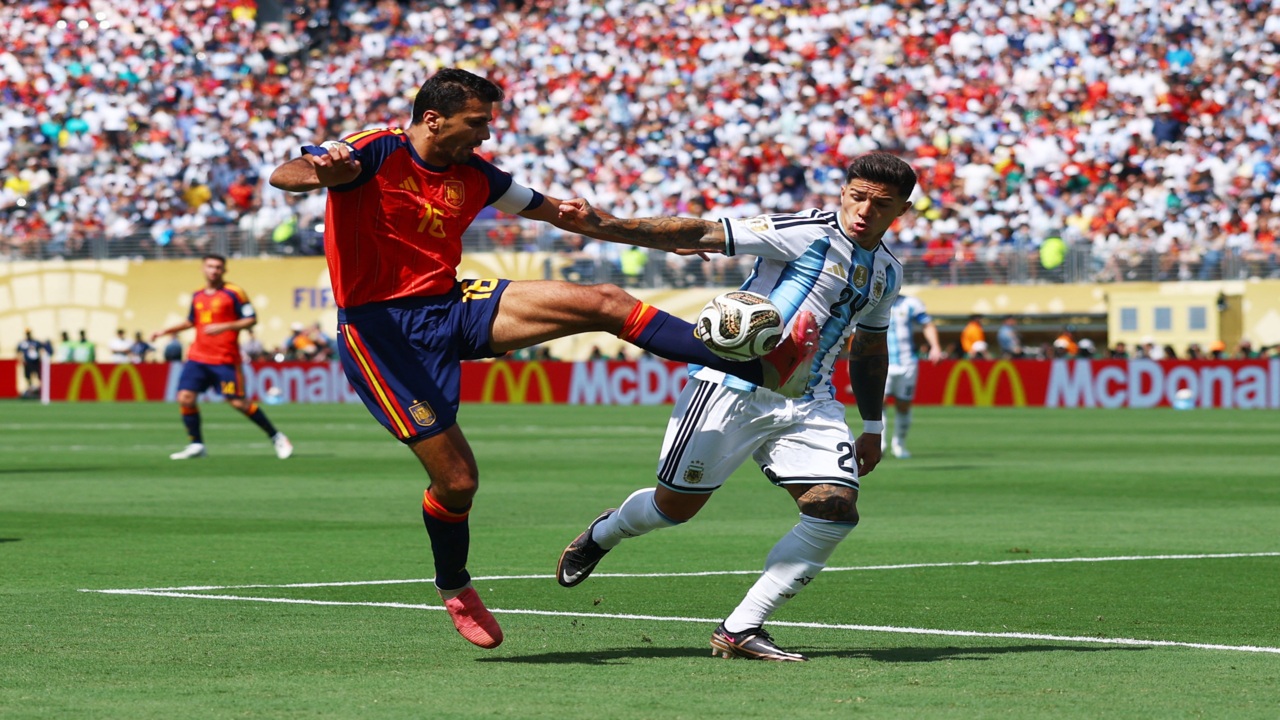
Rodri left City for Barcelona this summer. Maresca has already acknowledged in press conferences that finding a long-term successor for that midfield role remains a priority.
Against Bournemouth, the gap was visible from kickoff. Rico Lewis, a converted full-back rather than a natural holding midfielder, started alongside club-record signing Elliot Anderson in the center of the pitch.
Neither player offers the same defensive screening or game control Rodri once provided.
The absence of Rodri went beyond one player’s tactical profile, too. Rodri’s job wasn’t just to sit in front of the back four. He screened passing lanes into City’s box and recycled possession under pressure to protect against counterattacks.
Rodri also dictated tempo, deciding when City slowed the game down and when they accelerated.
Lewis is a talented, versatile footballer, but he made his name as an attacking full-back and inverted midfielder under Pep Guardiola, not as a specialist destroyer.
Anderson arrived from Nottingham Forest for a club-record fee as a box-to-box presence with progressive passing range. That profile sits closer to an advanced version of Rodri’s role than a true like-for-like, and he’s still adapting to a new league and manager.
The situation grew more urgent as the match wore on. Anderson picked up a hamstring injury and was substituted around the hour mark, replaced by Mateo Kovačić. That left City without their most talented midfield addition for the rest of the game, and without an obvious like-for-like alternative on the bench.
Kovačić offers experience and know-how, but he’s never been asked to anchor City’s midfield alone the way Rodri did.
Nico González, another option in that area of the squad, wasn’t even part of the matchday squad. City controlled possession for long spells against Bournemouth.
City still couldn’t consistently dictate tempo the way they did in the Rodri years. That pattern is likely to repeat against tougher opposition unless Maresca finds a genuine solution.
For Maresca, this could mean a new signing before the transfer window closes, or a tactical rethink with the players already at the club.
City has agreed a deal worth up to £86m with Lille for 18-year-old Morocco international Ayyoub Bouaddi. He impressed at this year’s World Cup as his country reached the quarterfinals. Sky Sports’ own transfer analysis described Bouaddi as “a deep-lying controller, already in the template of Rodri.”
The outlet drew a direct contrast with Anderson, calling him “more of a box-to-box runner.” Unlike Anderson or Lewis, Bouaddi is being bought specifically to do the job Rodri used to do.
The Bouaddi move doesn’t retroactively fix Sunday’s performance. He is 18 and unproven in the Premier League, so he isn’t a guaranteed replacement the moment he arrives.
The timing is striking, though, particularly given the midfield issues that surfaced against Bournemouth. It comes on top of Anderson’s club-record deal.
It is unclear whether Anderson will start immediately or will need time to adapt. Maresca has finally started building the kind of midfield cover Rodri’s departure left behind.
City ultimately found a way to win, and Cherki’s introduction changed the game completely, setting up both goals within seven dramatic minutes. That’s a reasonable response from a manager whose team was drifting toward a losing start to the season. Needing a stoppage-time VAR review to avoid a nightmare opening weekend isn’t the same as solving City’s central problem.
A midfield without a true Rodri-type is going to be exposed by better teams than Bournemouth, and City’s underlying issue on Sunday had little to do with the final score.
What’s your take? Post it in our free sports community at stadiumrant.app, or download Stadium Rant on the App Store.
City found a way to win. Their dramatic comeback may have actually highlighted the problem Maresca needs to solve most urgently. Rodri’s departure left a specific kind of gap in midfield.
Neither Lewis nor Anderson filled it against Bournemouth, and Kovačić offered no real upgrade once he came on. Maresca has already signaled he’s searching for his next Rodri, and the Bouaddi deal suggests City agrees with the diagnosis. Sunday’s result, won by two late goals, didn’t answer the midfield question on its own. It’s the reason City moved so quickly to answer it themselves.
