

Asian Games 2026 logistics crisis has become one of the biggest stories surrounding the Nagoya Games on the eve of Saturday’s opening ceremony, with athletes and officials reporting problems involving accommodation, transport, accreditation and food. The accommodation pressure is partly linked to a rise in expected participation, with organizers originally planning for around 15,000 athletes and officials before the number increased to about 17,000 as new sports were added.
India’s Chef de Mission Sahdev Yadav confirmed that 30 to 35 Indian athletes initially faced accommodation difficulties after the contingent’s allocation was reduced, forcing India to book additional hotel rooms. Complaints from China, South Korea and other delegations have added to the concerns, while the Olympic Council of Asia defended its unconventional accommodation model at a press briefing on Friday.
Asian Games: China teams get stuck at Nagoya airport without food for 7 hours https://t.co/8QGfNlH0h6
— South China Morning Post (@SCMPNews) September 17, 2026
The central issue comes from Nagoya’s decision not to build a traditional Athletes’ Village for the 20th Asian Games. Instead, around 17,000 athletes and officials are being housed in hotels, temporary wooden container-style units, and the Costa Serena cruise ship, which is being used as a floating accommodation facility. Organizers had initially expected around 15,000 athletes and officials, but the number increased to approximately 17,000 as new sports were added, putting additional pressure on an accommodation plan that was already designed around a smaller participant figure. The OCA says the approach was designed to control costs, avoid leaving behind an underused village and give organizers more flexibility as participation numbers increased.

Accommodation problems have nonetheless emerged across several delegations. Reports have described long waits for room allocations, cramped cabins, undersized beds, incorrect room assignments, and lengthy accreditation procedures, while some teams have had to find alternative hotels independently. Japanese athletes were also reportedly moved to backup accommodation after organizers mistakenly assigned male and female team members to shared rooms.
India has provided the clearest indication of how the shortage has affected individual contingents. Yadav said organizers removed around 30 to 35 Indian athletes from the accommodation list, despite India maintaining that it had stayed within the number of places previously invoiced, forcing the delegation to arrange hotels after reaching Nagoya. India initially booked 18 rooms and planned to secure another 10, while also arranging its own vehicles to reduce further disruption.
Asian Games 2026 gets off to a chaotic start 🏨
— The Bridge (@the_bridge_in) September 17, 2026
Indian athletes were left stranded for over 14 hours after landing in Nagoya on Wednesday, with rooms on the Costa Serena cruise ship nowhere in sight.
Rowers went without food for hours before finally getting accommodation late… pic.twitter.com/1F4TDoPWut
Yadav also acknowledged that there had been “mismanagement” during the arrival process, although he said the Indian contingent’s priority was resolving the problems rather than assigning blame. Indian MMA athlete Varun Sanyal offered a more personal account of the disruption, describing himself as “a total ghost in their system” after officials initially struggled to locate his accommodation details despite his valid accreditation. Accreditation has been another issue, with athletes housed on the cruise ship reportedly facing lengthy waits because cards were being processed there. The Indian official said the situation for India’s athletes had subsequently settled, but his comments confirmed that the accommodation shortage was not simply a social-media complaint.
Transport has become another major part of the unfolding story. Indian shooters have reportedly faced journeys of around 50 to 60 kilometres between accommodation and training facilities, producing travel times of up to two hours when buses were delayed or insufficient. South Korea’s football team was also taken to a baseball venue instead of its football stadium, while other delegations experienced long waits at airports for credentials and transport.
Food and basic arrival arrangements have also created frustration for some athletes. Indian rowers reportedly spent hours waiting for accommodation on the cruise ship and said they had to rely on food bought themselves after initially receiving little more than water. Chinese athletes also encountered significant delays, while Chinese badminton players received assistance from the country’s consulate in Nagoya after transport problems.
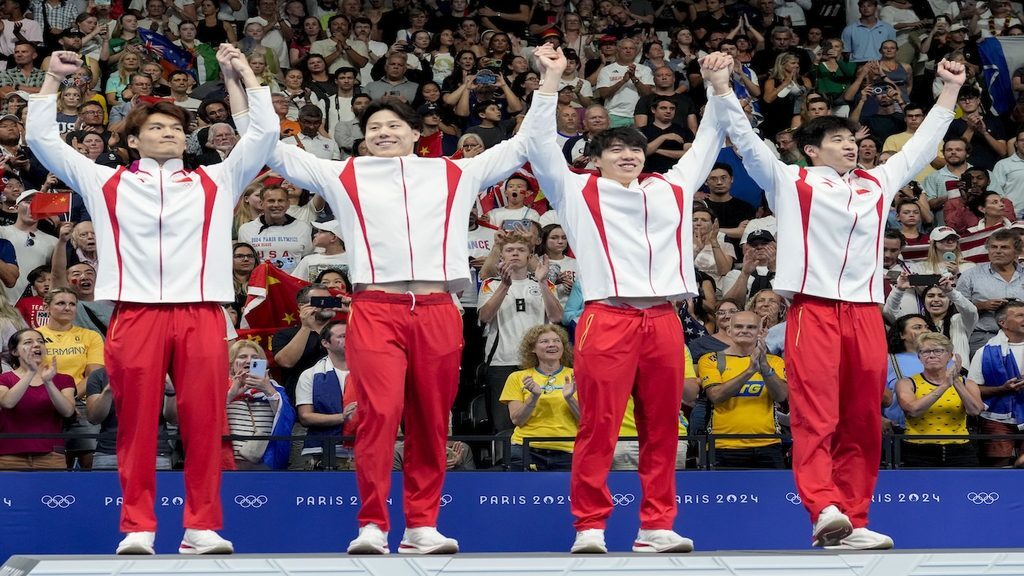
Chinese world champion gymnast Zhang Boheng offered one of the strongest athlete accounts of the problems. Zhang said he and teammates were left waiting for around six hours after arriving, with registration and paperwork delaying their accommodation process before heavy rain complicated their journey to the cruise ship. “I’m totally exhausted,” Zhang said, later explaining that he had eaten breakfast around 7 a.m. and did not eat again until close to 7 p.m.

South Korean basketball players have raised separate concerns about the temporary cabins. Basketball player Byeon Jun-hyeong posted footage showing a leaking sink and water on the floor inside his accommodation, accompanying the video with the message, “Please help us.” South Korean basketball official Jung Jae-yong also said athletes taller than two metres could not properly stretch their legs on the beds, highlighting the practical concerns surrounding the cabin design.
The Olympic Council of Asia used Friday’s media briefing to defend the accommodation strategy rather than announce a reversal. OCA Director General Husain Al-Musallam argued that a permanent village could become an expensive “white elephant” after the Games and said organizers had to consider the long-term use of such infrastructure. OCA Coordination Commission chairman Tayyab Ikram similarly said an Athletes’ Village is not mandatory and argued that the alternative model was designed around cost, flexibility and sustainability.
The first press conference of the 20th Asian Games Aichi-Nagoya 2026 was held today at Port Messe Nagoya, ahead of the Opening Ceremony. pic.twitter.com/96Dzup5R0G
— Olympic Council of Asia (@AsianGamesOCA) September 18, 2026
Officials also said the accommodation allocation had now been completed. Al-Musallam stated that every accredited athlete, coach and official had accommodation, while organizers said a 24-hour resident centre was available to address remaining concerns. The defence comes after several days of complaints, meaning the immediate question is no longer whether alternative accommodation exists but whether the wider system can operate smoothly once competition reaches full scale.
Weather has added a fresh complication to an already strained operation. Torrential rain in the region has already caused evacuations, transport disruption and changes to some events, while Typhoon Dujuan is threatening the Aichi-Nagoya coast early in the Games. Organizers have said emergency procedures are ready, including temporary athlete evacuations and moving the Costa Serena offshore if typhoon-level winds become a threat.

The timing makes the situation particularly significant because the opening ceremony takes place on September 19, with the Games officially beginning as the controversy is still developing. A logistics system already dealing with accommodation allocation, accreditation queues and long journeys will now have to operate alongside contingency plans for severe weather. The organizers insist the immediate housing problems have been resolved, but the next few days will show whether transport and emergency arrangements can cope with the demands of the full Games schedule.
The Asian Games 2026 logistics crisis is therefore bigger than a dispute over shipping containers or cruise-ship cabins. Accommodation shortages, long airport waits, accreditation delays, transport mistakes, food complaints, and weather disruption have combined to create an unusual pre-Games storyline, with India among the delegations forced to make its own contingency arrangements. The OCA has defended the model and says every participant now has accommodation, but athlete complaints show why the logistics operation remains under intense scrutiny on the eve of the opening ceremony.
