
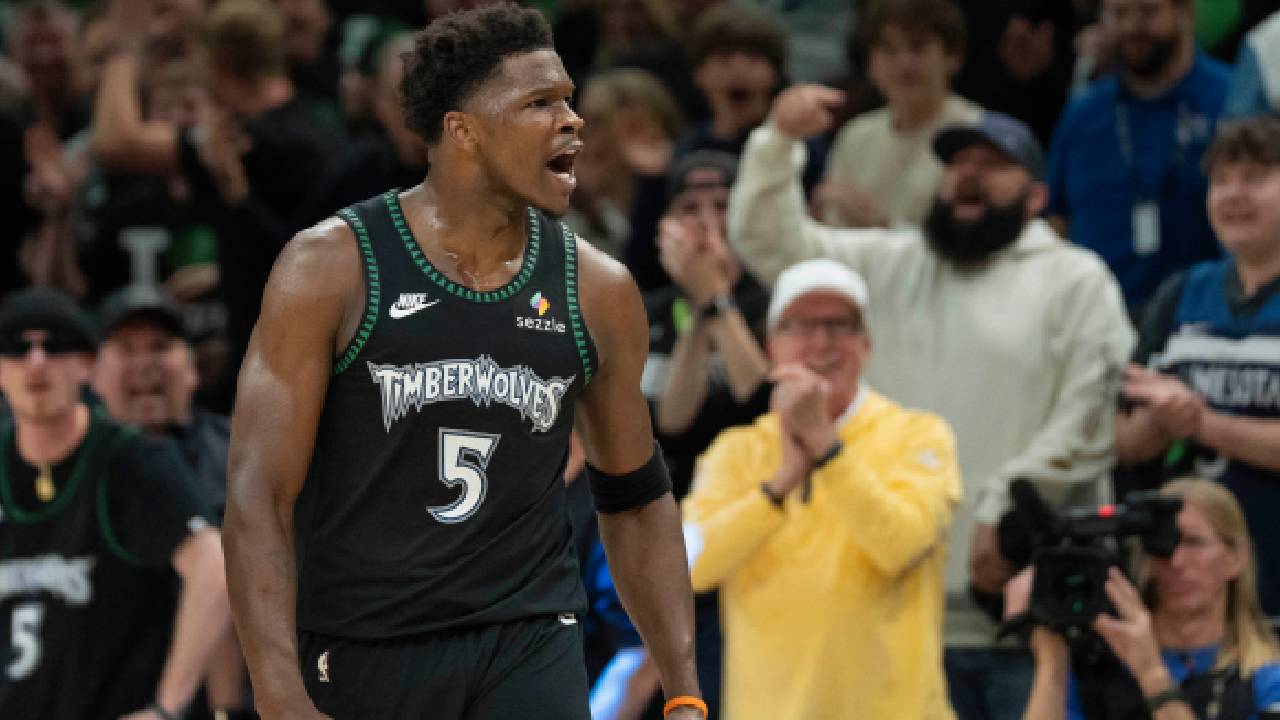
Anthony Edwards has reached the point where calling him one of the NBA’s best young players no longer does justice to his résumé. The Minnesota Timberwolves star averaged 28.8 points, 5.0 rebounds and 3.7 assists in 61 games during the 2025-26 season while shooting 48.9 percent from the field and 39.9 percent from three-point range. NBA profile and season statistics provide the numbers behind a much larger argument.
Several players in the same age group can challenge Edwards for the distinction of best 25-year-old NBA player. Tyrese Maxey averaged 28.9 points and 6.7 assists, Deni Avdija produced 24.2 points, 6.9 rebounds and 6.7 assists, and Scottie Barnes continued to offer elite two-way versatility. Evan Mobley, Jalen Williams, Franz Wagner, and LaMelo Ball also bring skill sets capable of making the debate legitimate.

The best 25-year-old NBA player should not be determined by scoring average alone. A useful comparison has to consider six areas: scoring, playmaking, defense, playoff performance, team success, and individual résumé.
That gives Edwards an advantage without making the ranking a simple scoring contest. Maxey brings superior playmaking, Barnes greater defensive versatility, Mobley elite interior defense, and Williams the strongest championship résumé.

A direct statistical comparison provides a better way to evaluate the best 25-year-old NBA player than relying only on reputation. The 2025-26 regular-season numbers show just how strong the competition has become.
| Player | PPG | RPG | APG | FG% | 3P% | TS% | Resume / Team Case |
| Anthony Edwards | 28.8 | 5.0 | 3.7 | 48.9% | 39.9% | 61.7% | 3x All-Star; primary scorer; deep playoff experience |
| Tyrese Maxey | 28.9 | 4.1 | 6.7 | 46.2% | 36.7% | 58.8% | All-Star; 3rd Team All-NBA |
| Deni Avdija | 24.2 | 6.9 | 6.7 | 46.2% | 31.8% | 60.0% | Major breakout; primary Portland creator |
| Franz Wagner | 20.6 | 5.2 | 3.3 | 48.1% | 34.5% | 58.8% | Two-way wing; Orlando centerpiece |
| Evan Mobley | 18.2 | 9.0 | 3.6 | 54.6% | 29.7% | 59.6% | Elite defensive big; Cleveland cornerstone |
| Scottie Barnes | 18.1 | 7.5 | 5.9 | 50.7% | 30.4% | 57.7% | 2x All-Star; All-Defensive Second Team |
| Jalen Williams | 17.1 | 4.6 | 5.5 | 48.4% | 29.9% | 56.0% | 2025 NBA champion; All-Star; All-NBA |
| LaMelo Ball | 20.1 | 4.8 | 7.1 | 40.7% | 36.8% | 54.6% | Elite creator and three-point volume |
The numbers reveal why Maxey represents the most serious offensive challenge. Maxey nearly matches Edwards as a scorer while producing significantly more assists, giving Philadelphia another way to create advantages against a defense.
Barnes and Mobley have stronger defensive cases, while Williams has the best championship résumé. Edwards combines elite scoring volume with a proven No. 1 role and substantial postseason responsibility.
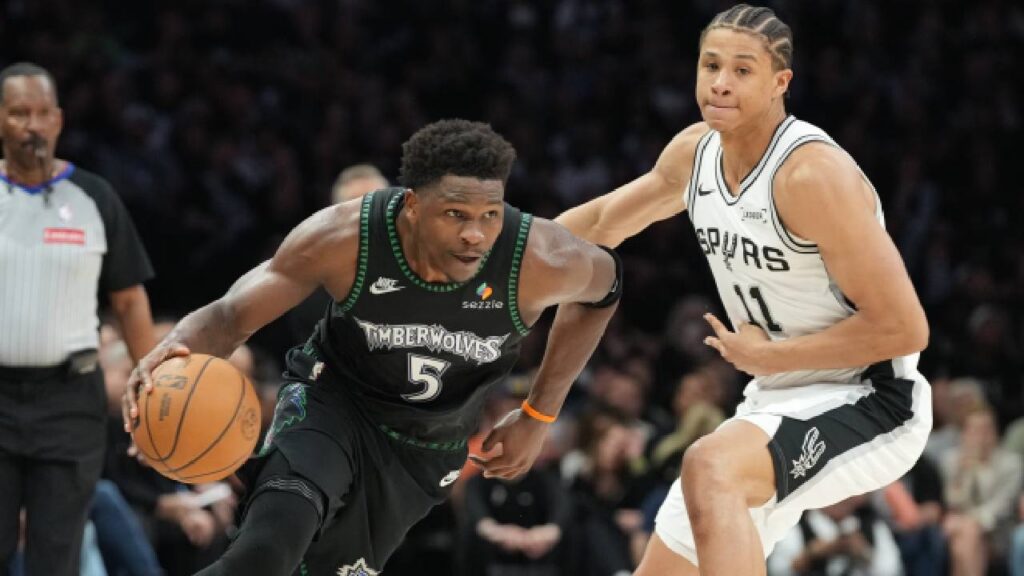
Minnesota asks Edwards to initiate possessions, create against switches, attack loaded defenses, and produce difficult shots when an offensive possession breaks down. Defensive game plans are built around limiting Edwards’ ability to reach the rim and forcing other Timberwolves players to create.
The 2025 playoffs provided another example of that responsibility. Edwards averaged 25.3 points, 7.8 rebounds, and 5.5 assists across 15 games, demonstrating a broader offensive game than the simplistic “athletic scorer” label suggests. Playoff production matters because postseason possessions expose weaknesses that can remain hidden during the regular season.
Maxey creates advantages with speed, ballhandling, and pick-and-roll play. Edwards adds greater size and physical strength, allowing Minnesota to demand more defensive responsibility.
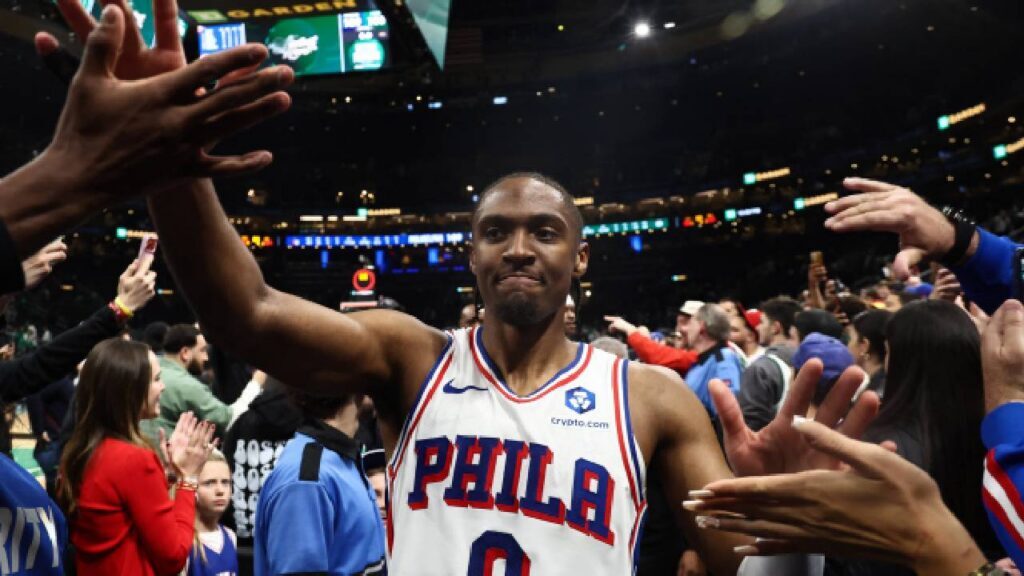
Maxey deserves the No. 2 spot because his offensive production is the closest match for Edwards. Philadelphia’s guard averaged 28.9 points, 4.1 rebounds, and 6.7 assists while shooting 46.2 percent from the field, 36.7 percent from three, and 89.2 percent from the free-throw line.
Edwards still gets the edge because the overall burden is different. Minnesota can ask Edwards to be the primary scorer, late-clock creator, and physical defensive presence without needing to protect him from difficult assignments.
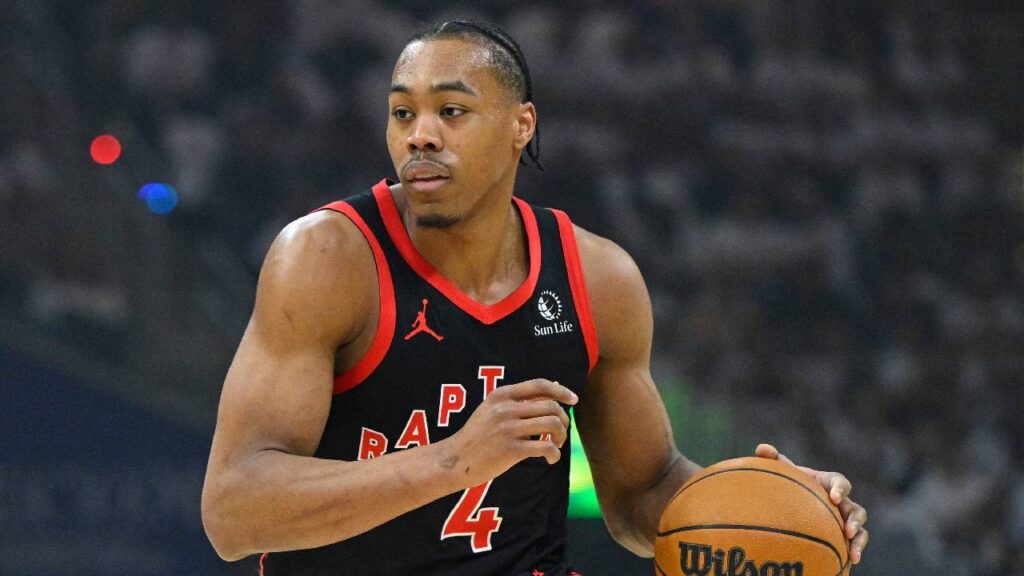
Barnes has the strongest case for versatility. Toronto received 18.1 points, 7.5 rebounds, and 5.9 assists per game from Barnes during the 2025-26 season. The forward also averaged 1.5 blocks and 1.4 steals, becoming the only NBA player to record at least 100 steals and 100 blocks. Barnes’ broader offensive creation puts him ahead of Mobley while preserving his major defensive role.
Mobley’s argument depends even more heavily on defense. Cleveland’s center can protect the rim, switch across multiple positions, and provide efficient interior offense without requiring the ball on every possession. Mobley may be the better defensive specialist, but Barnes has the more expansive offensive role. Edwards remains ahead because primary shot creation carries greater postseason value.
Williams presents the strongest team-success argument. Oklahoma City has already demonstrated that Williams can contribute to winning basketball at the highest level. In 33 games during the 2025-26 season, Williams averaged 17.1 points, 4.6 rebounds, and 5.5 assists. Williams ranks above Barnes and Mobley because championship-level team success matters when the statistical gap is not overwhelming. Edwards remains ahead because Williams has not carried the same No. 1 scoring burden.
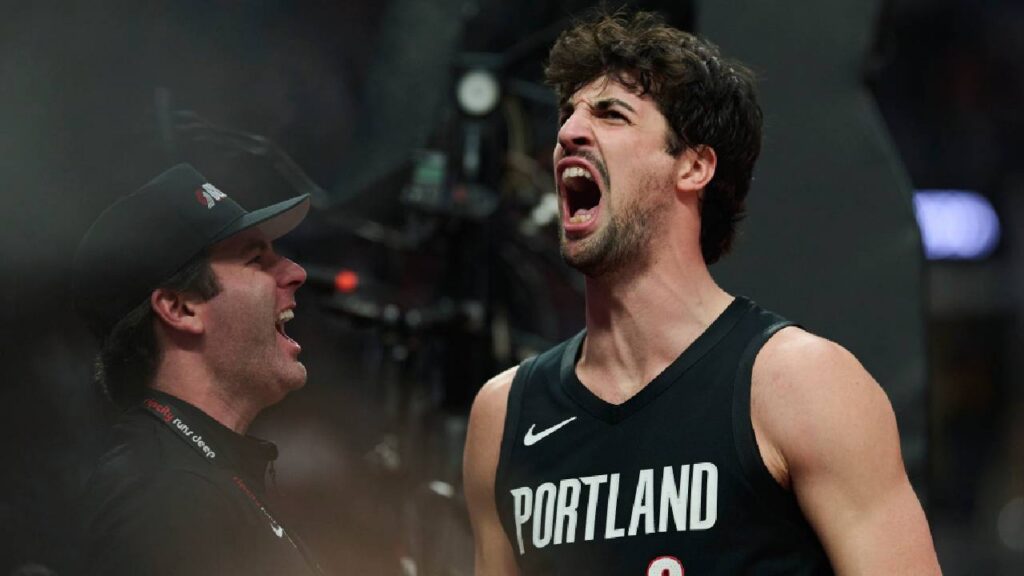
Avdija deserves inclusion near the top of the conversation after producing 24.2 points, 6.9 rebounds and 6.7 assists for Portland. Avdija’s combination of size, transition ability, and playmaking gives him a legitimate pathway toward becoming one of the NBA’s best all-around forwards. Wagner remains another serious challenger because of his scoring efficiency and versatility. Wagner averaged 20.6 points, 5.2 rebounds, and 3.3 assists while shooting 48.1 percent from the field and 34.5 percent from three during a season limited to 34 regular-season games.
Ball remains one of the most talented offensive creators in the group. Ball averaged 20.1 points, 4.8 rebounds, and 7.1 assists while shooting 36.8 percent from three, giving Charlotte an offensive engine capable of creating shots for himself and teammates. Ball’s efficiency, availability, and defensive concerns keep his overall case behind the higher-ranked players.
The best 25-year-old NBA player should combine individual production with the ability to carry a team through the most difficult environments. Edwards currently checks more of those boxes than any player in the group. Edwards still wins because no challenger combines comparable scoring volume, primary-option responsibility, physical advantages, defensive capability, and postseason experience.
The Timberwolves star does not dominate every category, but Edwards has fewer weaknesses as the centerpiece of a championship-level offense. The argument does not require pretending Edwards has no weaknesses. Turnovers, shot selection and playmaking against aggressive traps remain areas for improvement, while a genuine MVP-level leap would require better decision-making and sustained efficiency against elite playoff defenses.
Anthony Edwards does not need to be the best player in every individual category to deserve the crown. Maxey can match or exceed Edwards offensively in certain areas, Barnes can provide greater defensive versatility, Mobley can control the paint, and Williams can point to championship-level team success. The difference comes from the job Minnesota asks Edwards to perform.
A team looking for a 25-year-old who can create offense when the game slows down and absorb the attention of an elite defense has the strongest argument for choosing Edwards. Edwards also remains useful on the other end of the floor. Anthony Edwards owns the crown today because the combination of 28.8-point scoring production, physical shot creation, defensive ability and postseason responsibility gives Minnesota’s star the strongest overall case.
