
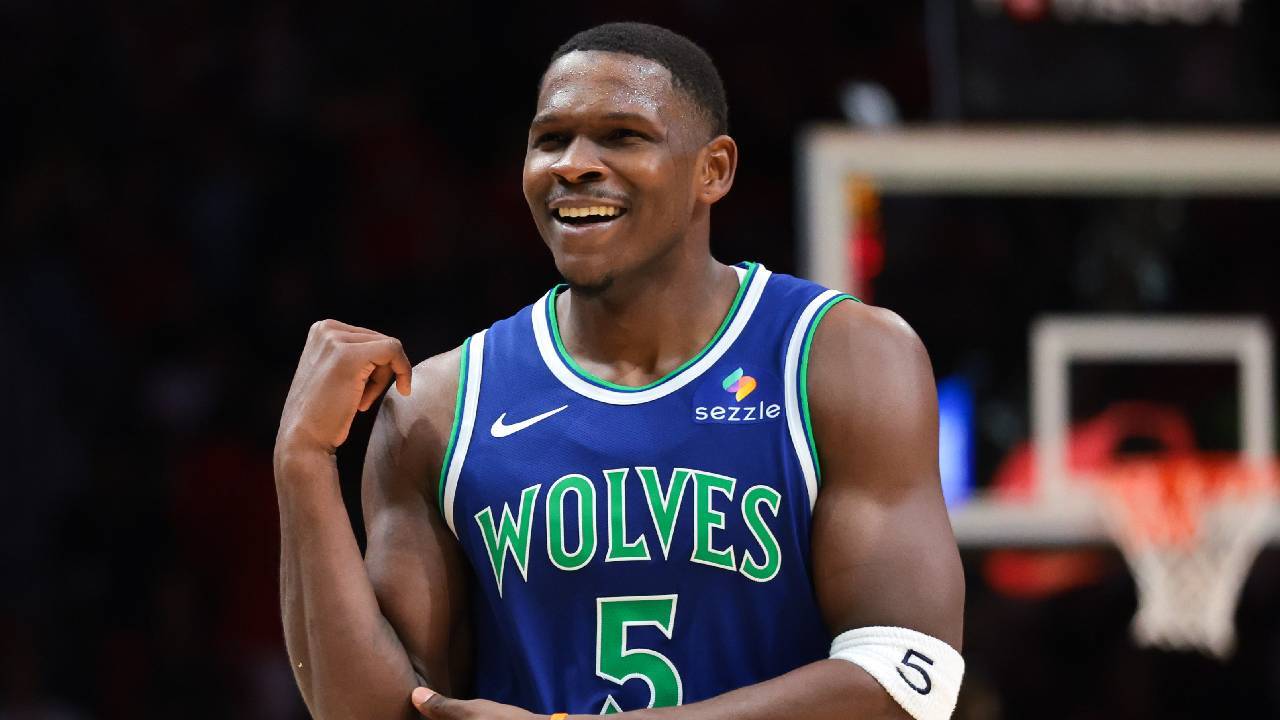
Another Anthony Edwards opening night eruption made him the third NBA player with multiple season openers of at least 40 points. Wilt Chamberlain recorded four qualifying performances, Michael Jordan produced three, and Edwards now has two. The Minnesota Timberwolves star scored 45 as Minnesota defeated the Miami Heat 131-106 on October 21, 2026. Edwards combined high-volume perimeter scoring with double-digit rebounding.
The Timberwolves’ franchise opening-game scoring record also fell as Edwards surpassed his previous mark of 41 against the Portland Trail Blazers last season. The NBA’s opening-night breakdown establishes the rarity, but the individual games reveal how differently those points accumulated. Chamberlain overwhelmed opponents without a three-point line, while Jordan’s qualifying performances included dramatically different combinations of shooting and free throws.
Nine Threes Created A Different Route To 45
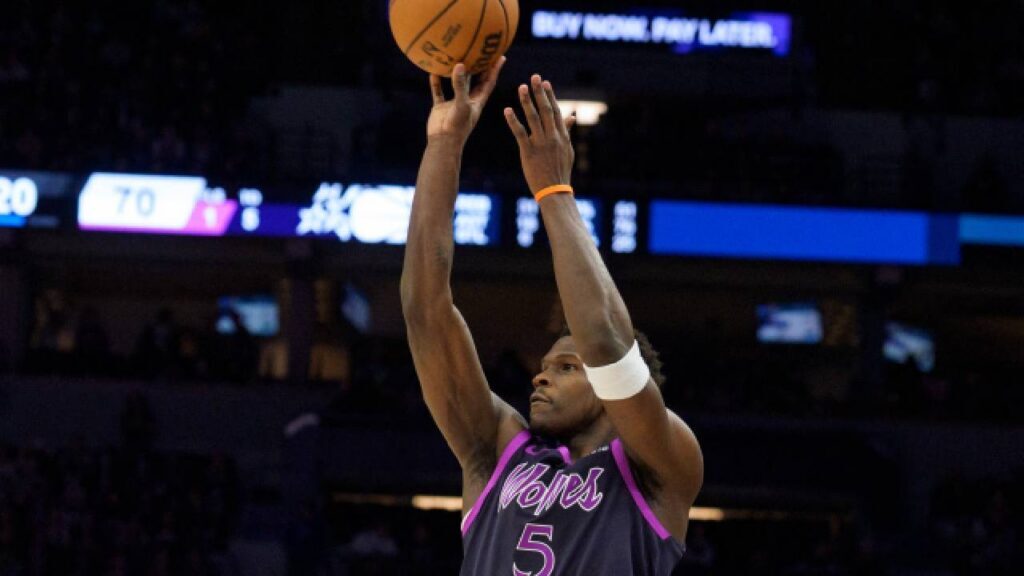
Edwards finished 16-for-29 overall, including nine of 17 from three-point range and four of five at the foul line. The Reuters game report confirms his departure with 3:51 remaining and Minnesota ahead by 28. The Anthony Edwards opening night scoring outburst required approximately 33 minutes.
Nine three-pointers supplied 27 points, representing 60 percent of Edwards’ scoring total. Seven baskets on 12 attempts inside the arc supplied another 14 points. Four made free throws completed a performance built primarily on field-goal production rather than repeated trips to the line.
Edwards posted a calculated 70.7 percent effective field-goal percentage. The formula adds half the three-point makes to total field goals, divides by attempts, and multiplies by 100. The additional value of nine threes explains why identical field-goal percentages can produce different scoring totals.
Jordan’s 1995 opener provides a direct shooting comparison with the Anthony Edwards opening night performance. Both players finished 16-for-29, but Edwards scored six more points from those baskets because he made six additional three-pointers. Jordan played during the NBA’s shortened-line period, spanning 1994-95 through 1996-97, adding another distinction between the performances.
Chamberlain’s 1962 opener produced 11 more points on six additional field-goal attempts and 12 additional free-throw attempts. Edwards generated 41 points from 29 field-goal attempts, compared with Chamberlain’s 46 from 35 attempts. The available figures compare shooting output and playing time, but do not establish which player scored more efficiently per possession.
The NBA adopted its three-point line for the 1979-80 season, after Chamberlain’s career. Jordan’s 1989 performance also included overtime, unlike Wednesday’s regulation victory. Comparing scoring methods remains useful, while treating the totals as interchangeable would erase meaningful differences in opportunity and playing time.
Anthony Edwards Opening Night History Meets Chamberlain’s Four

Chamberlain began his run with 43 points against the New York Knicks on October 24, 1959, in his NBA debut. The Philadelphia Warriors rookie made 17 of 27 field-goal attempts and nine of 15 free throws while playing 48 minutes. A historical account also documents 28 rebounds, adding immediate interior dominance to the scoring.
Philadelphia opened the following season against the Syracuse Nationals on October 22, 1960, with Chamberlain delivering 42 points. The 1960 box score records 18-for-35 shooting, six made free throws on 15 attempts, and 47 minutes. The Warriors therefore received consecutive qualifying openers before Chamberlain’s most prolific scoring season even began.
Chamberlain scored 48 against the Los Angeles Lakers on October 19, 1961, making 21 of 44 shots in 48 minutes. Six makes on 12 free throws completed the scoring line documented in the 1961 box score. The performance involved 15 more field-goal attempts than Edwards used Wednesday, illustrating a substantial difference in scoring workload.
The fourth entry came with 56 points against the Detroit Pistons on October 23, 1962, representing the San Francisco Warriors. Chamberlain played 48 minutes, converted 23 of 35 shots, and made 10 of 17 free throws. The NBA’s historical scoring list identifies that total as the highest recorded in a season opener.
Jordan’s Three Openers Tell Different Scoring Stories
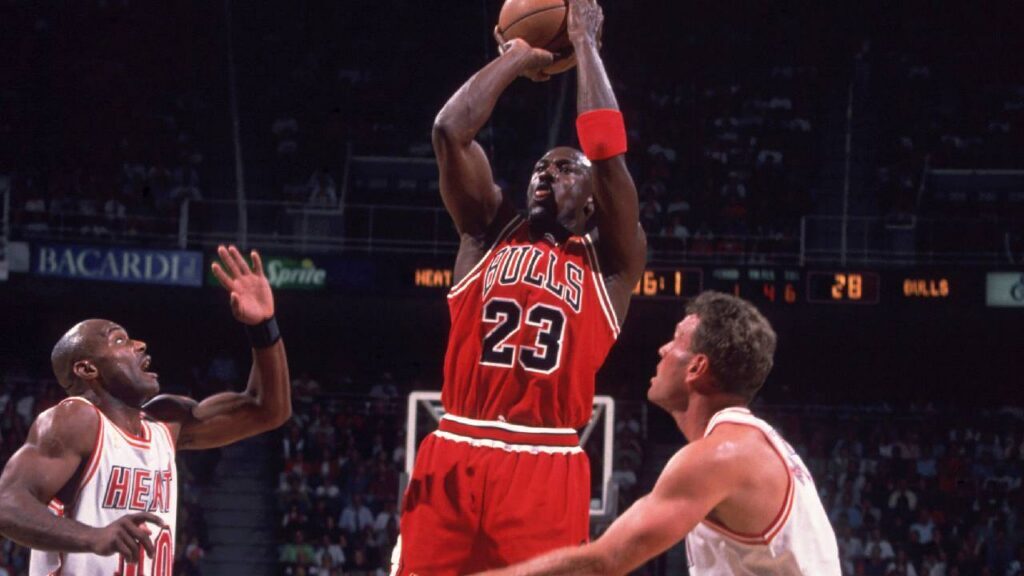
Jordan’s first qualifying opener produced 50 points for the Chicago Bulls against New York on November 1, 1986. Chicago’s leading scorer played 41 minutes, made 15 of 31 field-goal attempts, and converted 20 of 22 free throws. The 1986 box score shows zero three-point attempts, making foul-line production central to that performance.
Jordan followed with 54 against the Cleveland Cavaliers on November 3, 1989, during a 124-119 overtime victory. The Bulls received 19-for-31 shooting, one three-pointer, and 15 made free throws on 17 attempts across 47 minutes. The 1989 box score also credits Jordan with 14 rebounds, six assists, and zero turnovers.
Jordan’s third qualifying opener produced 42 against the Charlotte Hornets on November 3, 1995. Chicago’s star finished 16-for-29 from the field, made three of seven three-pointers, and converted seven of nine free throws in 39 minutes. The 1995 box score also records seven assists, showing a playmaking contribution alongside the scoring.
Ball’s Contribution Gives Minnesota Another Threat
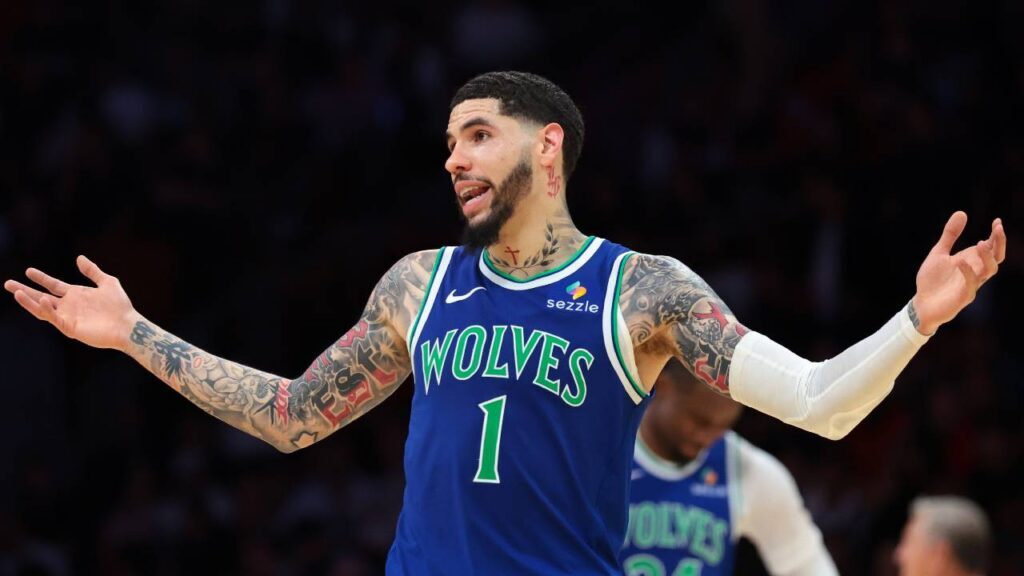
LaMelo Ball supplied 21 points and six assists, combining with Edwards for 14 three-pointers against Miami. The NBA’s game analysis reported that the guards created shooting opportunities for each other throughout the victory. The Heat consequently had to defend two guards whose 14 combined three-pointers supplied 42 points.
End Of My Anthony Edwards Opening Night Rant
The latest Anthony Edwards opening night performance deserves recognition for its combination of volume, efficient shooting, rebounding, and decisive team success. The earlier age-group comparison assessed a broader résumé, and Wednesday adds another strong scoring performance to that discussion. Membership beside Jordan and Chamberlain establishes a rare achievement without establishing equivalent careers.
The Timberwolves can celebrate a star who delivered immediately and a new backcourt partner who contributed meaningful production. Historical context strengthens that celebration by showing precisely how Edwards reached the milestone and how his predecessors scored. Minnesota already has an opening performance worth remembering, with the rest of the season determining how far that promising start carries.
