
The Champions League is Europe’s top soccer club event for the top finishing club teams. The history of the Champions League dates back to 1992, for its predecessor was called the European Cup.
Before 1992, the European Cup had been a knock-out cup for league-winning teams. However, calls were made to introduce a group element into the European Cup, which would include more games for those teams in it.
In 1992, UEFA introduced a group stage for teams that won in the 2nd round. Two groups of four were included for those eight teams remaining. With the teams playing home and away, six games were played with the top finishing sides progressing into the final. Thus, the European Cup became the Champions League.
This first Champions League final was between Marseille and AC Milan. It was a game that was won by Marseille 1-0, and so they were the first team to win the Champions League.
In 1994, AC-Milan and Barcelona played in the final of the Champions League. In the event, AC-Milan recorded a 4-0 victory in the Champions League final. That was a record win in a Champions League final until Paris SG hammered Inter Milan 5-0 in 2025.
For the 1995 season, UEFA restructured the Champions League. The group stage was held at the beginning of the Champions League, and not after a few knock-out rounds. With sixteen teams included, the top two finishing teams would progress into the quarter-finals of the event. Ajax emerged as the champions after a 1-0 win against Milan in the final.
From 1997, UEFA also allowed second-placed teams from Europe’s top leagues to qualify for the Champions League. For the first time, the Champions League would include teams that had not won their league title. Second-placed teams could now play in the Champions League. However, it remained the Champions League even if it did not entirely include champions from the top leagues.
Manchester Utd became the first English club to win the Champions League. In 1999, they defeated Bayern Munich 2-1 in the final to win the Champions League. That final had one of the most dramatic climaxes in the tournament’s history with Man Utd securing victory with two late, late goals.
Expansion of the Champions League has since followed. In 2001, the Champions League included 32 teams, with the top four teams from Europe’s top leagues qualifying. With more teams, UEFA added a second group round to follow the first. The top two teams from the second groups would then qualify for the quarter-finals.
However, UEFA later abandoned the second group stage. An extra knock-out round was added for the final sixteen teams progressing from the group stage.
Since then, English and Spanish clubs have won the most Champions League trophies. Liverpool won the Champions League on penalties after a thrilling 3-3 draw against Milan in 2005. Chelsea won the Champions League twice. Manchester Utd and City won the Champions League in 2008 and 2023.
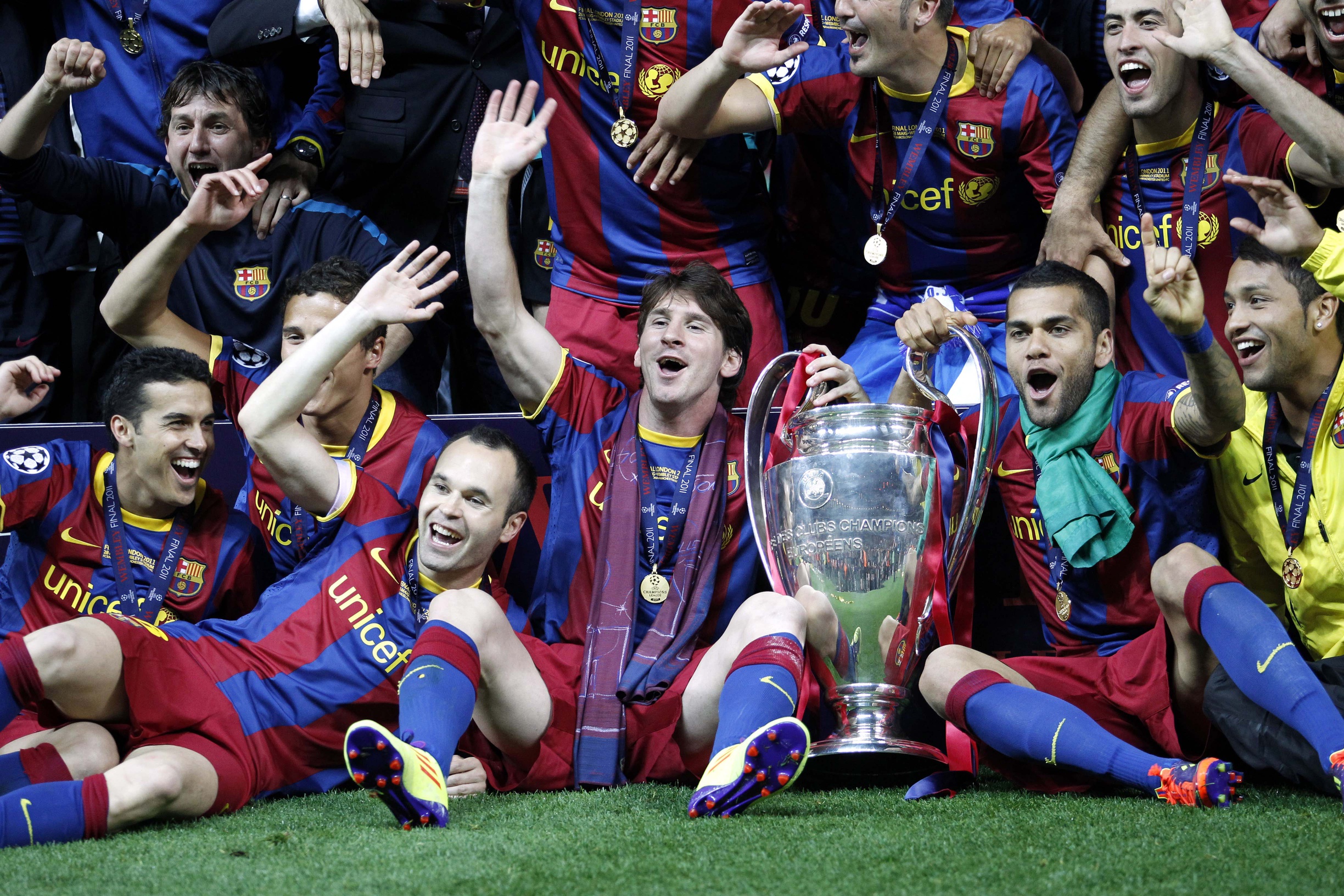
Real Madrid and Barcelona have had the most joy in the Champions League since 2009. Barcelona won the trophy three times since then. Real Madrid became increasingly dominant in the competition, winning six in total and completing a unique Champions League hat-trick in 2018 with three won in a row.
UEFA reformatted the Champions League for the 2024-2025 season. That revamp replaced the four-team groups with one 36-team league phase. Each team in that league stage plays eight games based on a seeded draw.
In terms of soccer playing standards, the Champions League is probably better than the former European Cup because it includes more teams from Europe’s top leagues. For example, the 1990 European Cup included the champions from the national leagues of Ireland, Luxembourg, Finland, Malta, Cyprus, and Iceland. Then, it was a tournament for champions with a more limited number of Spanish, English, Italian, and German sides in it.
The introduction and gradual expansion of the Champions League has resulted in that competition becoming increasingly dominated by the Spanish, English, German, and Italian club sides. It is not truly a tournament for champions because the fourth and even fifth-placed teams from the top leagues can qualify for it. However, the fourth-placed teams from the top leagues are usually somewhat better than the champions of Ireland, Luxembourg, Finland, Malta, and Cyprus, countries with club sides that aren’t usually good enough to qualify for the present-day Champions League.
The group (now league) stage in the Champions League ensures all teams in it play at least eight matches. In comparison, teams that played in the former European Cup first round without progressing only had two matches. The larger number of matches ensured for all Champions League participants, combined with its prize money offered, makes it a more lucrative tournament than the European Cup.
Although regarded as a continuation of the former European Cup, the Champions League is quite a different club championship. The present-day Champions League generally includes better teams, but critics argue its expansion has helped the biggest clubs in Europe monopolize soccer. Yet, the likes of Real Madrid and Juventus have still become dissatisfied with the Champions League, prompting an attempt to establish an alternative Euro Super League that would have enabled them to monopolize soccer even more. Shame on them!
If you love sports, download Stadium Rant from the Apple App Store and join one of the fastest-growing social sports communities. Be sure to follow us on socials too — you can find all our profiles on our Linktree.
