
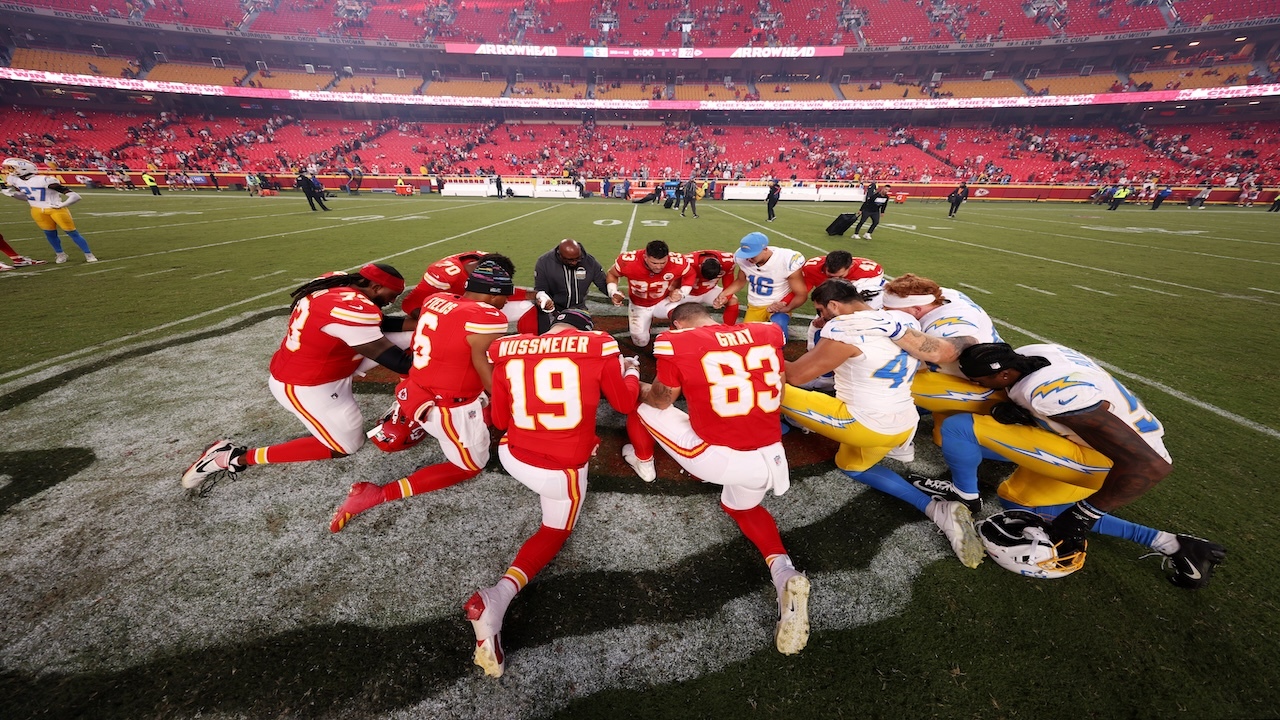
The Chiefs’ pass rush finally gave us something besides another discussion about how sacks do not tell the whole story. Four sacks against the Chargers? Yes, thank you. Disruption is great, but occasionally watching the quarterback actually hit the ground is good for the soul.
Kansas City’s 22-6 victory produced encouraging results from several defenders. George Karlaftis, Ashton Gillotte, and Chamarri Conner recorded a sack apiece, while Chris Jones and Peter Woods shared another. That is a welcome distribution of responsibility. Jones should not have to carry the entire department on his back.
Before we declare the pass rush officially repaired, however, there are a few details worth examining. The timing of those sacks matters. So does the offensive line Kansas City faced.
Karlaftis’ afternoon helps explain why the previous sack drought needed some context. He finished with nine pressures and a sack against Los Angeles. That followed his 11-pressure performance against Las Vegas. The quarterback disruption was already happening, and Sunday added the finish everyone wanted.
The distinction matters. An empty sack column does not mean a player did nothing. One sack the next week does not mean he suddenly figured out football.
Pressure can force an early throw, interrupt a quarterback’s movement, or prevent a deeper route from developing. A sack is a result that’s easier to quantify, but the work leading toward that result still counts.
Those numbers alone don’t tell us whether Karlaftis or the Chiefs’ pass rush became more efficient against the Chargers. To judge his performance fairly, we need to know how many times he rushed the passer in each game. Counting pressures is a start, but how often he created one tells us more.
For now, the encouraging development is consecutive disruptive performances, with a sack added on Sunday. That’s plenty to discuss without making the numbers perform tricks they can’t support.
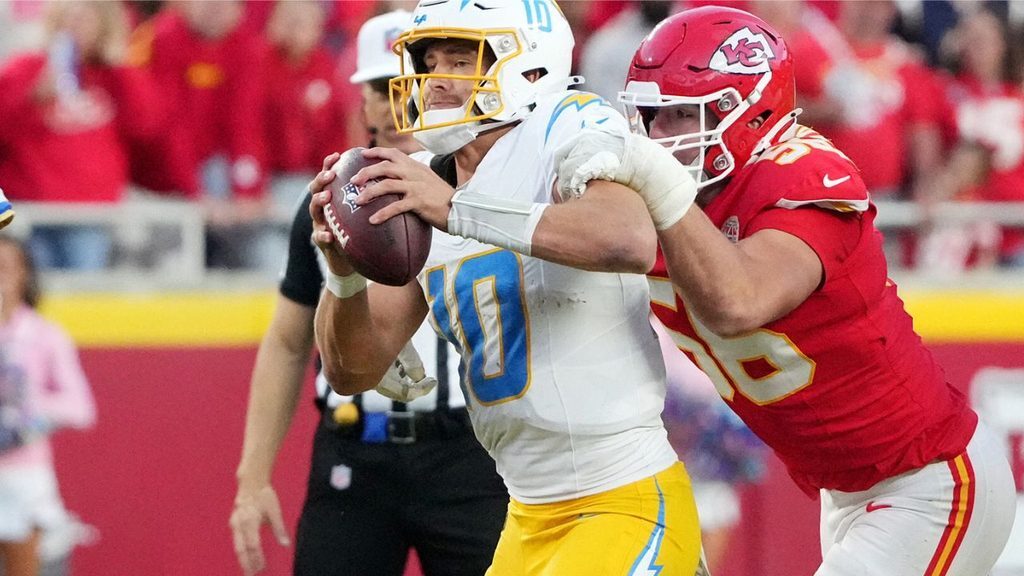
All four Kansas City sacks came after halftime. Jones and Woods shared the first in the third quarter, followed by Gillotte. Conner and Karlaftis recorded theirs late in the fourth quarter, with Kansas City already ahead 22-6.
That doesn’t render the late sacks meaningless. Preventing an opponent from mounting a comeback is useful work. Chiefs fans have watched enough uncomfortable finishes to appreciate anything that discourages another one.
It does, however, change what the sacks tell us about the game. They didn’t create Kansas City’s early lead. They helped preserve an advantage the team had already established.
Gillotte’s third-quarter sack shows what that looked like. After Nikko Remigio’s fumbled punt return gave Los Angeles another possession, the Chargers faced second-and-seven at their own 44. With 3:45 remaining, Gillotte sacked Herbert for a six-yard loss, creating third-and-13. Los Angeles gained only one yard on the next play and then punted. Kansas City already led 19-6, but the Chiefs’ pass rush helped prevent a special-teams mistake from becoming a scoring opportunity. Apparently, the defense had cleanup duty, too.
A lagging offense has less freedom to keep everyone guessing. When time is running out and multiple scores are needed, passing becomes harder to avoid.
The question remains whether Kansas City can finish those opportunities when the score is close and the offense still has its full range of options. Can the Chiefs pass rush help build the lead instead of saving its biggest moments for when Kansas City already has a comfortable cushion?
That would make the improvement considerably more convincing.
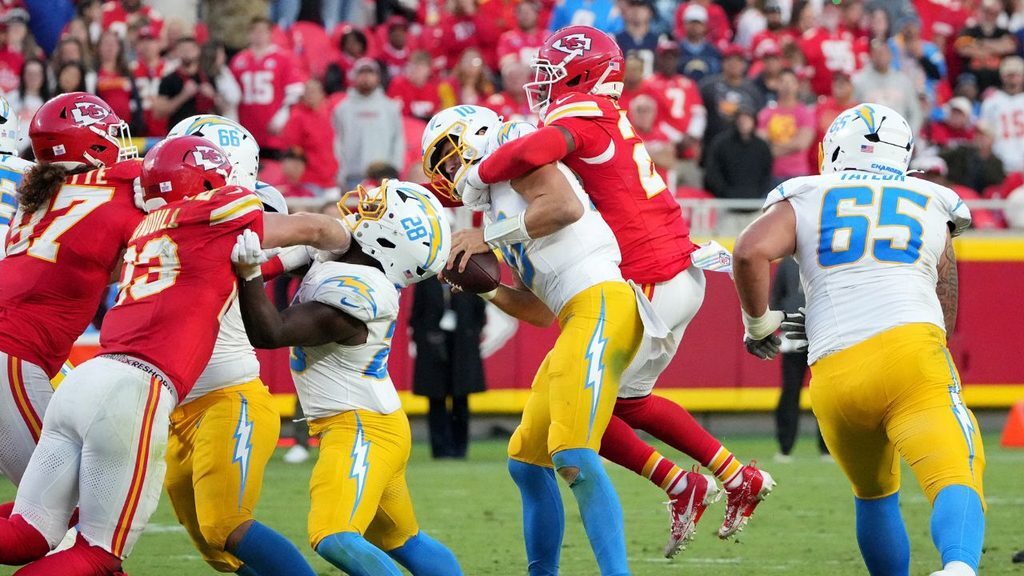
Los Angeles entered the matchup with substantial protection concerns. Justin Herbert had already been sacked a whopping 17 times across five games. The Chargers were also dealing with multiple offensive-line injuries, including the absences of Joe Alt and Kayode Awosika.
Kansas City deserves credit for exploiting that situation. Nobody awards bonus points for politely ignoring an opponent’s weakness, but beating a diminished line doesn’t do anything to prove they can beat a line at full strength. Sunday was evidence of progress, not a warranty.
Going forward, I want to see who keeps showing up and whether they make plays while the game is still close. Can Gillotte help end drives? Can pressure up the middle keep quarterbacks from escaping the edge rush? Can Karlaftis keep making life difficult even when he doesn’t record a sack?
That will tell us more about this defense than waiting for a four-sacks-a-week subscription service to become a thing.
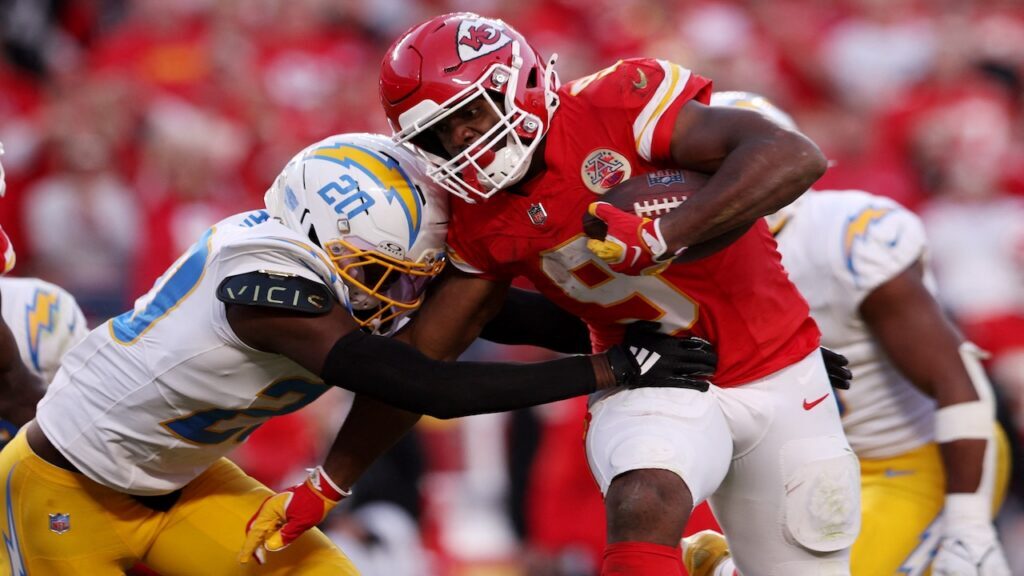
The Chiefs’ pass rush gave us reasons for optimism against Los Angeles. Several players contributed; Karlaftis followed another disruptive performance with a sack, and the defense finished opportunities.
The Chargers’ battered offensive line and Kansas City’s lead still belong in the conversation. Sunday was encouraging, but I’m not ready to declare the pass rush fixed after one good afternoon.
I want to see that pressure carry over against other opponents, especially while the game is close. Make the quarterback uncomfortable early, deliver on opportunities to bring him down, and stop asking the secondary to cover receivers until further notice.
Four sacks were a welcome development. Now, let’s make opposing quarterbacks nervous often enough that we can stop having this conversation every week.
