
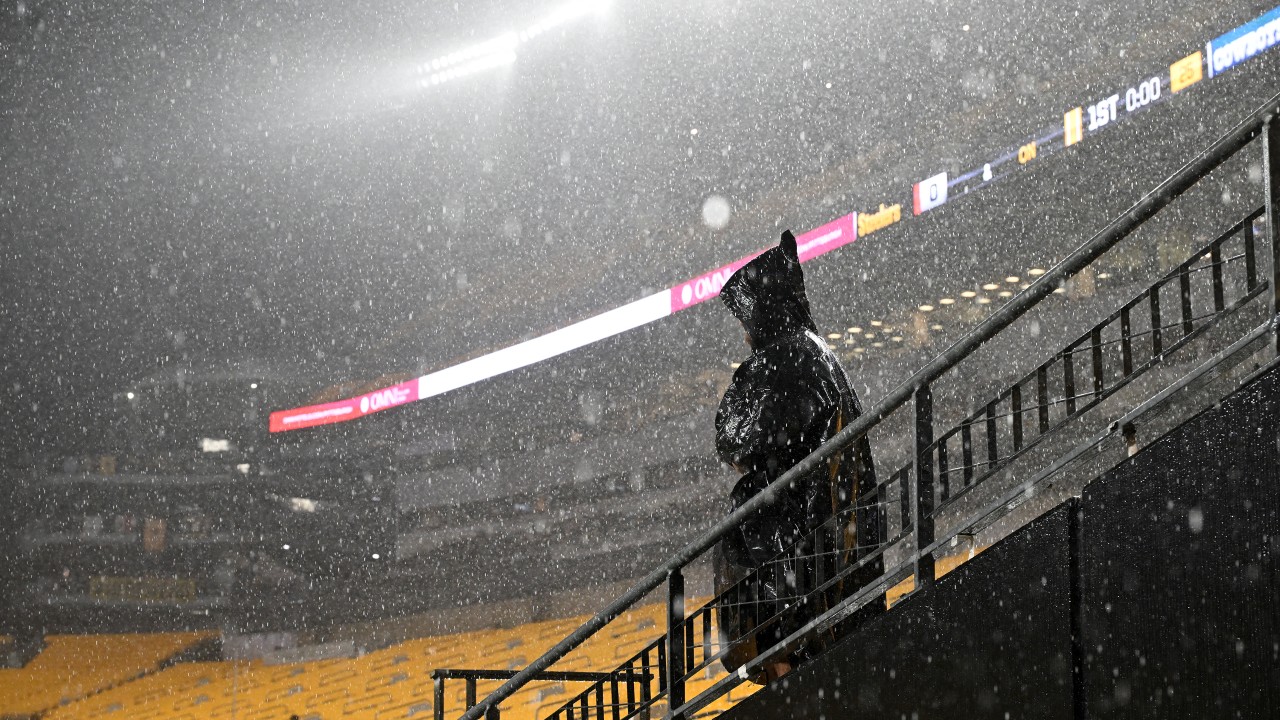
The NFL has spent decades convincing us that weather is part of the sport’s DNA. Snow swirling under stadium lights? Iconic. Rain turning the field into a slip‑and‑slide? Gritty. Wind knocking kicks sideways like a drunk pigeon? “Real football.”
Football loves to pretend it’s a weather‑proof sport. The league romanticizes snow like it’s a postcard, worships rain like it’s a baptism, and treats wind like it’s a personality trait. Every broadcast booth calls it “real football.” Ultimately, the weather shows zero respect and deletes the forward pass entirely.
The second the weather stops being cinematic, the whole illusion cracks. The NFL wants the drama of weather without the chaos, the aesthetic without the consequences. It wants the storm in slow motion—not the storm that actually shows up.
Snow is the league’s favorite myth. It photographs well. It feels nostalgic. It gives every highlight a soft glow, like football wandered into a holiday commercial. The games themselves? They’re a mess.
Patriots–Dolphins (1982): The Snowplow Game. A snowplow rolled onto the field and carved a clean lane through the storm for the kick. The NFL still treats it like folklore instead of what it was: groundskeeping interference dressed up as grit.
Lions–Eagles (2013): LeSean McCoy ran for 217 yards because he was the only person with traction. Everyone else looked like they were wearing dress shoes on an ice rink.
Bills–Colts (2017): A full blizzard swallowed the field. Yard markers vanished. Players ran blind routes through whiteout conditions. Adam Vinatieri kicked through a snowbank like he was trying to launch a satellite.
Snow is iconic until someone slips. Then it becomes a risk masquerading as tradition.
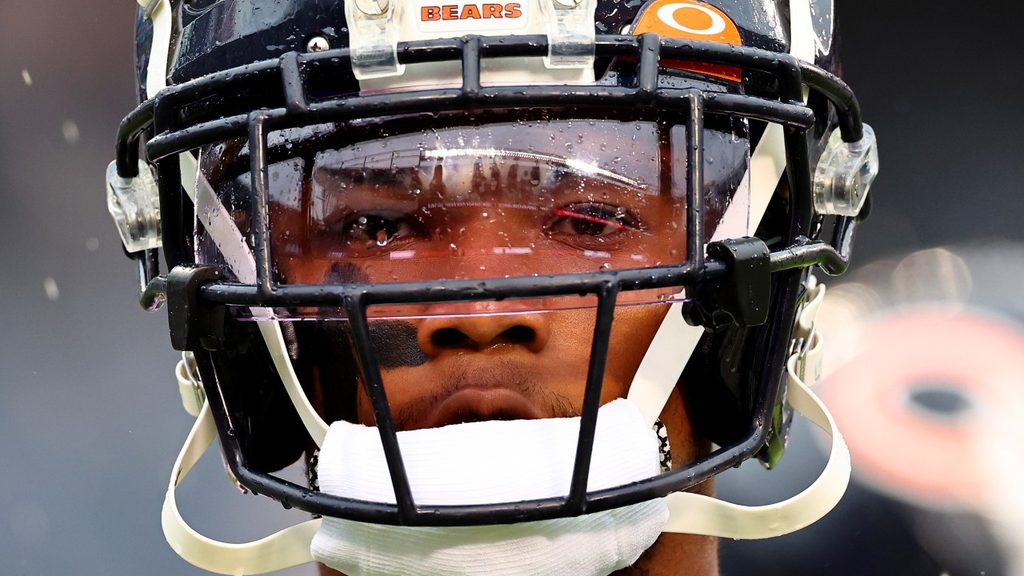
Rain gets framed as grit—the weather testing the purity of the sport. Rain doesn’t test anything. It just ruins everything.
Patriots–Jets (2015): The rain poured down in sheets until the field seemed to be dissolving. Brady fought a slick, escape‑artist football as players slipped through a game the weather tried to erase.
49ers–Redskins (2019): The field turned into a shallow lake. Every tackle produced a splash. Players hydroplaned through plays like they were skimming across a pond.
Bears–49ers (2022): The field became a swamp. Justin Fields slid across the turf on his stomach after the win—the only moment of joy in three hours of aquatic suffering.
Rain is gritty until the ball becomes a bar of soap. Then it’s a blooper reel.
Wind is the NFL’s nostalgia crutch. Commentators call it “old‑school football,” as if the forward pass is a luxury item.
Browns–Raiders (2020): Gusts in the 40s turned the passing game into a physics experiment. Deep balls stalled mid‑air. Field goals curved like they were avoiding traffic.
Patriots–Bills (2021): Gusts over 50 mph. Mac Jones threw three passes all game. Kicks veered sideways like they had second thoughts.
Wind is “classic football” until the ball changes direction mid‑flight. Then it’s a physics problem the wind decides to solve for you.
A hurricane makes snow, rain, and wind look like the NFL forgot to close a window.
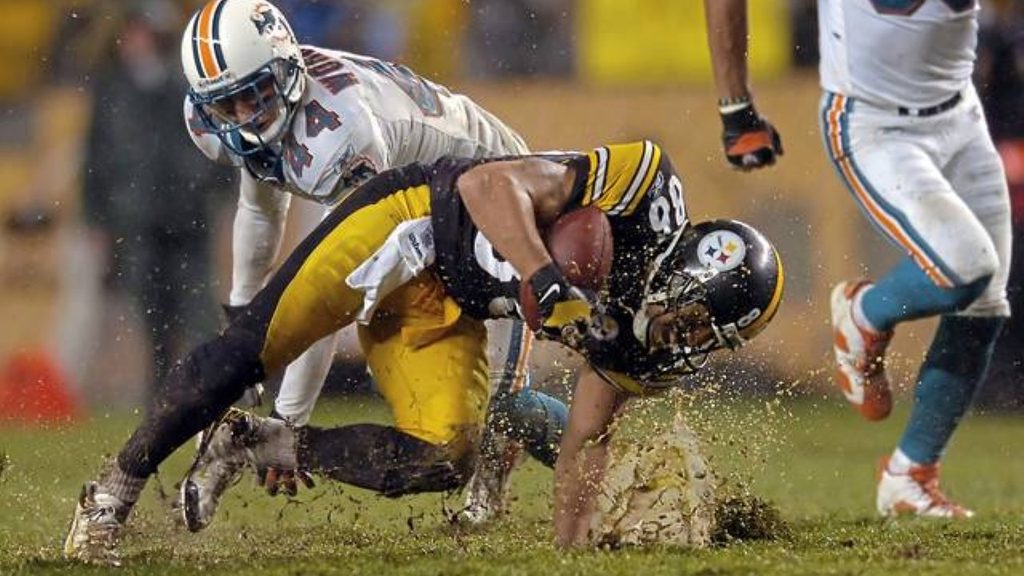
Dolphins–Steelers (2004): Hurricane Jeanne didn’t just delay kickoff—it arrived like a slow, grinding siege. The storm’s outer bands tore across Miami, whipping rain sideways as if the stadium owed it money. Palm trees buckled into deep bows as the wind tried to fold the entire city.
The field had no structure left; it behaved like a soaked sponge, swallowing cleats and spitting them out coated in muck. Every snap felt submerged. The football looked less like NFL equipment and more like something dragged out of Biscayne Bay.
Pittsburgh adapted by embracing the ugliness—grinding forward like a team built from the same stubborn material as the storm. Miami kept trying to run an offense, but Jeanne kept rewriting the rules. The hurricane wasn’t a backdrop; it was a participant.
The broadcasters did what broadcasters always do: turn the disaster into mythology—right up until the ball slipped, skidded, or completely refused to behave like a football.
A hurricane doesn’t make football gritty—it makes football unforgettable or unplayable. It’s the moment the NFL’s mythology collapses under actual weather.
Heat is the league’s quiet villain—the one condition it pretends isn’t weather.
Dolphins’ September games: Heat index over 110°F. Visiting teams wilt on the sun‑side bench while Miami players sit in the shade like they’re at a spa. The NFL will spend months talking about player safety, then schedule opponents directly into a September oven and call it home‑field advantage.
Bills–Dolphins (2022): The heat index blasted past 100°F, and Buffalo players dropped like they were running drills inside a sauna. Multiple Bills players needed treatment for heat illness. Meanwhile, Miami’s shaded sideline watched as the sun cooked the visitors alive.
Heat is “gritty” until someone passes out. Then it’s a liability the league pretends is strategy.
Cold games get mythologized more than any other weather. The frozen breath and icy turf fuel the “warrior spirit.” Cold turns that mythology into straight misery.
The Ice Bowl (1967): Wind chill plunged to –48°F, freezing the game into a slow, punishing crawl. Referees’ whistles froze to their lips, forcing penalties to be shouted across the field. Players moved like machinery in molasses, every step fighting the frozen turf beneath them.
Seahawks–Vikings (2016): In that cold, the football might as well have been a frozen turkey. Blair Walsh missed a chip-shot field goal. The bad snap and rushed hold didn’t help. Minnesota’s season still disappeared into the Minnesota winter.
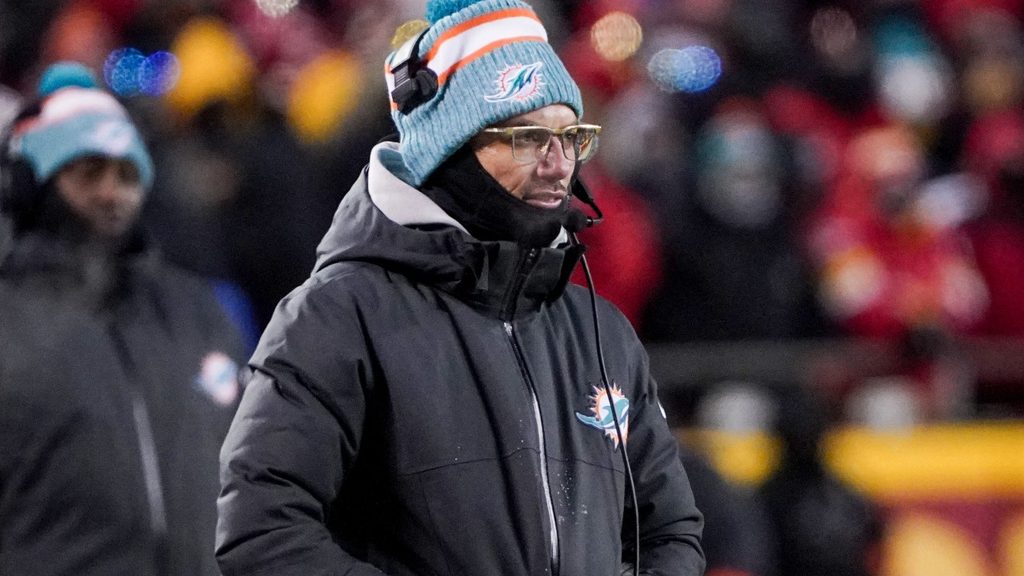
Dolphins–Chiefs (2024): Wind chill dropped to –27°F, turning every snap into a full‑blown survival drill. At least twelve fans later required amputations after suffering frostbite during the brutal freeze. Mahomes’ helmet even cracked on impact, proof that the cold was breaking football itself.
Cold is iconic until frostbite becomes a competitive disadvantage. Then it’s a medical concern.
Fog is cinematic—until it becomes a visibility crisis.
Eagles–Bears (1988): The Fog Bowl. A dense fog swallowed the entire field. Fans couldn’t see the players. Players couldn’t see each other. Commentators narrated the game like a radio drama because it was the only option.
Fog is atmospheric until the ball disappears. Then it’s football played on faith.
The NFL doesn’t want football to survive the elements—it wants the elements to cooperate with the broadcast.
The NFL wants the snowflakes falling perfectly through the stadium lights. It doesn’t want the camera lenses covered in rain, the field underwater, or the offense completing three passes because the wind has declared war on physics.
This is the core of it: The NFL wants the mythology of weather without the mess. It wants the slow‑motion snow highlight reel, not the three hours of sloppy football that produced it. It wants nostalgia without consequences. Drama without chaos. Branding without reality.
Weather is a vibe—until it isn’t.
Every season, without fail, we romanticize the storm. Panic when it arrives and curse the chaos. We pretend we didn’t just watch a game inside a malfunctioning snow globe.
The NFL doesn’t hate weather—it hates what weather does to football. And somehow, every year, we all pretend not to notice.
Read More NFL News From Stadium Rant Here: NFL News
