
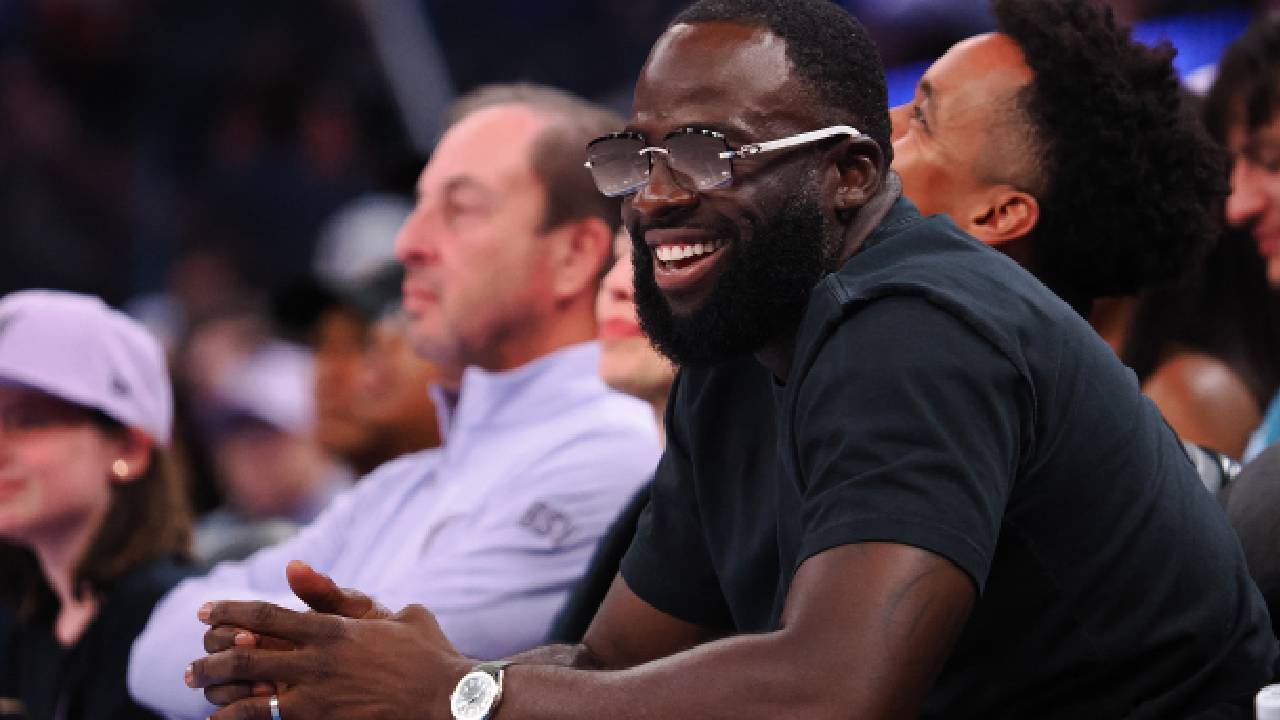
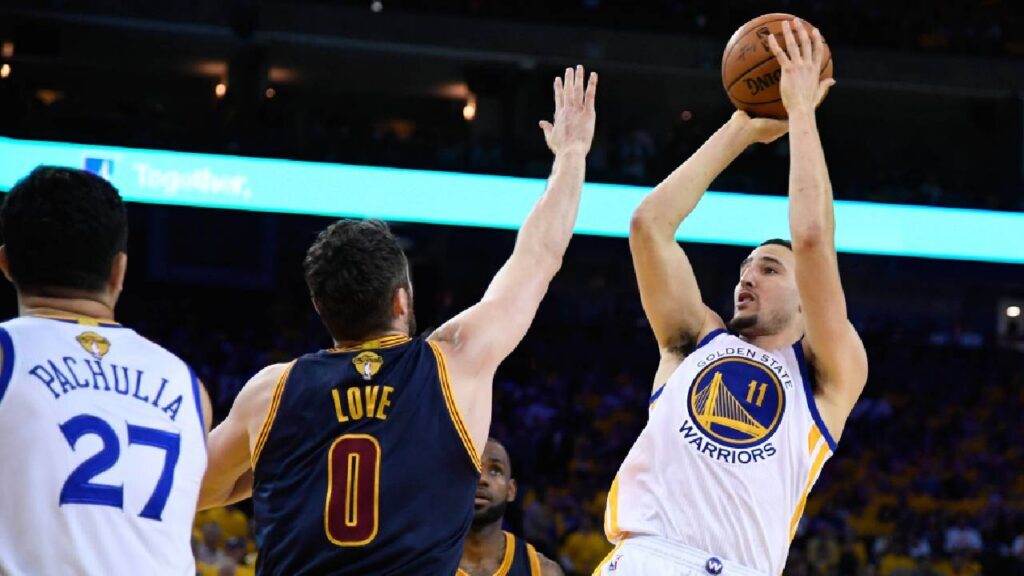
Draymond Green’s defense of Klay Thompson offers a useful blueprint for Miami Heat expectations. Thompson’s role should center on shooting gravity, off-ball movement, and complementary offense—not recreating his 2017 Golden State Warriors production. Green’s Ray Allen comparison reinforces that approach after Thompson’s move to Miami.
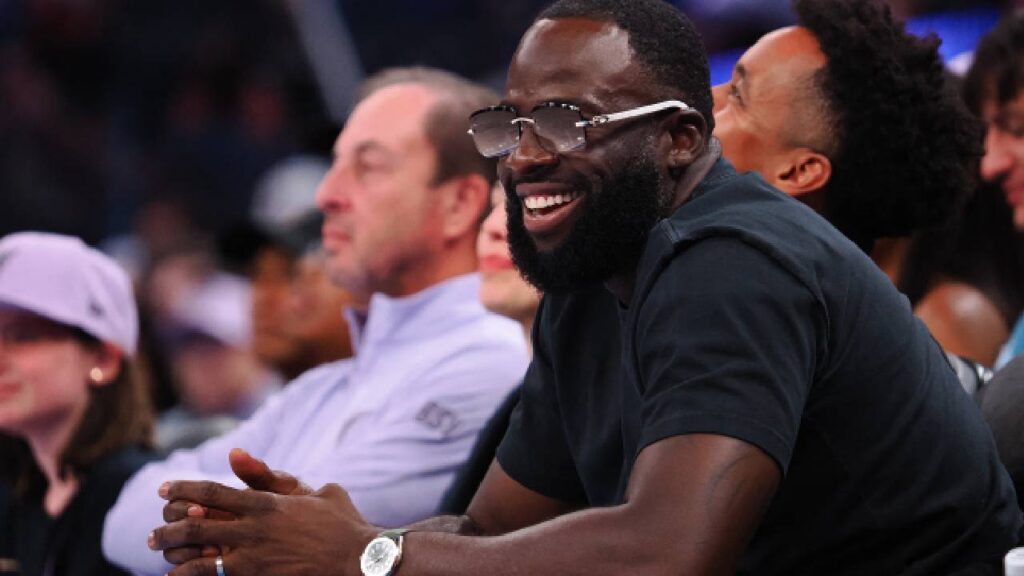
Green told fans and media not to expect “2017 Klay” in Miami. Instead, he compared Thompson’s situation to Ray Allen joining the Heat later in Allen’s career. Green warned that Thompson should not be set up for criticism because he is no longer in his prime.
Green made the comments on The Draymond Green Show, and NBC Sports Bay Area reported Green’s full explanation. “Don’t try to set my brother up like you about to get the 2017 Klay so, the moment you don’t, y’all can bash him,” Green said. “That’s bulls—t. He’s going into Year 16 of his career. We obviously know the injuries that he’s faced.” Green’s argument is less about protecting Thompson’s reputation than establishing a realistic standard. Miami needs Thompson to complement its stars, not recreate his Warriors-era scoring workload.
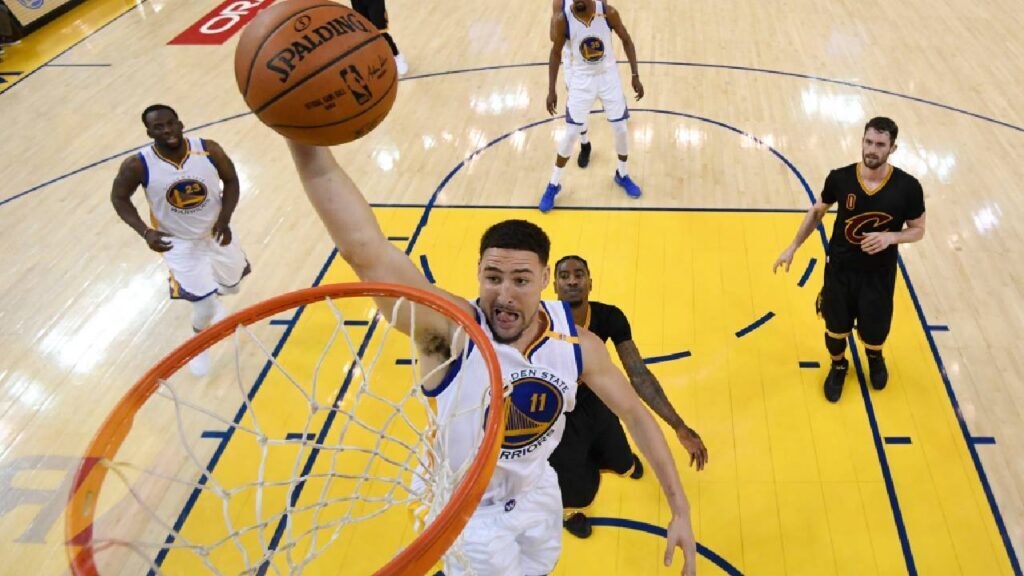
The progression from Thompson’s prime to his two Dallas Mavericks seasons shows why Green’s distinction matters.
| Category | 2016–17 Golden State Warriors | 2024–25 Dallas Mavericks | 2025–26 Dallas Mavericks |
| Games played | 78 | 72 | 69 |
| Minutes per game | 34.0 | 27.3 | 21.7 |
| Points per game | 22.3 | 14.0 | 11.7 |
| Three-point attempts per game | 8.3 | 7.7 | 7.6 |
| Three-point percentage | 41.4% | 39.1% | 38.3% |
| Role | Prime starter and secondary scorer | Starter/rotation scorer | Veteran rotation shooter |
Thompson averaged 22.3 points in 34.0 minutes per game in 2016–17. By 2025–26, those figures had fallen to 11.7 points and 21.7 minutes. Thompson should not be expected to carry bench units, create difficult late-clock shots or reclaim the two-way workload that defined his Warriors peak.
Thompson attempted 7.6 three-pointers per game in 2025–26 and made 38.3% of them. Thompson does not need to dominate the ball to affect a defense. Thompson’s defender still has to account for him when he relocates, comes off screens or spots up around the perimeter.
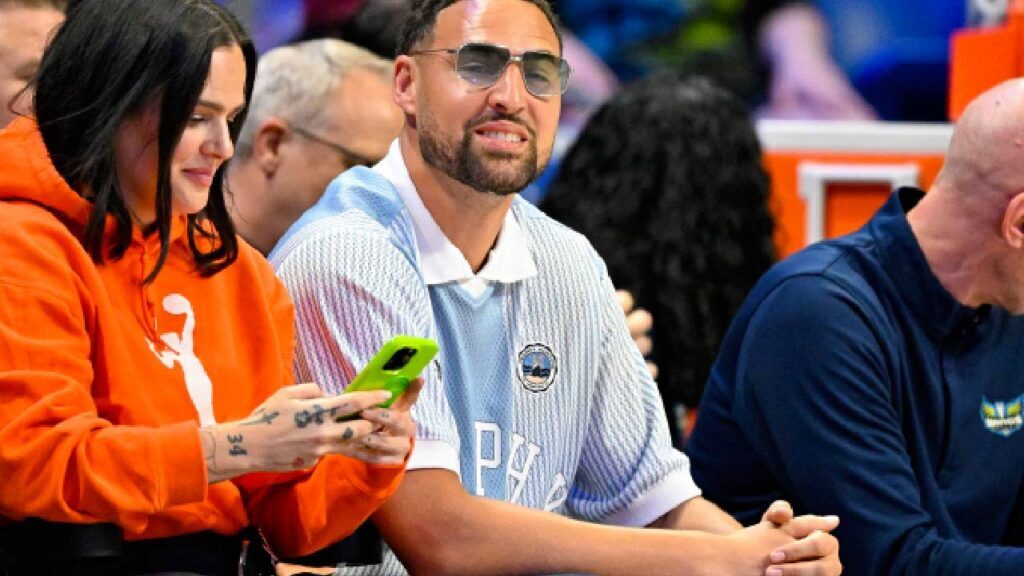
Miami signed Thompson to a two-year, $11.5 million deal after he cleared waivers, with a $5.88 million player option for 2027–28. Thompson reportedly left roughly $10 million on the table to join the Heat. The Heat acquired Giannis Antetokounmpo from Milwaukee in July and already had Bam Adebayo in place. They also added Tim Hardaway Jr., giving Miami another experienced perimeter shooter. Antetokounmpo creates the clearest reason for Thompson’s presence. At the 2026 All-Star break, NBA.com reported that Antetokounmpo led the NBA with 18.7 points in the paint per game while taking 78.2% of his shots there.
When Antetokounmpo attacks the rim, Thompson forces defenses to choose between helping inside and leaving a career 3-point shooter open. Adebayo adds another connection through handoffs and passing actions that can keep Thompson moving without requiring him to create his own shot.
A successful possession might look like this:
The concerns are legitimate. His 38.3% three-point shooting is below his prime level, while reduced athleticism can affect his ability to create separation, attack closeouts and defend difficult assignments. That defensive concern should not be overstated, but Miami will have to monitor whether opponents can repeatedly force switches onto Thompson and attack him with quicker perimeter players. If that happens, Spoelstra may have to limit his minutes in certain lineups.
The clearest answer is veteran spacing specialist and complementary scorer. Miami should use Thompson primarily to:
A reasonable statistical expectation is roughly 12–14 points per game while shooting around 38–40% from three-point range. Thompson’s minutes should depend on two things: whether the shot is falling and whether he can remain playable defensively. A strong shooting season could keep him on the floor for extended stretches, while defensive struggles or a major shooting decline would make his closing-lineup role less secure.
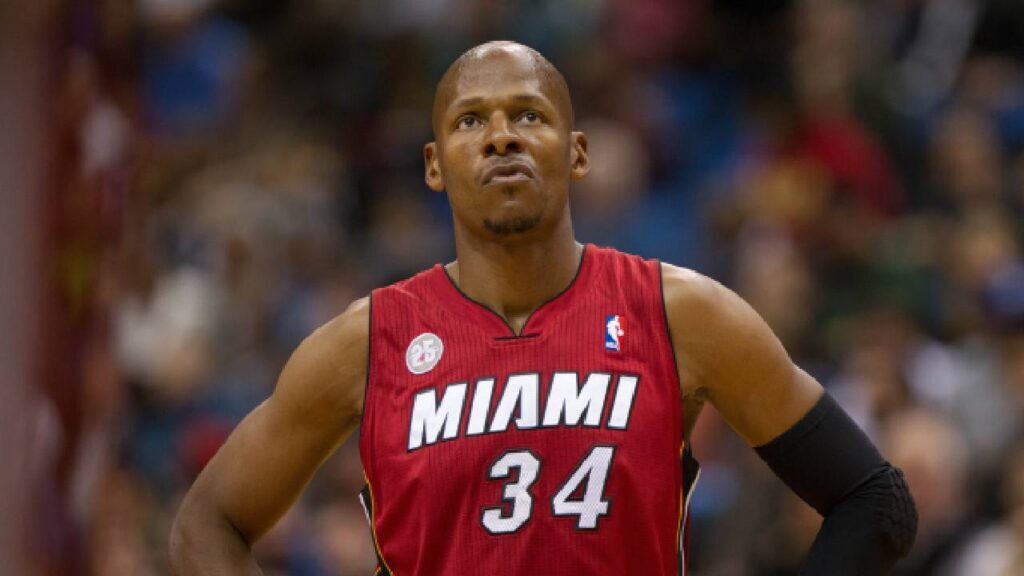
The Ray Allen comparison works best as a role blueprint, not as a debate over which player had the better career. Allen joined Miami in 2012 after starring for the Milwaukee Bucks, Seattle SuperSonics and Boston Celtics. The Heat did not ask him to become their leading scorer. LeBron James, Dwyane Wade and Chris Bosh already carried that responsibility.
Miami needed Allen to make defenses pay for helping off the perimeter. Allen averaged 10.9 points in 25.8 minutes per game while shooting 41.9% on 4.8 three-point attempts per game during the 2012–13 regular season.
| Category | Ray Allen, 2012–13 Miami Heat | Klay Thompson, 2025–26 Dallas Mavericks |
| Games played | 79 | 69 |
| Minutes per game | 25.8 | 21.7 |
| Points per game | 10.9 | 11.7 |
| Three-point attempts per game | 4.8 | 7.6 |
| Three-point percentage | 41.9% | 38.3% |
| Primary offensive value | Spacing, movement, late-game shooting | Spacing, movement, high-volume shooting |
Allen’s most famous Heat moment came in Game 6 of the 2013 NBA Finals, when his game-tying three-pointer against the San Antonio Spurs forced overtime and kept Miami alive. The Heat went on to win Game 7. Allen’s importance extended beyond that shot. His movement and shooting kept defenders attached, allowing Miami’s stars to operate without another defender constantly helping off the perimeter.
That is the part of Allen’s Miami tenure that applies to Thompson. Green is not saying Thompson will become Allen; he is arguing that an aging shooter can remain essential to a contender when he accepts a specialized role. For Thompson, that means fewer self-created possessions, more off-ball movement and a greater emphasis on making defenses account for him.
Draymond Green’s larger point is correct: judging Klay Thompson against his 2017 self would create the wrong expectations. The Ray Allen comparison makes sense because both players can influence a contender without needing to dominate possessions. Thompson’s success in Miami should come down to whether he can remain an efficient shooter while holding up well enough defensively to stay on the floor. That is not a diminished role. For this Heat roster, it may be the right one.
