

After qualifying for only the third time in the country’s history, the men’s Canadian national soccer team made a historic run to the top 16 in the 2026 World Cup. This team not only won their first-ever game in the tournament, but it also made it out of their group and won a knockout game. After scoring a total of one goal in the previous two times they qualified, Canada has been building a sustained powerhouse in the soccer world. Here are some of the ways the country has made monumental leaps forward.

One of the biggest changes since Canada’s 2022 World Cup roster has been an increase in players playing for European clubs. Club teams in Europe are widely regarded as the best places to play soccer in the world. Having players competing in leagues like the English Premier League and the Bundesliga allows them to face top competition from around the world and hone their skill against the world’s best.
In 2022, Canada’s men’s team had 12 players on the 26-man roster playing for club teams in Europe. The 2026 team features an increase of four players playing for European clubs, to a total of 16. Nine of the remaining players play for teams in Major League Soccer in the United States. The number of players playing overseas is expected to increase after their success during the 2026 World Cup.
Another point of emphasis that Canada Soccer has established is the recruitment of dual-national players. Starting in 2015 with the recruitment of former player Junior Hoilett, who was born in Canada to parents of Jamaican descent, the federation knew it had access to a whole new pool of talent. Under head coach Jesse Marsch, the 2026 World Cup team consisted of 15 players born in Canada but eligible to play for another country. Another seven players were born outside of the country but chose to play for the team. This includes players like starters Jonathan David and Alfonso Davies.

When Canada was chosen to co-host the 2026 World Cup in 2018, a new vigor was established to improve the country’s men’s soccer future. This improvement was showcased in the 2022 tournament when the country not only qualified but also scored its first-ever goal. Going into the 2026 tournament, major investment and coaching changes contributed to a top-16 placement.
On March 13, 2024, a new era of men’s Canadian soccer started with the hire of Marsch. The former 2015 MLS Coach of the Year brought an extensive playing career and coaching resume to the national team, featuring stops in the Bundesliga and the English Premier League. Marsch brought a new aggressive system to the team, allowing them to keep pace with other top countries. In a bid for stability, Marsch signed a contract extension that keeps him as head coach through the 2030 World Cup.
To help Marsch and his players reach the heights they hope for, Canada Soccer has made a significant investment. The federation has announced plans to develop a $250 to $300 million permanent soccer training center. While the training center will help the current iteration of the men’s national team, Canada Soccer has emphasized the future by doubling its investment in its youth teams in 2025, with more investment expected in 2026.
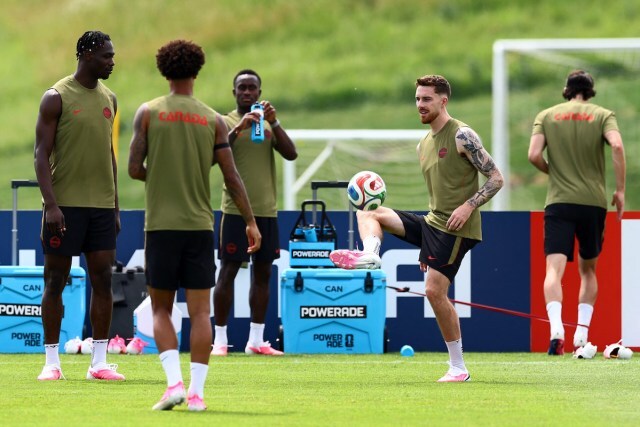
Much like the rest of the world, soccer is Canada’s most popular participation sport, being played by 50% of Canadian youth. Canada Soccer has fostered a professional league setting, allowing more opportunities for homegrown players to pursue soccer careers in the country. With the goal of improvement in the men’s national program, more leagues have been popping up around Canada over the past few years.
Canada boasts its own top league, the Canadian Premier League, which features eight teams from around the country. Founded in 2017, the CPL has several rules in place to improve national soccer talent. This includes a minimum quota of Canadian players on team rosters and starting lineups, requirements for domestic under-21 players, and a Canadian university draft.
While the CPL is the top-tier league in Canada for men’s soccer, provinces across the country have developed their own leagues. Currently hosting 52 teams across three leagues, the Ontario Premier League (formerly League1 Ontario) has noted that 350 players, male and female, have come through the league and gone on to sign professional contracts in Canada or abroad. This includes current men’s national team player Joel Waterman. The success of the OPL has helped spawn Premier Leagues in other provinces such as Alberta, British Columbia, and Québec.
With an already successful women’s program, Canada Soccer has shifted its focus to make the men’s program a powerhouse. After the men’s national team ranked 122nd in the world in 2014, Canada made significant changes to give the country a shot at being one of the best teams in the world. This included the development of new leagues across the country and a new focus on dual-national players. This, combined with greater investment, led the men’s national team to reach the top 16 at the 2026 World Cup and a ranking of 30th in the world, with even greater sights set on the 2030 tournament.
